What Even Is Kombucha?
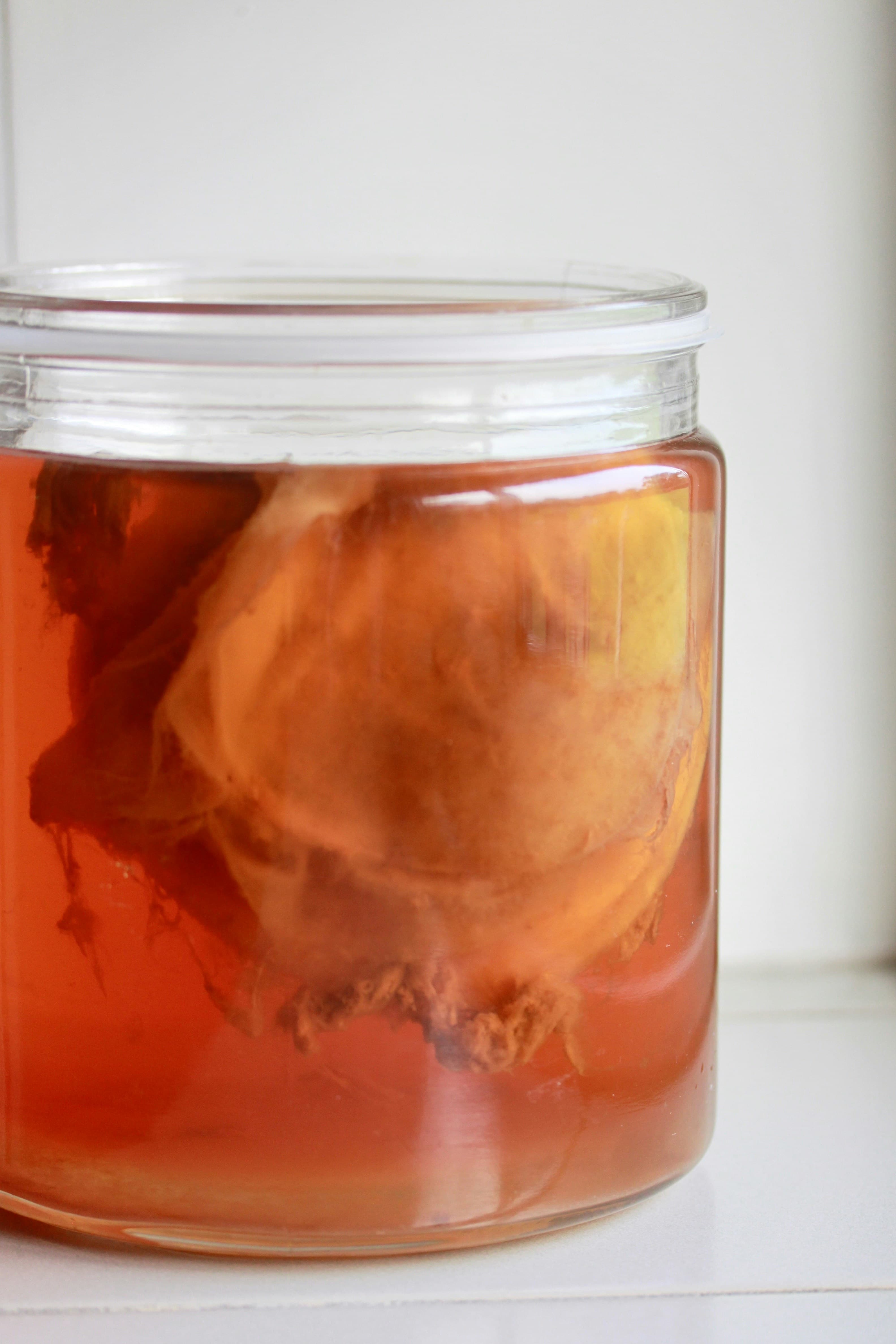
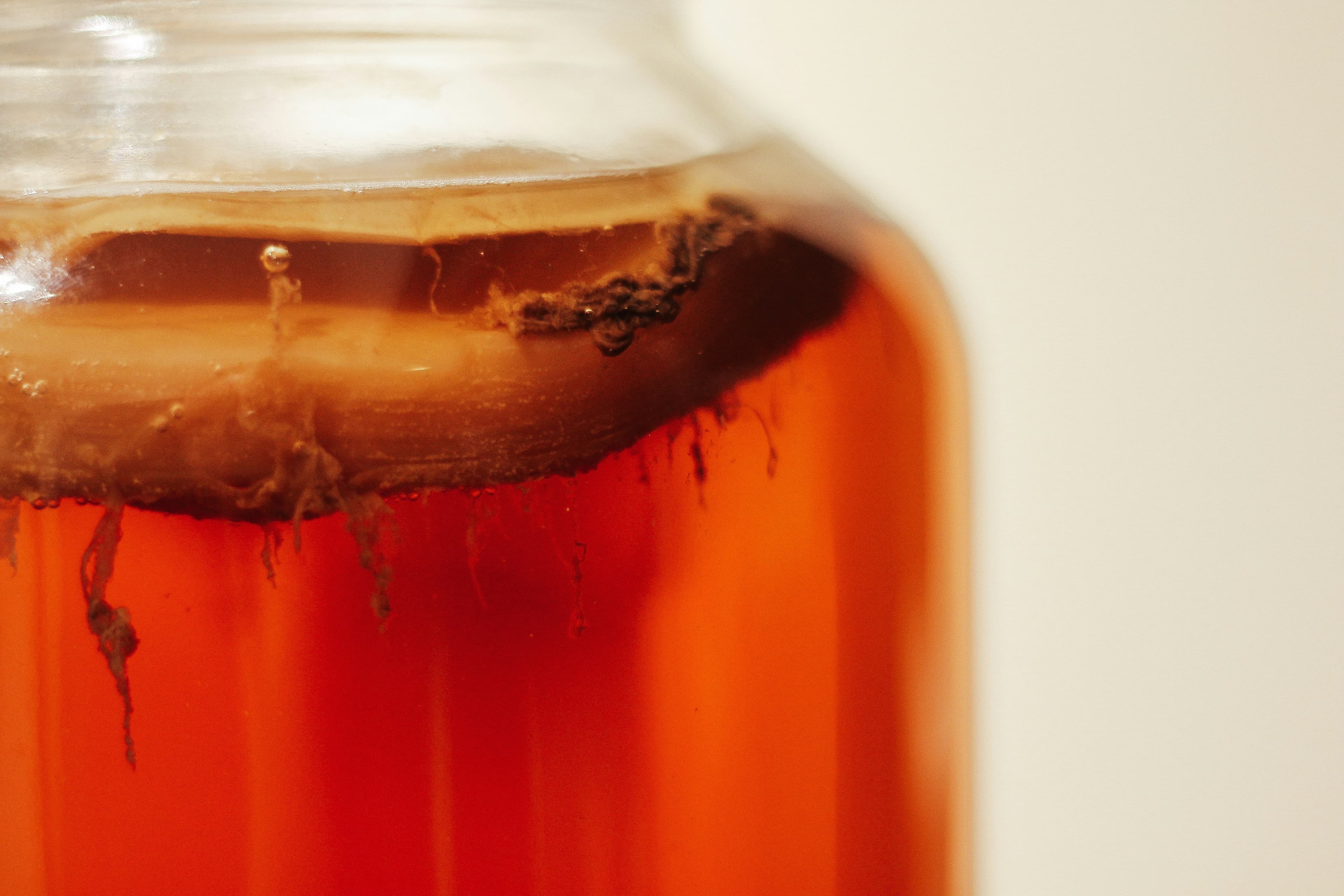
Kombucha is sweetened tea that's been fermented by a SCOBY — a “symbiotic culture of bacteria and yeast.” The SCOBY looks like a rubbery pancake and floats on top of your tea while the bacteria and yeast eat the sugar and produce acids, carbonation, and a tiny amount of alcohol (usually under 0.5%).
The result is a fizzy, tangy, slightly sweet drink that you can flavor however you want. It's one of the easiest ferments to start with because it's forgiving and hard to mess up.
💡 Where do I get a SCOBY?
The easiest way is to buy one online — they ship surprisingly well. You can also grow one from a bottle of raw, unflavored kombucha (like GT's Original). Pour it into a jar, cover it, and wait 2–3 weeks. A thin SCOBY will form on the surface. It works, but it's slow.
How Long Does the First Ferment Take?
Most kombucha first fermentations take 7–14 days. The exact timing depends on temperature and your taste preference. At 72–80°F (22–27°C), 7 days usually produces a pleasantly tart kombucha. In a cooler kitchen (65–70°F / 18–21°C), give it 10–14 days.
Start tasting on day 7 by inserting a clean straw beneath the SCOBY and sampling a small amount. You want a balance of sweet and tart — not too sugary (fermentation isn't done) and not too vinegary (fermentation went too long). When the balance tastes right, it's ready. The SCOBY will keep brewing indefinitely if you leave it, becoming more acidic over time. See our kombucha troubleshooting guide if something seems off.
First Fermentation (F1)
This is where you make the base kombucha. It takes 7–14 days.
Brew sweet tea. Boil the water, remove from heat, and add the tea bags and sugar. Stir until the sugar dissolves. Let it steep for 10–15 minutes, then remove the tea bags. Let the tea cool completely to room temperature. This is important — hot liquid will kill your SCOBY.
Combine and add the SCOBY. Pour the cooled sweet tea into your glass jar. Add the 1 cup of starter liquid (this acidifies the tea and protects against mold in the early days). Gently place the SCOBY on top. It might sink — that's fine. A new one will form on the surface.
Cover and wait. Cover the jar with your cloth and secure with a rubber band. Place it somewhere warm (70–80°F / 21–27°C) and out of direct sunlight. Don't move it around — the new SCOBY forming on the surface is delicate.
Taste and wait. Start tasting on day 7 by gently inserting a straw beneath the SCOBY. Early on, it'll taste sweet. As fermentation progresses, it gets more tart and vinegary. When the balance of sweet-to-tart tastes right to you, it's ready. Most people like it somewhere between day 7 and 14.
Second Ferment: Flavoring and Carbonation
F1 gives you flat kombucha. If you want carbonation and flavor, you need F2. This is where it gets fun. The second ferment typically takes 2–4 days at room temperature — the fruit sugars in your flavoring feed the remaining yeast, which produces CO2 trapped in the sealed bottle.
Remove the SCOBY. With clean hands, remove the SCOBY and set it aside in a bowl with 1–2 cups of finished kombucha (this is your starter liquid for the next batch). You can brew another batch immediately — continuous brewing is the easiest way to keep kombucha going.
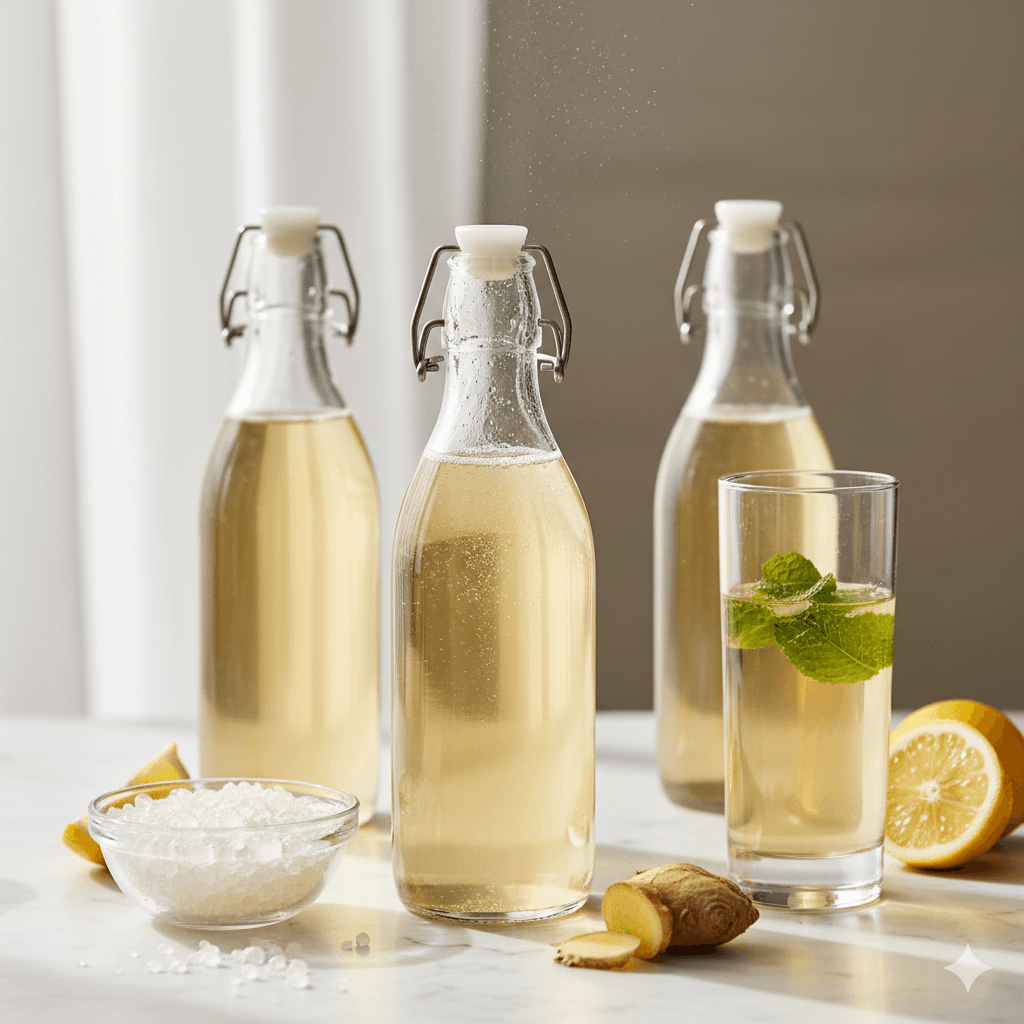
Add flavoring and bottle. Pour the kombucha into flip-top bottles, leaving about an inch of headspace. Add flavorings — fruit juice, chopped fruit, ginger, herbs. A good starting ratio is 10–20% juice to kombucha. Seal the bottles tightly.
Carbonate. Leave the sealed bottles at room temperature for 2–4 days. The yeast will eat the sugars from your flavoring and produce CO2, which gets trapped in the sealed bottle. “Burp” the bottles daily by briefly opening the cap to release excess pressure. After 2–4 days, move to the fridge.
⚠️ Pressure warning
Sealed bottles build real pressure. Always burp daily and use bottles designed for carbonation (flip-top Grolsch-style bottles work great). Never use regular mason jars with flat lids — they aren't designed for pressure and can crack. When in doubt, burp more often.
Flavor Ideas
- Ginger-lemon — 1 tbsp fresh grated ginger + juice of half a lemon per bottle
- Berry — 2–3 tbsp mashed raspberries, blueberries, or strawberries
- Mango-turmeric — 2 tbsp mango puree + 1/4 tsp ground turmeric
- Apple-cinnamon — 2 tbsp apple juice + a small cinnamon stick
- Lavender — 1 tsp dried culinary lavender (subtle and floral)
Troubleshooting
For a deep dive into every common kombucha problem — mold, flat fizz, vinegary taste, and more — see our dedicated kombucha troubleshooting guide. If you want a faster, caffeine-free alternative, check out water kefir (ready in 48 hours) or make a ginger bug for naturally fermented sodas. Looking to invest in proper brewing equipment? See our best kombucha brewing kits.
My SCOBY sank
Totally normal. A new SCOBY will form on the surface within a few days. The old one is still working from the bottom. Don't worry about it.
There's mold on top
Real mold looks fuzzy and is usually white, green, or black — and it grows on the surface, on the SCOBY itself. If you see actual fuzzy mold, discard everything (SCOBY, liquid, and start fresh). Mold is rare if you use enough starter liquid to keep the pH low from the start.
It tastes like vinegar
You fermented too long. It's still safe — you can use it as a vinegar substitute in dressings and marinades. Next time, start tasting earlier. Warmer kitchens ferment faster.
No carbonation after F2
The seal on your bottles might not be tight enough, or your flavoring didn't have enough sugar for the yeast to eat. Try adding 1/2 tsp of sugar per bottle before sealing. Also make sure your bottles are truly airtight.