Best Kimchi Containers in 2026
Last updated July 22, 2026
Kimchi is one of the most aromatic fermented foods you can make — and that's both the point and the challenge. A container that seals properly keeps your kimchi fermenting correctly, prevents fridge odor contamination, and extends shelf life. We looked at glass and plastic airtight options, traditional Korean onggi crocks, and what actually matters when storing a batch.
The Ferment Guide is reader-supported. When you buy through links on this page we may earn an affiliate commission, at no extra cost to you. We only recommend gear we'd use ourselves. Learn more.
Crazy Korean Cooking Premium Kimchi Container (0.9 gal)
Our Top Picks

1. Crazy Korean Cooking Premium Kimchi Container (0.9 gal)
What we like
- Designed specifically for kimchi — this is the only container on this list where that's true
- Locking lid with inner lid prevents odor leakage effectively
- BPA-free polypropylene rated for cold temperatures
- 0.9-gallon (3.4L) capacity fits a full standard kimchi batch
- Flat rectangular design stacks efficiently in the fridge
- Used by Korean households worldwide
Watch out for
- Plastic will stain orange-red over time from gochugaru
- Odor absorption increases with age — consider replacing after 2–3 years of heavy use
Our verdict: This is the container that Korean home fermenters actually use, and it shows. The double-lid system (inner lid + outer locking lid) is the most effective odor barrier in this category. The flat profile stacks in the fridge better than round containers. If you make kimchi regularly, this is the right container — it's purpose-built for the job.
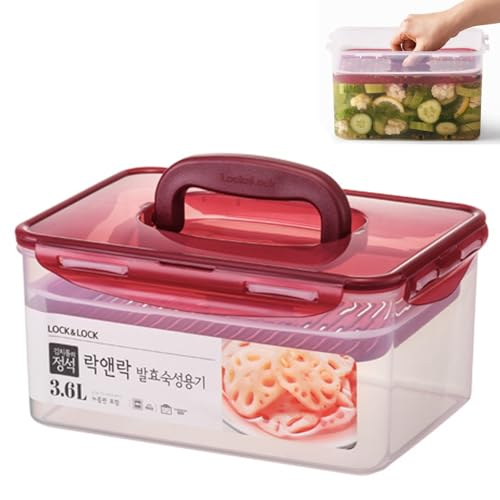
2. LOCK&LOCK Kimchi Press Container (3.6L)
What we like
- Four-side locking lid with silicone gasket creates genuine airtight seal
- Inner press plate keeps kimchi submerged under its brine
- BPA-free, odor-resistant plastic that holds up to kimchi long-term
- 3.6L capacity handles a full napa cabbage batch
- One of the most trusted food storage brands in Korea
Watch out for
- Rectangular shape means wasted space with round containers on the same shelf
- Clear plastic shows staining
Our verdict: LOCK&LOCK is a legitimate Korean brand and a genuine step above generic airtight containers, and this version adds an inner press plate that keeps kimchi under the brine as it ferments. The four-side locking lid seals better than most single-latch designs. At ~$24 for a 3.6L press container, it's the best value pick in this category — effective, durable, and widely available.

3. Wide-Mouth Airtight Glass Container (1.1 Gallon)
What we like
- 1.1 gallon (4.2 L) — the biggest container here, sized for a full kimjang batch
- Glass will not stain or hold onto kimchi smell the way plastic does
- Hinged lid with a silicone gasket for a double seal
- 4.3-inch mouth is wide enough to pack and scrub by hand
- Volume tick marks moulded into the side
Watch out for
- Heavy — the jar alone is over 3 lb before you fill it
- Glass, so no dropping it and no freezer thermal shock
Our verdict: If you make kimchi a whole cabbage at a time, the plastic containers above run out of room. This holds a full 4.2 litres and, being glass, comes out of the dishwasher with no lingering smell and no orange staining — the two things that eventually retire every plastic kimchi container. The trade-off is weight and care in handling.

4. Bormioli Rocco Frigoverre Glass Container (67 oz)
What we like
- Glass doesn't absorb odors or stain — stays clean indefinitely
- Airtight lid with rubber gasket
- Easy to see kimchi level without opening
- Elegant appearance — looks good on the counter
- Dishwasher safe
Watch out for
- Heavy — full of kimchi and brine, a large glass container is substantial
- At about 67 oz it is still smaller than a full napa cabbage batch — may need two
- More breakable than plastic alternatives
Our verdict: If plastic staining and odor absorption bother you, glass is the answer. The Bormioli Rocco Frigoverre has a proper airtight seal and stays pristine indefinitely — no staining, no residual smell after cleaning. The smaller size and weight are the main drawbacks. Good for people who ferment smaller batches or prioritize long-term cleanliness.
What to Look for in a Kimchi Container
Airtight seal is the most important feature
Kimchi continues fermenting slowly in the fridge, producing CO2. A container that doesn't seal well will leak brine, allow off-odors to escape into your fridge, and let oxygen in to promote surface spoilage. Look for a locking lid with a rubber gasket — the kind that clicks or clamps shut. Screw-top lids without gaskets are not airtight enough.
Glass vs. plastic
Glass is ideal: it doesn't absorb odors or stain, it's easy to see inside, and it's inert. The downside is weight and breakability. BPA-free polypropylene plastic containers work well and are lighter — they do absorb some staining and odor over time, but a good container limits this. Avoid containers made from low-quality plastics that crack or warp in the fridge.
Size: match your batch
A standard batch of kimchi from one napa cabbage yields about 1–2 quarts (about 1–2 liters). A 1–2 quart container works for a single batch; if you make large kimjang batches, 1-gallon or larger containers are more practical. Many Korean households use dedicated kimchi fridges with multiple containers — if you're that serious, the traditional route is worth exploring.
Onggi crocks: traditional but specialized
Traditional Korean onggi are unglazed earthenware pots fired at high temperatures. The porous clay allows slow gas exchange while keeping out insects and debris — a form of passive airlock. They're used for long-term kimchi fermentation and storage, often buried in the ground traditionally. Modern onggi is impractical for most Western kitchens (heavy, expensive, requires outdoor space), but they're the gold standard for authentic long-ferment kimchi.
Frequently Asked Questions
Related Guides
How to Make Kimchi
A beginner-friendly guide to making traditional napa cabbage kimchi at home. No special equipment needed.
🥒Fermented Pickles
Crunchy, tangy, probiotic-rich pickles — no vinegar needed. Just cucumbers, salt, water, and time.
🔍Vegetable Fermentation Troubleshooting
Mushy sauerkraut? White film on your pickles? How to tell mold from kahm yeast, fix soft textures, and know when to keep vs. toss.
Shop Related Equipment
Our top-rated gear picks for this project.
Best Fermentation Crocks for Vegetables in 2026 (Tested)
We tested the best fermentation crocks for vegetables — sauerkraut, kimchi, pickles, and fruit ferments. Water-sealed fermenting crocks from budget picks to heirloom German stoneware.
Best Fermentation Weights for Mason Jars & Crocks (2026)
We tested glass, ceramic, and stainless steel fermentation weights to find the best picks for wide-mouth mason jars and crocks — so your vegetables stay submerged and mold-free.
Best Fermentation Lids for Mason Jars in 2026
Fermentation lids turn any wide-mouth Mason jar into a proper fermenting vessel. We tested the most popular airlock lids to find the best options for beginners and experienced fermenters.
The Ferment Guide is reader-supported. When you buy through links on this page, we may earn a small affiliate commission. This doesn't affect our recommendations — we only feature products we genuinely use and trust.