This is one of the most common questions beginners ask — and it doesn't have a single clean answer. The honest version is: it depends on the food, your gut's current state, and what you're trying to achieve. But research does give us a useful starting point.
What the Research Suggests
A 2021 study published in Cell (Wastyk et al.) is the most-cited recent data point. It randomly assigned participants to either a high-fermented-food diet or a high-fiber diet for ten weeks. The fermented food group ate an average of about six servings of fermented foods per day — and showed measurable increases in microbiome diversity and decreases in inflammatory markers.
Six servings sounds like a lot. But in the study, a serving was modest: a small cup of kefir, a few tablespoons of sauerkraut, a small yogurt. It adds up faster than you'd expect once you start including fermented foods across multiple meals.
Most nutritionists working in this space suggest a practical daily target of one to two servings as a starting point — enough to meaningfully add live cultures to your diet without overwhelming a gut that isn't used to them.
Rough Serving Sizes by Food
These are approximate. Fermented foods aren't standardized like supplements — the cultures, fermentation time, and preparation all vary. Use these as rough anchors, not exact prescriptions.
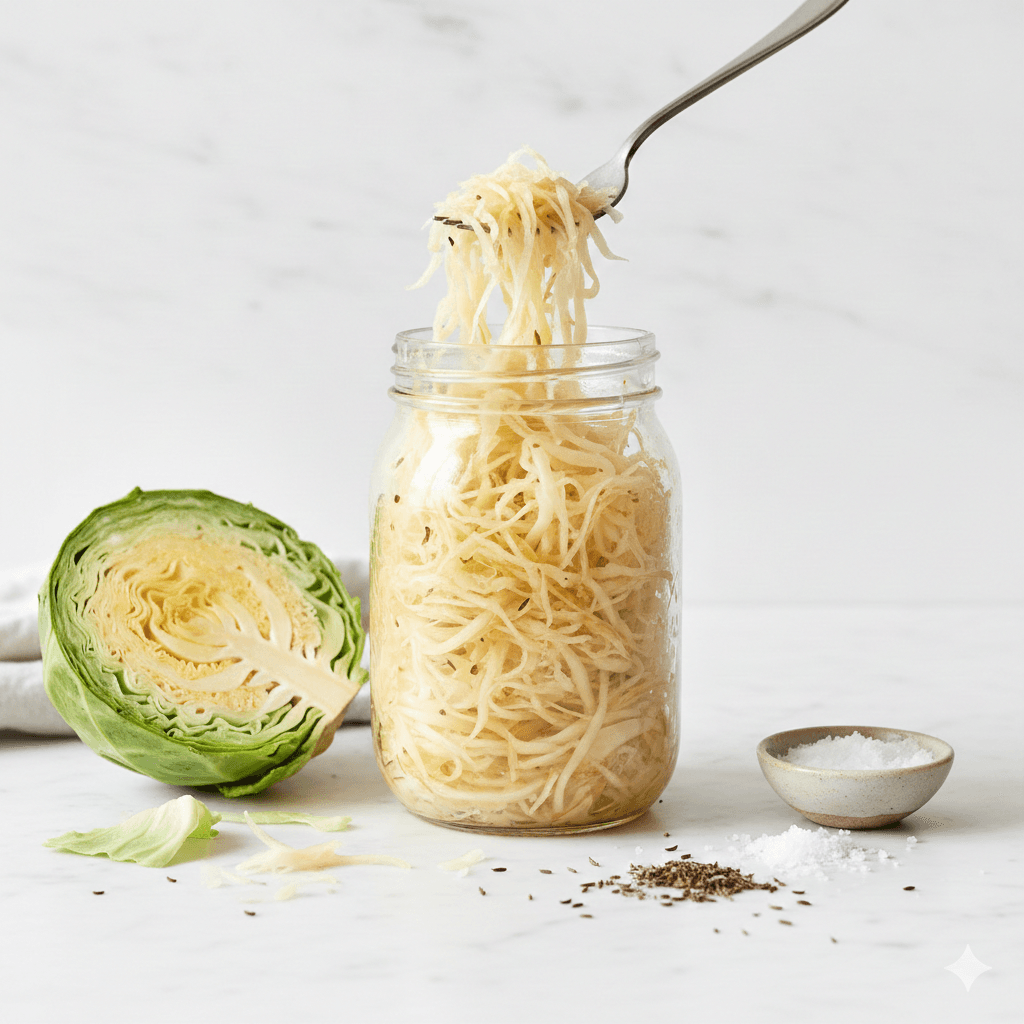
- Sauerkraut or kimchi: 2–4 tablespoons (about 30–60g). A forkful alongside a meal is a good starting portion for beginners.
- Kefir or yogurt: ½ to 1 cup (120–240ml). Kefir tends to contain a broader range of strains than yogurt.
- Kombucha: 4–8 oz (120–240ml). Start smaller if you're new — the carbonation and organic acids can cause temporary digestive discomfort in some people.
- Miso: 1–2 teaspoons dissolved in broth. A small bowl of miso soup counts.
- Fermented pickles or vegetables: A few pieces alongside a meal. Look for refrigerated, unpasteurized versions — shelf-stable pickles are vinegar-preserved and contain no live cultures.
Why Beginners Should Start Low and Go Slow
If you're new to fermented foods, jumping straight to multiple servings per day can cause temporary bloating, gas, or digestive discomfort. This isn't a sign something is wrong — it's your gut microbiome adjusting to an influx of new bacteria and organic acids it isn't used to processing.
A sensible approach for the first two weeks: start with one small serving per day. After that, add a second serving and see how you feel. Most people find their digestive system adapts within a few weeks and the initial discomfort fades.
If you have a sensitive gut, IBS, or are immunocompromised, talk to your doctor before significantly increasing fermented food intake. Fermented foods are generally safe for healthy adults, but that caveat matters.
Does It Matter Which Fermented Food You Eat?
Yes, to some extent. Different fermented foods contain different strains of bacteria — and research suggests diversity matters as much as quantity. Eating only one type of fermented food day after day is less beneficial than rotating through several.
A varied weekly rotation might look like:
- Sauerkraut or kimchi with meals a few times a week (lacto-fermented vegetables)
- Kefir or live-culture yogurt daily or near-daily
- Kombucha a few times a week if you enjoy it
- Occasional miso, fermented pickles, or other vegetables
Fermented dairy — kefir and yogurt — has the most consistent research backing for gut health specifically. If you can only add one fermented food to your diet, kefir is a reasonable first choice.
Does It Have to Be Homemade?
No — but the source matters more than whether you made it yourself. Most commercially packaged sauerkraut, pickles, and fermented vegetables on grocery store shelves are pasteurized, which kills the live cultures. The fermentation happened, but the bacteria are gone.
To get live cultures, you need either:
- Refrigerated, unpasteurized fermented vegetables — typically found in the deli or refrigerated section, not the shelf
- Live-culture yogurt or kefir — check the label for “contains live and active cultures”
- Homemade ferments — which are inexpensive to make and reliably contain live bacteria
Making your own sauerkraut or kimchi also gives you control over salt levels and ingredients, and costs very little. If you're curious about getting started, our sauerkraut guide walks through the whole process for beginners.
The Most Important Variable: Consistency
The research showing gut health benefits from fermented foods was based on consistent daily consumption over weeks — not occasional large servings. Eating a pound of sauerkraut once a week probably does less than eating two tablespoons a day.
The practical takeaway: find one or two fermented foods you actually enjoy eating, and build them into your regular meals. Kefir with breakfast, sauerkraut alongside dinner, a small glass of kombucha in the afternoon — whatever fits your routine.
Frequently Asked Questions
Can you eat too much fermented food? In normal amounts, fermented foods are very safe. Very large quantities of high-salt ferments (like kimchi or sauerkraut) could contribute to sodium intake — worth noting if you're watching sodium. Kombucha contains small amounts of alcohol and caffeine, so very large daily quantities aren't recommended. Otherwise, the main limit is digestive tolerance.
Do fermented supplements work as well as food? Probiotic supplements contain specific, characterized strains in high doses. Fermented foods contain a broader, less controlled range of organisms but also provide fiber, vitamins, and other compounds. Research suggests whole fermented foods and probiotic supplements work via different mechanisms — they're not perfect substitutes.
What if I'm lactose intolerant? Many people with lactose intolerance can tolerate kefir and yogurt because the bacteria break down much of the lactose during fermentation. Water kefir is a fully dairy-free alternative with a similar probiotic profile.
Getting Started
If you're new to fermented foods, the simplest version of a daily plan is: add one small serving of a fermented food you enjoy to one meal per day, every day, for two weeks. Then add a second serving.
For a fuller overview of the health research behind fermented foods, read our post on fermentation for gut health. If you want to start making your own, our beginner's guide covers the easiest projects to start with.