August brings the best stone fruit of the year — ripe peaches that drip down your arm, plums with skins that stain your fingers purple, nectarines that smell like summer concentrated into a single bite. And if you have more than you can eat before they go soft, fermentation is the best tool you have.
Lacto-fermented stone fruit is one of fermentation's better-kept secrets. The process takes a few days, requires minimal equipment, and produces something genuinely surprising: fruit that's sweeter and more complex than fresh, with a gentle tanginess and effervescence that makes it feel like a completely different ingredient.
Does Fermented Fruit Actually Work?
Fermentation and fruit is a combination most people associate with wine or brandy — alcoholic fermentation driven by yeast. What we're doing here is different: lacto-fermentation, driven by lactic acid bacteria naturally present on the fruit's skin.
Fruit ferments well because it contains natural sugars that bacteria love, and because the skins carry wild microbes ready to do the work. The challenge is that fruit is also high in sugar relative to vegetables, which means fermentation moves faster and the results change quickly. You want to catch stone fruit at the early, lightly tangy stage — not wait until it becomes alcoholic or vinegary.
The result, when timed correctly, is extraordinary: fruit that tastes like itself but richer, slightly tart, with a living complexity that fresh fruit lacks. If you've tried our fermented strawberry recipe or fermented rhubarb, stone fruit follows the same logic and rewards the same patience.
Which Stone Fruit Ferments Best?
Peaches are the easiest starting point. They're naturally sweet and aromatic, and the flavor translates beautifully through fermentation. Use firm-ripe peaches rather than fully soft ones — they hold their texture better in the jar.
Plums ferment exceptionally well and the skin adds beautiful color to the brine. Italian prune plums (the small, oval purple ones available in late August) are particularly good for this. Their lower water content means they stay firmer longer.
Nectarines behave very similarly to peaches but without the fuzz — which actually makes them slightly easier to prepare. They tend to be a bit firmer, which is an advantage for fermentation.
Cherries also work well using this same method. Keep them whole with the pits in (or remove pits if you prefer) — cherries ferment quickly and make a beautiful, deeply colored brine.
Basic Lacto-Fermented Stone Fruit Recipe
Ingredients:
- 2 lbs (about 1 kg) firm-ripe stone fruit — peaches, plums, or nectarines
- 1 tablespoon non-iodized salt per cup of water used
- Filtered or non-chlorinated water, enough to cover the fruit
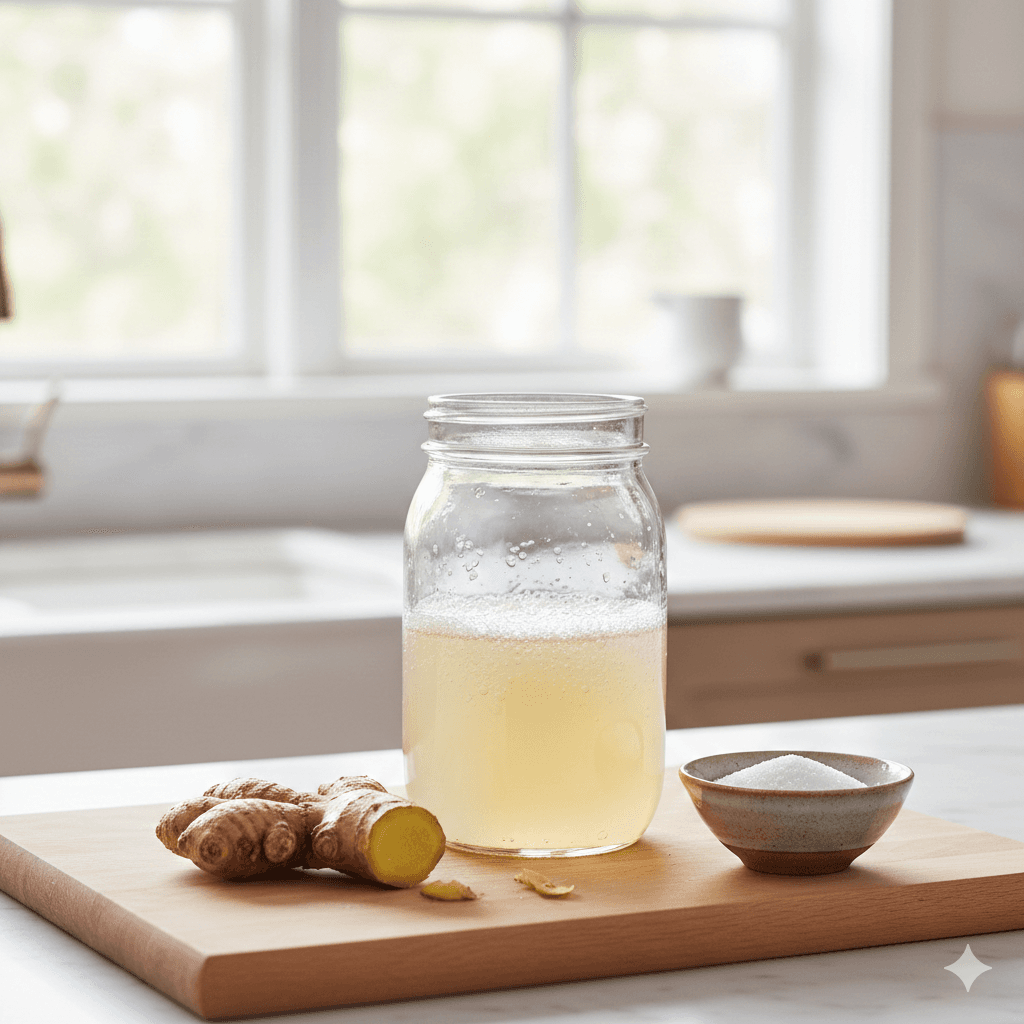
- Optional flavorings: 1 cinnamon stick, 2–3 cardamom pods, a few whole peppercorns, a vanilla bean, or a small piece of fresh ginger
Equipment:
- A wide-mouth quart or half-gallon mason jar
- A fermentation lid with airlock (optional, but helpful for fruit ferments)
- A fermentation weight or small zip-lock bag filled with brine
Fruit ferments faster than vegetables.
Stone fruit typically reaches its peak flavor in just 2–4 days at room temperature. Check it daily. Because of the higher sugar content, fermentation moves quickly — and what's perfect on day three can become overly sour or alcoholic by day five. When in doubt, move it to the fridge early. Cold storage halts the process and preserves the stage you want.
Step-by-Step Instructions
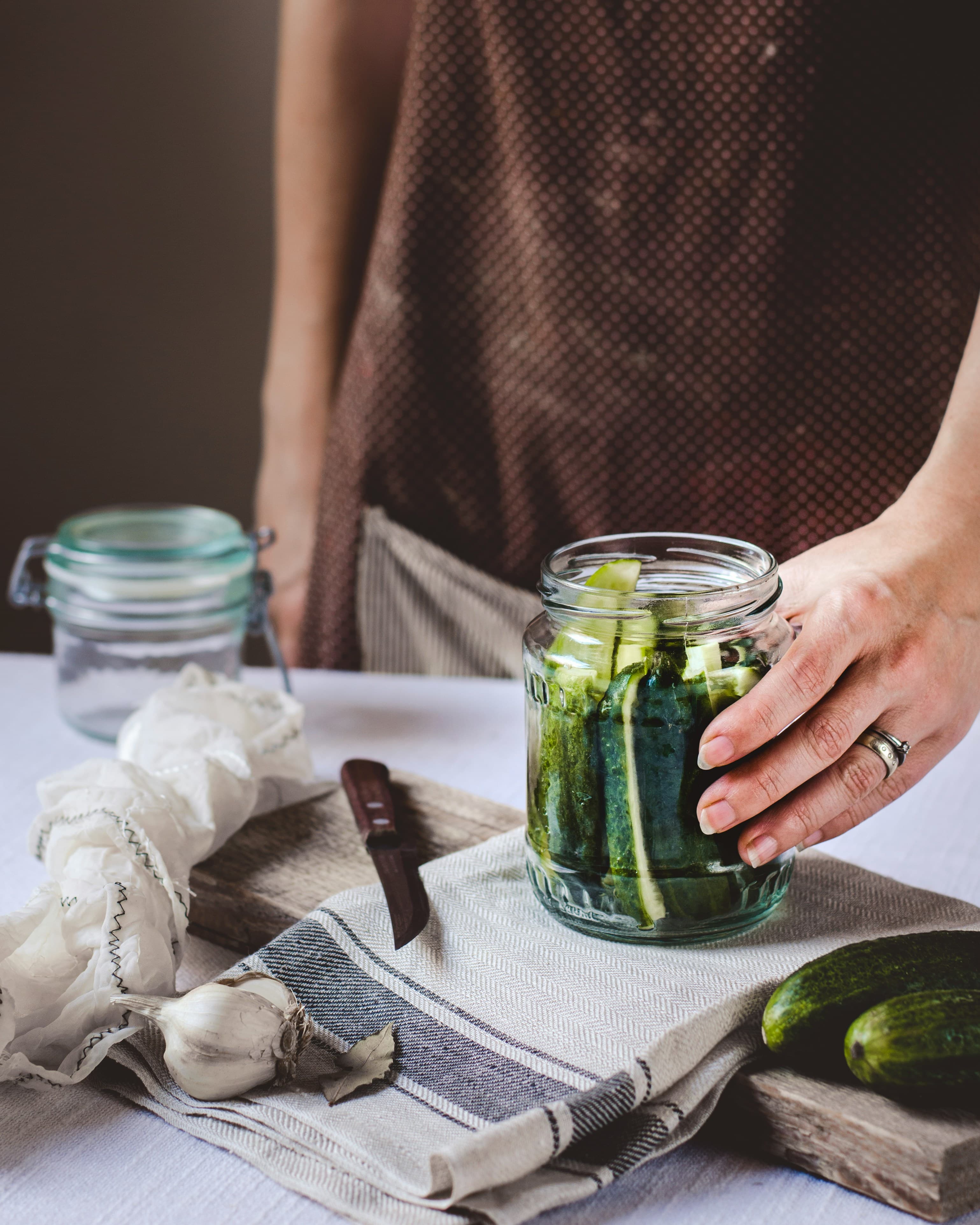
Step 1: Prepare the fruit. Wash the fruit well. Remove pits and cut into halves or quarters — smaller pieces ferment faster and are easier to pack into a jar. Leave the skins on. The skins carry the wild bacteria that drive lacto-fermentation and add color and flavor to the brine. If using plums, halving and removing the pits is enough.
Step 2: Make the brine. Dissolve 1 tablespoon of non-iodized salt per cup of filtered water. Stir until fully dissolved. You'll typically need 1½ to 2 cups of brine for a quart jar of fruit. Tap water often contains chlorine, which can inhibit fermentation — let it sit for an hour if you don't have a filter, or use bottled water.
Step 3: Pack the jar. Place any optional flavorings (cinnamon, cardamom, ginger) at the bottom of the jar. Pack the fruit pieces in tightly, cut side down. Fill as much of the jar as possible while leaving an inch of headspace at the top.
Step 4: Add the brine. Pour the brine over the fruit until everything is fully submerged. Press down with a fermentation weight or a brine-filled bag to keep the fruit below the liquid line. Fruit floats aggressively — a weight is not optional here. Any fruit above the brine will oxidize and can introduce mold.
Step 5: Cover and ferment. Cover loosely to allow CO₂ to escape — a cloth, a loose lid, or a proper fermentation airlock lid all work. Fermentation lids are particularly useful for fruit because the activity can be vigorous and brine sometimes bubbles up and overflows. Set the jar on a plate to catch any overflow.
Keep at room temperature (65–75°F / 18–24°C), out of direct sunlight. Ferment for 2–4 days. You'll see small bubbles forming around the fruit and rising to the surface — that's CO₂ being produced by the bacteria, which means fermentation is active.
Step 6: Taste and refrigerate. Start tasting at 48 hours. The fruit should taste noticeably tangy and slightly effervescent, with the underlying sweetness of the fruit still present. When you reach a flavor you like, seal the jar and refrigerate immediately. Don't wait for the perfect moment — fermentation continues in the fridge, just much more slowly.
How to Use Fermented Stone Fruit
The fruit itself is delicious eaten straight from the jar, but the brine is equally valuable. Here's how to use both:
As a cheese board accompaniment. Fermented plums or peaches alongside aged cheddar, manchego, or blue cheese is a combination that stops conversations. The tanginess complements rich, fatty cheeses in a way fresh fruit can't match.
Over yogurt or ice cream. Spoon fermented peaches over plain yogurt with a drizzle of honey. The sourness of the fermented fruit and the cultured tang of the yogurt create a layered, complex flavor.
In cocktails or shrubs. The brine from fermented stone fruit makes an excellent cocktail mixer. Add it to sparkling water for a probiotic drinking vinegar (shrub), or use it in a summer cocktail with gin or prosecco. Pour the brine into swing-top bottles for easy pouring and a nice presentation.
As a pork or duck glaze. Blend fermented plums with a small amount of the brine and a splash of apple cider vinegar for a quick fermented fruit sauce that works beautifully spooned over roasted meats.
Storage and Shelf Life
Fermented stone fruit keeps in the fridge for two to three weeks at peak quality. After that, it continues to sour slowly. By week four or five, the texture may soften and the flavor will be quite tart — still usable in cooking, but less pleasant to eat on its own.
For best results, keep the fruit submerged in brine throughout storage. If the brine level drops (because you're eating the fruit and removing pieces), top it up with a fresh salt solution: ½ teaspoon non-iodized salt dissolved in ½ cup of filtered water.
For more on keeping ferments fresh in storage, see our guide on how to store fermented foods and our detailed fermented pickles guide for general lacto-fermentation technique.