A ginger bug is one of the most useful things you can keep in your fermentation practice. It's a living culture of wild yeasts and bacteria cultivated from fresh ginger — and it's the secret behind naturally carbonated homemade sodas: ginger beer, ginger ale, fermented lemonade, pineapple soda, and more. Once you have an active ginger bug, the world of wild-fermented beverages opens up considerably.
Starting one takes about five days and requires nothing but fresh ginger, sugar, and water. Maintaining it takes about two minutes a day. This guide covers everything from day one through your first batch of soda.
What Is a Ginger Bug?
A ginger bug is a wild-fermented culture — similar in concept to a sourdough starter, but made from fresh ginger instead of flour. Fresh ginger skin carries naturally occurring wild yeasts and lactic acid bacteria. When you feed them sugar and water over several days, those microorganisms multiply into an active starter capable of carbonating sweet liquids.
Unlike commercial yeast sodas, ginger bug sodas have complexity: they're not just carbonated sweet water, but living beverages with depth of flavor from fermentation. The ginger flavor is prominent but not overwhelming, and the carbonation is natural — genuine CO₂ produced by yeast activity, not forced.
What You Need
Fresh Ginger
Use fresh, firm ginger with skin intact. The wild yeasts live on the surface of the skin — don't peel it. Organic ginger works best since some conventional ginger is treated with growth inhibitors that can slow fermentation. If you only have conventional ginger, it will usually still work, just possibly more slowly.
Finely grate or chop the ginger — you want maximum surface area in contact with the liquid to extract flavor and yeasts quickly.
Sugar
Plain white cane sugar is what most ginger bugs are fed. It's consistent, dissolves easily, and doesn't introduce competing flavors. You can experiment with raw cane sugar, honey, or coconut sugar once your bug is established — but start with white sugar for reliability.
Water
Filtered or spring water only. Chlorine in tap water can inhibit or kill the wild yeasts before they get established. If you only have tap water, leave it in an open container overnight — chlorine dissipates over 12 to 24 hours.
The Jar
A wide-mouth quart mason jar is ideal. Large enough for several days of feedings, easy to stir, and easy to see when activity starts.
Starting Your Ginger Bug: Day by Day
Day 1
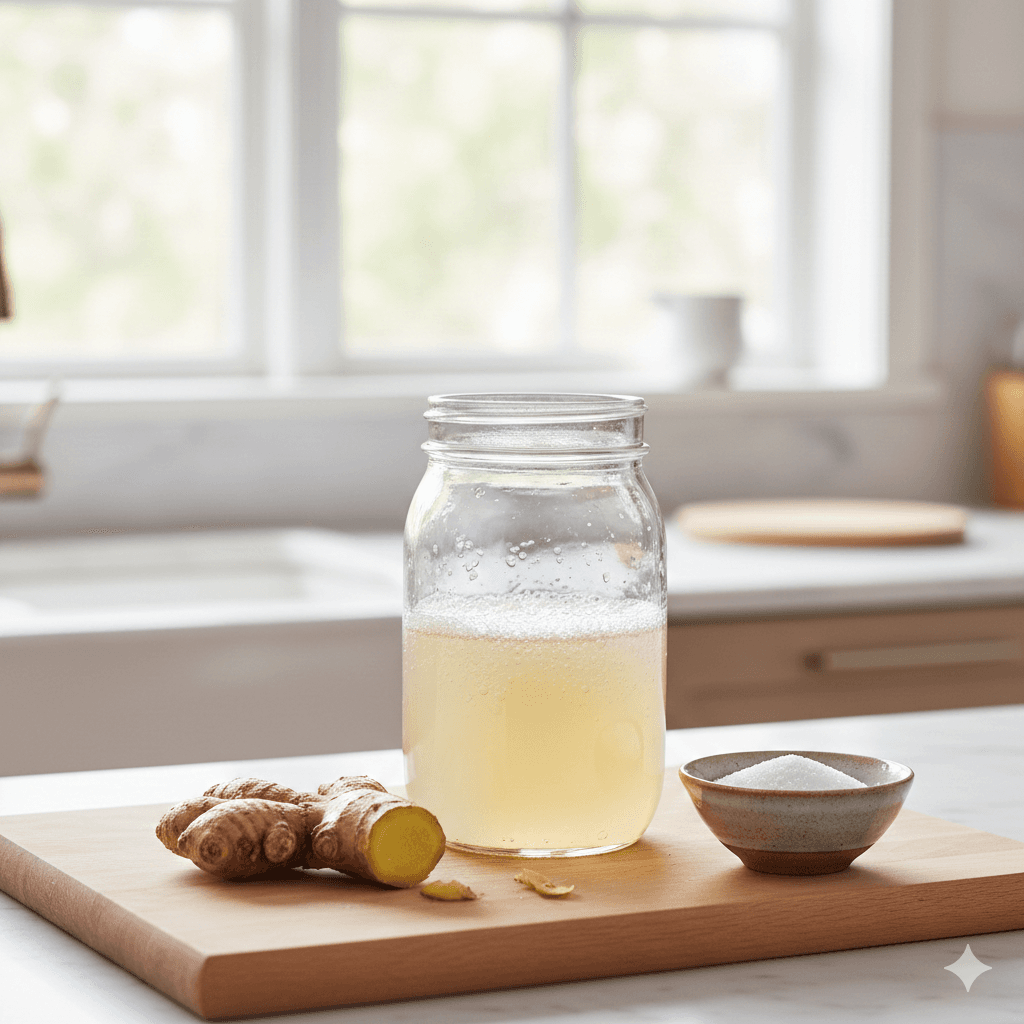
Add 1 tablespoon of grated fresh ginger (skin on) and 1 tablespoon of sugar to your quart jar. Pour in 2 cups of filtered water. Stir well until the sugar dissolves. Cover the jar loosely with a cloth, coffee filter, or paper towel secured with a rubber band. You want airflow in — for oxygen to support early yeast growth — but no fruit flies.
Set the jar somewhere at room temperature. 70–78°F is ideal. Cooler conditions slow fermentation; warmer conditions speed it up but increase the risk of over-fermentation.
Days 2 Through 5 — Daily Feedings
Each day, stir the mixture and add 1 tablespoon of fresh grated ginger and 1 tablespoon of sugar. Stir well to incorporate. Replace the cover.
You'll notice changes as the days progress:
- Day 2–3: Small bubbles may start forming around the ginger pieces. The liquid may appear slightly cloudy. Faint smell of ginger and something slightly fermented.
- Day 3–4: More visible bubbling when you stir. Liquid is noticeably cloudier. The smell becomes more yeasty and complex.
- Day 4–5: Vigorous bubbling when stirred. Liquid bubbles actively for 30 seconds or more after stirring. This is a ready ginger bug.
How to Know When Your Ginger Bug Is Ready
The test: stir the ginger bug vigorously. Watch for bubbles. A ready bug will bubble visibly for at least 30 seconds after stirring — ideally longer. The liquid should be cloudy, slightly thickened, and smell yeasty, gingery, and faintly alcoholic (like a very mild beer or bread dough).
If there are no bubbles after 5 days, troubleshoot before giving up: the most common issues are water that's too cold, ginger that was treated with growth inhibitors, or chlorinated water. Try moving the jar somewhere warmer, switching to bottled spring water, or sourcing fresh organic ginger.
How to Use a Ginger Bug
Once active, your ginger bug becomes a soda starter. The basic recipe is: make a sweet liquid, add ginger bug, bottle it, let it carbonate.
Simple Ginger Beer
- Make a simple syrup: dissolve ½ cup of sugar in 4 cups of water over low heat. Add 2 tablespoons of fresh grated ginger. Let it steep for 10 minutes, then remove from heat.
- Cool completely to room temperature. Add juice of 2 lemons or limes. Add enough filtered water to total 2 quarts.
- Stir in ¼ cup of strained ginger bug liquid per quart (½ cup total).
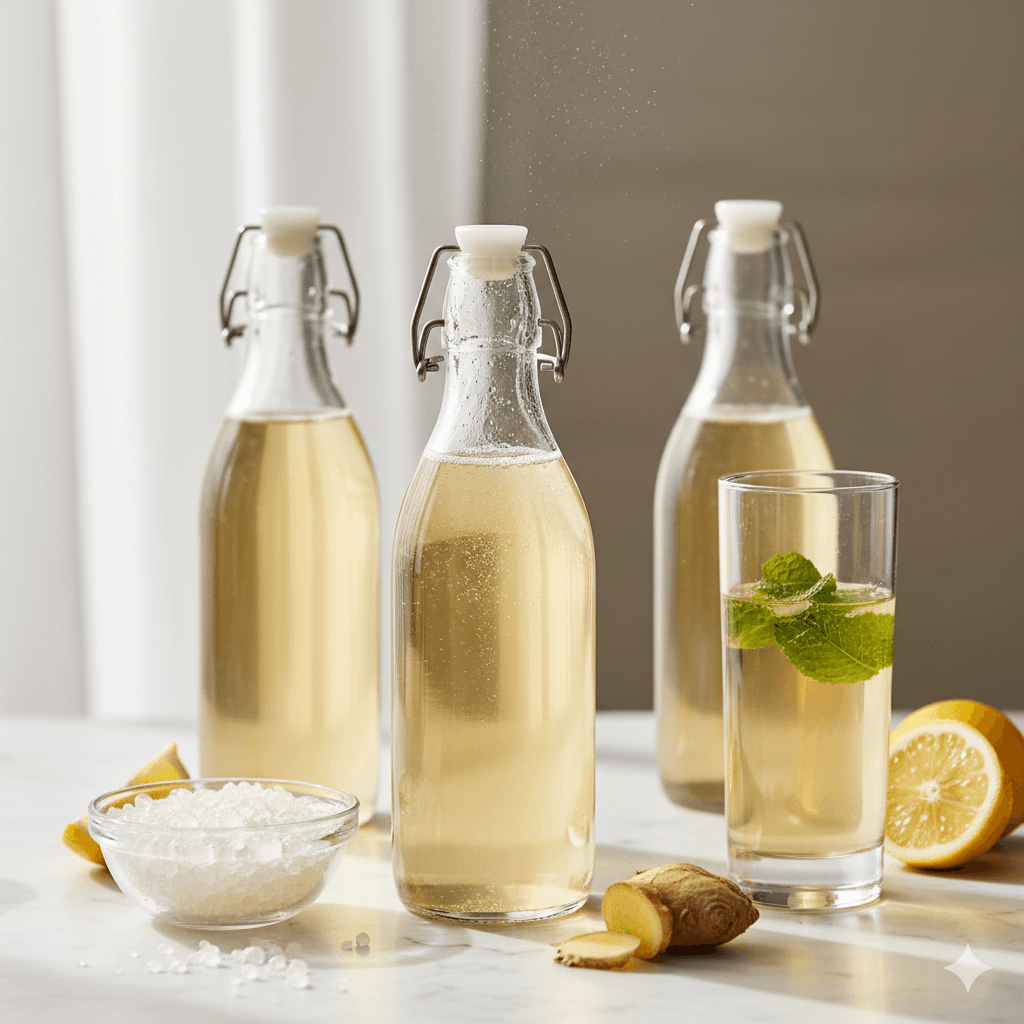
- Pour into swing-top bottles, leaving an inch of headspace. Seal tightly.
- Leave at room temperature for 24 to 48 hours. Check pressure daily — carefully open the bottle slightly to release some pressure if it feels very firm. Refrigerate when carbonated to your liking.
Other Ginger Bug Soda Ideas
- Ginger lemonade: Fresh lemon juice, water, sugar, ginger bug. Similar to ginger beer but more citrus-forward.
- Hibiscus soda: Steep dried hibiscus in hot water, sweeten, cool, add ginger bug. Gorgeous red color and floral tartness.
- Apple soda: Fresh apple juice (not pasteurized) plus ginger bug. Sweet and lightly spiced.
- Turmeric bug soda: Same method as ginger bug but with fresh turmeric — produces a golden, earthy soda.
Maintaining Your Ginger Bug Long-Term
If you're making soda regularly (more than once a week), keep the bug at room temperature and feed it daily — 1 tablespoon ginger and 1 tablespoon sugar each day. Remove some culture when it gets too full.
If you ferment less frequently, store the bug in the refrigerator. Cold dramatically slows fermentation. Feed it once a week in the fridge. When you want to use it, bring it to room temperature, feed it daily for 2–3 days to reactivate, and use it when it's bubbling actively.
Troubleshooting a Sluggish Bug
A ginger bug that stops bubbling has usually been underfed, gotten too cold, or had its microbial balance disrupted. To revive it: bring to room temperature, discard half the liquid, add fresh ginger and sugar, and feed daily for 2–3 days. Most bugs recover.
Mold on a ginger bug (fuzzy growth, not just cloudy liquid) means discard and start fresh. A healthy ginger bug should never show mold — the acidity protects it.
Ginger Bug vs. Other Fermented Sodas
If you're exploring fermented beverages, you'll encounter several soda-making approaches. Here's how ginger bug compares:
- Ginger bug vs. water kefir: Water kefir uses grain-based grains and ferments faster (24–48 hours). Ginger bug produces a more complex, ginger-forward flavor and requires no special grains to source.
- Ginger bug vs. tepache: Tepache ferments without a starter — the wild yeasts on the pineapple skin do all the work. Ginger bug is a cultivated starter you maintain ongoing.
- Ginger bug vs. kombucha: Kombucha requires a SCOBY and takes 1–4 weeks. Ginger bug sodas carbonate in 1–2 days and have a completely different flavor profile.
The beauty of a ginger bug is versatility. Once you have one going, you can carbonate almost any sweet liquid — juice, tea, herbal infusions, fruit water. It's a creative tool as much as a recipe.
If you're just getting started with fermentation, a ginger bug is an excellent second project after sauerkraut or pickles. The timeline is short, the process is forgiving, and the results — a batch of genuinely homemade fizzy soda — are consistently satisfying.