What Is Discard, and Why Keep It?
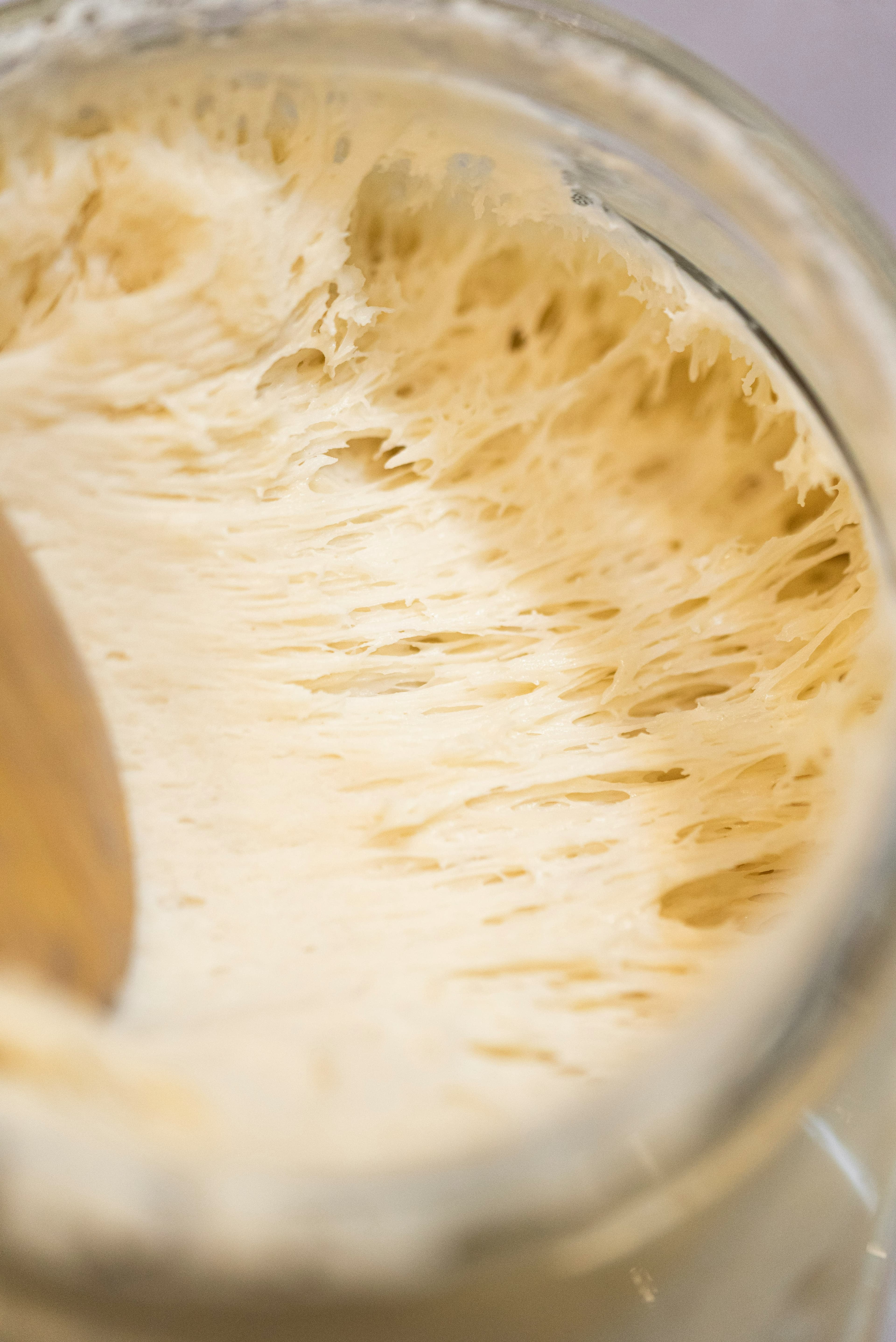
When you maintain a sourdough starter, you discard roughly half of it before each feeding. This keeps the starter healthy and manageable — but it also means you're throwing away perfectly good fermented dough on a regular basis.
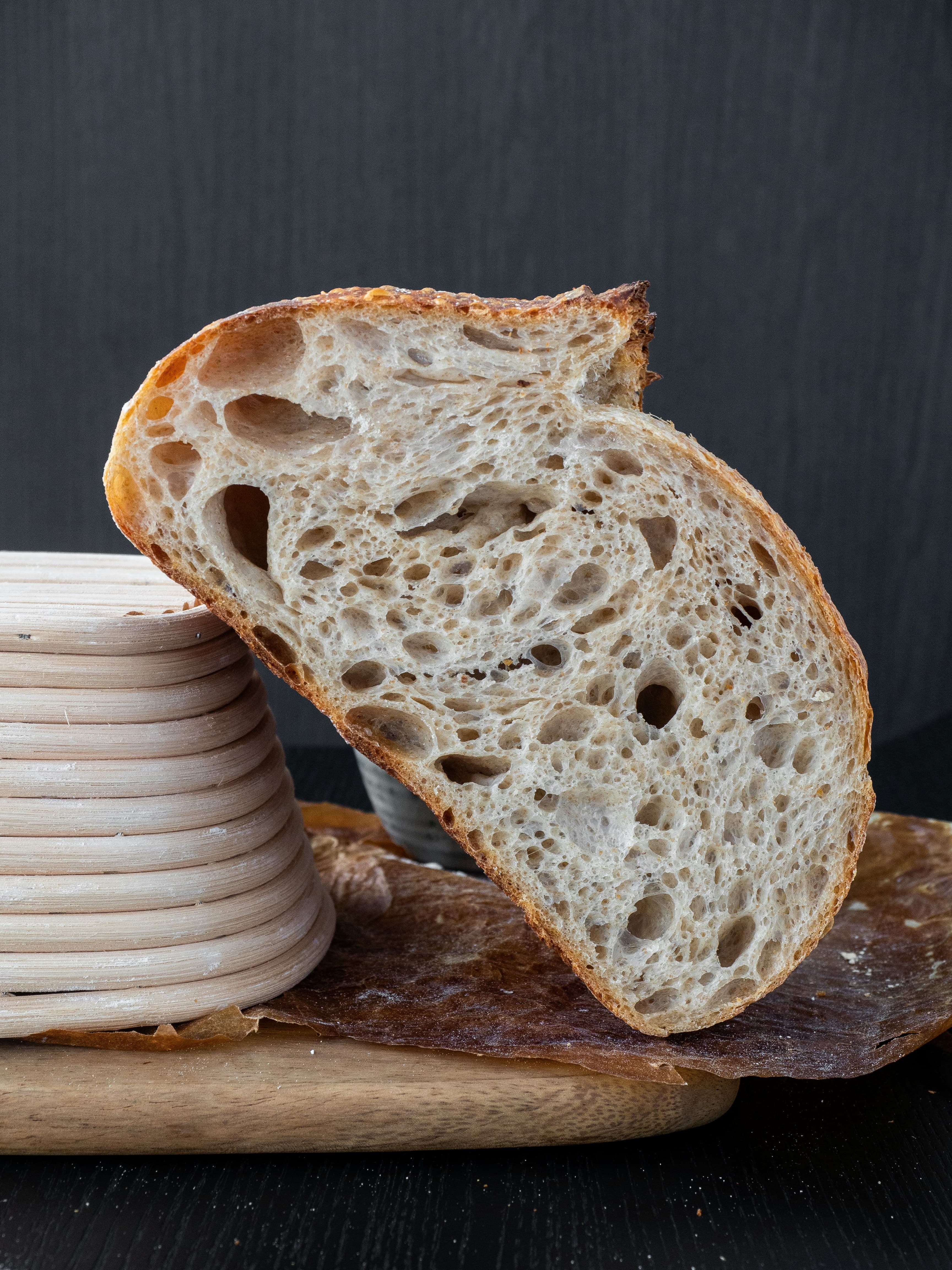
Discard won't rise bread on its own (it hasn't been freshly fed, so the yeast isn't at peak activity), but it's packed with flavor. If you don't have a starter yet, start with our sourdough starter guide. Ready to bake a full loaf? See our sourdough bread guide. That mild tang and complex depth from fermentation is exactly what makes sourdough bread taste like sourdough bread. You can add that flavor to almost anything that uses flour.
The recipes below are all designed around unfed discard — the stuff you'd normally toss. Cold from the fridge or room temperature, it all works. No excuses.
🫙 Storing discard
You don't have to use discard the same day. Collect it in a jar in the fridge and add to it over the course of a week. It'll get more sour as it sits, but that's fine — even preferable for crackers and pizza dough. Just give it a stir before using. It'll keep for up to two weeks refrigerated.
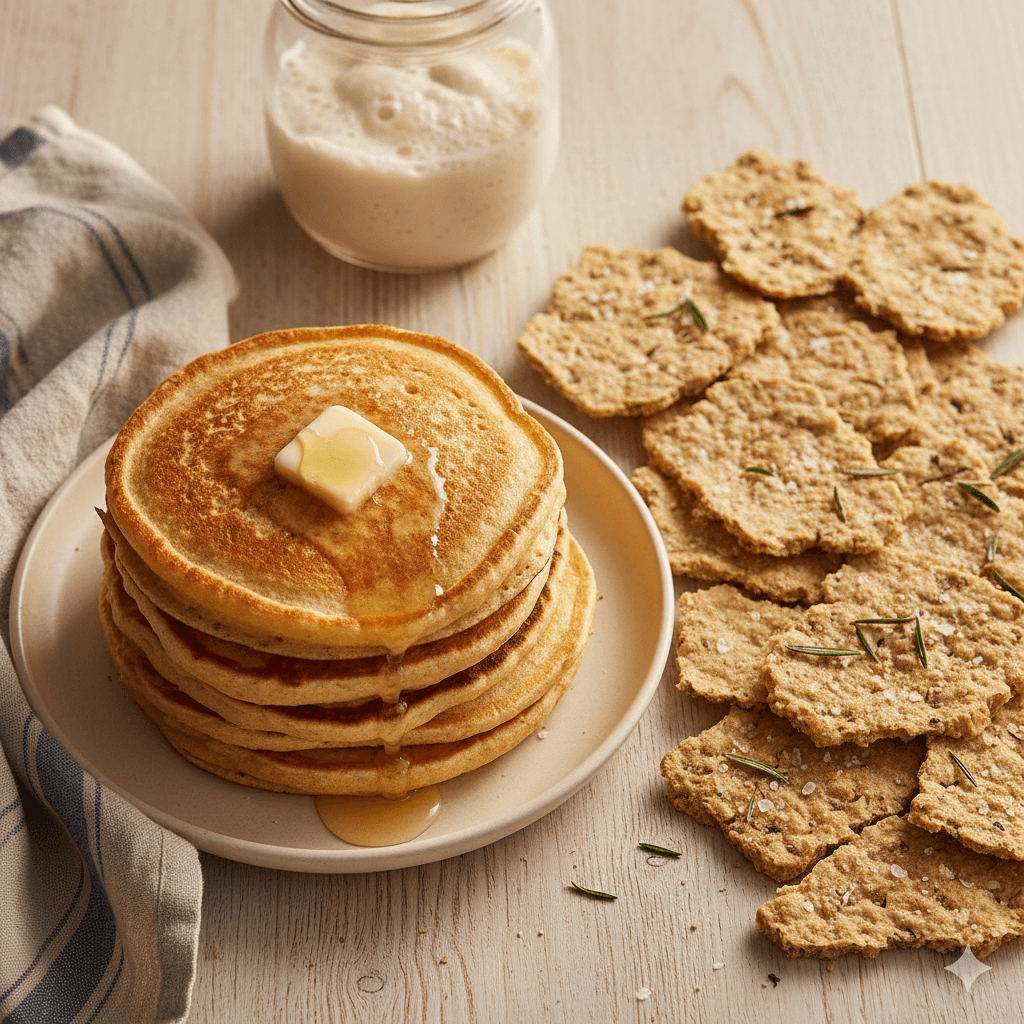
Sourdough Discard Pancakes & Waffles
This is the gateway discard recipe. Once you taste how fluffy and tangy these are, you'll never go back to a box mix. The discard adds a subtle sourness that pairs perfectly with butter and maple syrup.
- 1 cup (about 200g) sourdough discard
- 1 egg
- 2 tablespoons melted butter (or neutral oil)
- 2 tablespoons sugar
- 1/2 teaspoon salt
- 1/2 teaspoon baking soda
- 1/2 cup milk (any kind — add more if batter is too thick)
Instructions
Whisk together the discard, egg, melted butter, sugar, and milk until smooth. Sprinkle the salt and baking soda over the top and fold in gently — you'll see it start to bubble immediately. That's the baking soda reacting with the acid in the discard, and it's what makes these incredibly fluffy.
Cook on a preheated, lightly greased skillet or griddle over medium heat. Pour about 1/4 cup of batter per pancake. Flip when bubbles form on the surface and the edges look set (about 2–3 minutes). Cook another 1–2 minutes on the second side. For waffles, follow your waffle iron's instructions — the batter works the same way.
💡 The baking soda trick
Baking soda (not baking powder) is the star here. It neutralizes some of the sourness while creating extra lift. Don't add it until right before cooking — once it reacts, the bubbles start escaping. Work quickly after mixing.
Sourdough Discard Crackers
Thin, crispy, and genuinely addictive. These are the kind of crackers you bring to a party and people won't stop asking about. They taste like they came from an artisan bakery, and they take almost no effort.
- 1 cup (about 200g) sourdough discard
- 4 tablespoons (56g) melted butter (or olive oil for a more savory flavor)
- 1 teaspoon flaky salt (plus more for sprinkling)
- Optional toppings: everything bagel seasoning, dried rosemary, cracked pepper, sesame seeds, parmesan
Instructions
Preheat your oven to 350°F (175°C). Mix the discard, melted butter, and salt together until combined. Spread the mixture as thin as possible on a parchment-lined baking sheet — you want it almost see-through in places. Use an offset spatula or the back of a spoon.
Sprinkle with your chosen toppings and a little extra flaky salt. Bake for 15–25 minutes, rotating the pan halfway through. They're done when golden brown and crispy all the way through. The thin edges will cook faster — that's fine, they'll be extra crunchy. Let them cool completely on the pan, then break into irregular pieces.
💡 Getting them thin enough
The thinner you spread the batter, the crispier the crackers. If the dough is fighting you, let it rest for 5 minutes — the gluten will relax and it'll spread more easily. You can also place a sheet of parchment on top and roll it out with a rolling pin.
Sourdough Discard Pizza Dough
Discard adds a tangy complexity to pizza dough that you'd normally only get from a long cold ferment. This is a same-day dough that tastes like it took two days to make.
- 1 cup (about 200g) sourdough discard
- 2 1/2 cups (300g) bread flour or all-purpose flour
- 1 teaspoon instant yeast (yes, you still need yeast — discard alone won't rise it)
- 1 teaspoon salt
- 1 teaspoon sugar
- 2 tablespoons olive oil
- 1/2 cup warm water (adjust as needed)
Instructions
Combine the discard, flour, yeast, salt, sugar, olive oil, and warm water in a large bowl. Stir until a shaggy dough forms, then knead for 5–7 minutes until smooth and elastic. If it's too sticky, add flour a tablespoon at a time. If it's too dry, add water a teaspoon at a time.
Cover and let rise at room temperature for 1–2 hours, or until doubled. Divide in half (this makes two 12-inch pizzas). Stretch or roll each half into your desired shape on a floured surface. Top and bake at the highest temperature your oven can handle — 475°F to 500°F (245°C to 260°C) — for 10–14 minutes, until the crust is golden and the cheese is bubbly.
Sourdough Discard Banana Bread
Banana bread is already one of the best things you can bake, and sourdough discard makes it even better. The tang balances the sweetness of the bananas perfectly, and the extra moisture keeps it incredibly tender for days.
- 3 ripe bananas (the browner, the better)
- 1/2 cup (about 100g) sourdough discard
- 1/3 cup (75g) melted butter
- 3/4 cup (150g) sugar (brown sugar adds more depth)
- 1 egg
- 1 teaspoon vanilla extract
- 1 1/2 cups (190g) all-purpose flour
- 1 teaspoon baking soda
- 1/2 teaspoon salt
- Optional: 1/2 cup walnuts or chocolate chips
Instructions
Preheat your oven to 350°F (175°C) and grease a 9x5-inch loaf pan. Mash the bananas in a large bowl until mostly smooth (a few lumps are good). Stir in the melted butter, then add the sugar, egg, vanilla, and sourdough discard. Mix until combined.
In a separate bowl, whisk together the flour, baking soda, and salt. Fold the dry ingredients into the wet ingredients until just combined — don't overmix or the bread will be tough. Fold in walnuts or chocolate chips if using. Pour into the prepared pan and bake for 55–65 minutes, until a toothpick inserted in the center comes out clean. Let it cool in the pan for 10 minutes, then turn out onto a wire rack.
Sourdough Discard Flatbread & Naan
This might be the fastest and most satisfying way to use discard. No rise time, no yeast, no oven — just a hot skillet and ten minutes. The result is a soft, chewy flatbread with those characteristic blistered spots.
- 1 cup (about 200g) sourdough discard
- 1 cup (125g) all-purpose flour (plus more for rolling)
- 1/2 teaspoon baking powder
- 1/2 teaspoon salt
- 2 tablespoons plain yogurt (or milk)
- 1 tablespoon olive oil (plus more for cooking)
- Optional: garlic butter and fresh herbs for brushing
Instructions
Combine the discard, flour, baking powder, salt, yogurt, and olive oil in a bowl. Stir until a dough forms, then knead briefly on a floured surface for about a minute — just until it comes together and feels smooth. It shouldn't be sticky. If it is, add a bit more flour.
Divide the dough into 4 equal pieces. Roll each one out into a thin oval or circle, about 1/8 inch thick. Heat a cast iron skillet or heavy pan over medium-high heat with a thin slick of oil. Cook each flatbread for 2–3 minutes per side, until puffed and blistered with golden-brown spots.
Brush with garlic butter immediately after cooking if you want to go the naan route. These are best eaten warm, but they'll keep in a sealed bag at room temperature for a day or two — just reheat in a dry pan.
🔥 Skillet temperature matters
The pan needs to be properly hot before the dough hits it. You want those blisters and char spots — they're where the flavor is. If your flatbread is cooking through without blistering, your pan isn't hot enough. Let it preheat for a solid 3–4 minutes.
The Golden Rule of Discard
Here's the thing: sourdough discard works in basically anything that calls for flour. Muffins, biscuits, cake, pasta dough, crepes, cornbread — you name it. The general rule is to add 1/2 to 1 cup of discard and reduce the flour and liquid in your recipe by roughly equal amounts. Since discard is about a 1:1 ratio of flour to water by weight, just subtract accordingly.
Don't overthink it. Discard is forgiving. It's already fermented dough sitting in your fridge waiting to be useful. Treat it like a flavor ingredient, not a science experiment. The worst that happens is things taste slightly more tangy than usual — and honestly, that's usually a feature, not a bug.
❄️ Cold vs. room temperature discard
Cold discard straight from the fridge is thicker and more sour. Room temperature discard is looser and milder. Both work in every recipe here. For pancakes and banana bread, cold is fine — the cooking process evens everything out. For flatbread and pizza dough, room temperature is slightly easier to work with since the dough will be more pliable, but cold works too. Just let it sit out for 15–20 minutes if you want to take the chill off.