Kimchi does not have a strict expiration date. It is a fermented food — and fermentation is preservation. The lactic acid that develops during fermentation keeps kimchi safe by lowering the pH to a point where harmful bacteria cannot survive. What kimchi does have is a flavor arc: fresh and spicy early on, then increasingly sour and complex as it ages.
How long kimchi tastes good to you depends on personal preference. How long it's safe to eat is almost always longer than people assume.
Kimchi Shelf Life by Storage Method
In the Refrigerator
3–6 months is a reasonable guideline for kimchi that tastes like most people expect — spicy, tangy, and bright. After that, it becomes progressively more sour. Well-aged kimchi (several months old) is a different eating experience: more funky, more acidic, less vegetal. Many people prefer it.
In Korean culinary tradition, mukeunji — aged kimchi, often 1–3 years old — is prized for cooking. It's too sour to eat raw as a banchan but excellent in kimchi jjigae (stew), kimchi fried rice, and braised pork dishes. If your kimchi has gone past the point where you want to eat it fresh, cook with it.
At Room Temperature (Short-Term Fermentation)
Fresh kimchi ferments at room temperature for 1–5 days to develop initial sourness before moving to the fridge. The exact time depends on temperature: a warm kitchen (75–80°F) produces sour kimchi in 1–2 days; a cooler kitchen (65–70°F) may take 3–5 days.
Leaving kimchi at room temperature indefinitely will over-ferment it quickly. Move it to the fridge once it reaches the sourness level you want, or within 5 days at most.
Traditional Onggi / Outdoor Storage
Traditional Korean kimchi storage used onggi — porous earthenware pots — buried in the ground to maintain a cool, stable temperature over winter. This method allowed kimchi to ferment slowly over months without over-souring. The buried pots stayed at roughly 35–40°F, similar to a modern refrigerator.
Modern Korean households typically use dedicated kimchi refrigerators that maintain a slightly lower temperature than standard fridges to slow fermentation while allowing slow aging. For home fermenters without a dedicated kimchi fridge, a standard refrigerator works fine.
Frozen Kimchi
You can freeze kimchi, though the texture changes on thawing — the cabbage becomes softer and less crunchy. Frozen kimchi is best used for cooked applications: stews, fried rice, pancakes (kimchijeon). It keeps indefinitely in the freezer and retains its flavor well.
How Kimchi Changes Over Time
Week 1–2: Fresh Kimchi
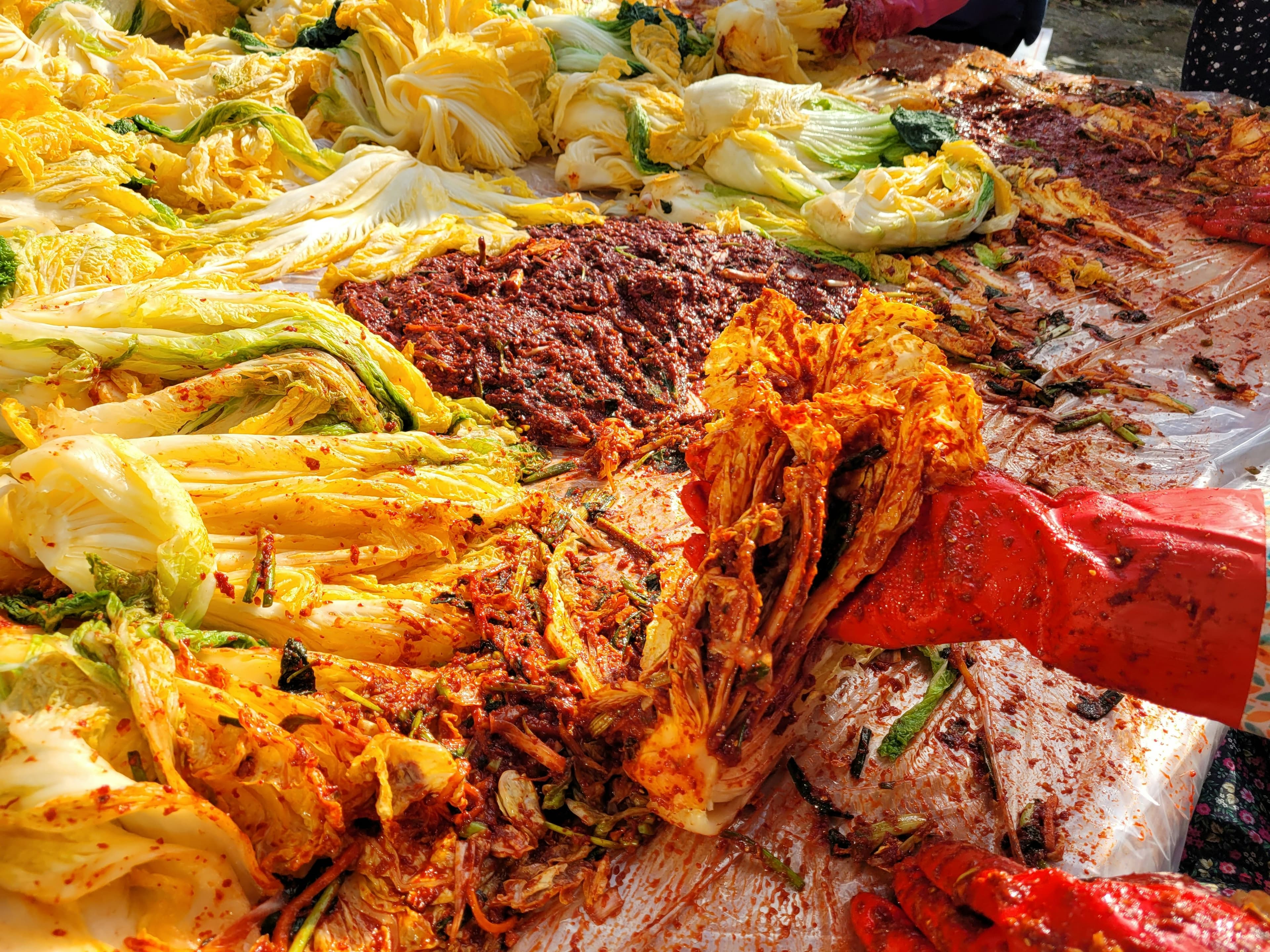
Just-made kimchi smells primarily of garlic, ginger, and gochugaru with very little sourness. The flavor is bold and spicy. This is how most people eat it immediately after making it. See our kimchi guide if you're making your first batch.
Weeks 2–8: Peak Ripeness
The lactic acid fermentation develops and the kimchi becomes pleasantly sour. The flavors integrate — the garlic mellows, the gochugaru blooms, and the sourness balances the spice. This is when most people find kimchi at its best for eating raw.
Months 2–6: Well-Fermented
The sourness dominates more. The kimchi is tangier and more funky. Still excellent raw for those who like sour fermented foods; also excellent in cooking. The napa cabbage may soften slightly.
6+ Months: Aged Kimchi (Mukeunji)
Very sour, with a deep complexity. The gochugaru flavor mellows and integrates fully. Best used for cooking at this stage — it transforms kimchi jjigae and fried rice in a way fresh kimchi cannot. Some fermenters specifically age batches for cooking use.
How to Store Kimchi to Maximize Shelf Life
- Keep it airtight. An airtight lid prevents excess oxygen exposure and slows surface mold formation. Wide-mouth mason jars with tight lids work well. Plastic wrap pressed directly onto the surface is an old trick to minimize air contact.
- Keep the vegetables submerged. Use a clean spoon or fermentation weight to push the cabbage below the brine line after each use. Exposed cabbage can develop kahm yeast or mold faster than submerged cabbage.
- Use a clean utensil every time. Introducing contaminants from a dirty spoon is the most common way people accelerate kimchi spoilage. Never double-dip from another food.
- Store in glass, not metal. The acidity in kimchi reacts with metal containers over time, giving off-flavors and degrading the container. Glass mason jars or food-grade plastic containers are fine.
- Store in the back of the fridge. The back of the refrigerator stays coldest and most stable. The door has the most temperature fluctuation and is the worst spot for long-term kimchi storage.
How to Tell if Kimchi Has Gone Bad
Kimchi rarely goes bad if stored properly. When it does, the signs are clear:
- Fuzzy mold: Green, black, or fuzzy white growth on the surface is real mold — not kahm yeast, which is a flat white film. Mold looks fuzzy and three-dimensional. If you see actual fuzzy mold, discard the batch.
- Off smell beyond sour: Kimchi smells sour, garlicky, fishy (from the fish sauce), and fermented. If it smells rotten, putrid, or like something clearly wrong — not just “sour and funky” but genuinely unpleasant in a different way — trust your nose.
- Pink or unusual liquid color: Normal kimchi brine is red-orange from the gochugaru. Pink or unexpectedly discolored liquid can occasionally indicate contamination, though this is rare.
Very sour smell alone is not a sign that kimchi has gone bad. It's a sign that fermentation has progressed. The rule of thumb: if it smells like kimchi (however sour), it's almost certainly still kimchi.
What to Do with Over-Fermented Kimchi
If your kimchi has become too sour to enjoy raw, don't throw it out. Over-fermented kimchi is one of the best cooking ingredients in Korean cuisine:
- Kimchi jjigae — kimchi stew with tofu and pork. Sour kimchi makes the broth more complex and rounded.
- Kimchi fried rice — the acidity of old kimchi cuts through the fat of the rice and any eggs or meat.
- Kimchi pancakes (kimchijeon) — tangy, savory, crispy. Old kimchi works better than fresh here.
- Braised pork belly — kimchi and pork are natural partners; the acid tenderizes and flavors the meat.
For more on the full range of fermentation storage questions, see our guide to storing fermented foods. And if you want to understand the fermentation process that makes kimchi shelf-stable in the first place, see our primer on lacto-fermentation.
Kimchi vs. Sauerkraut: Which Lasts Longer?
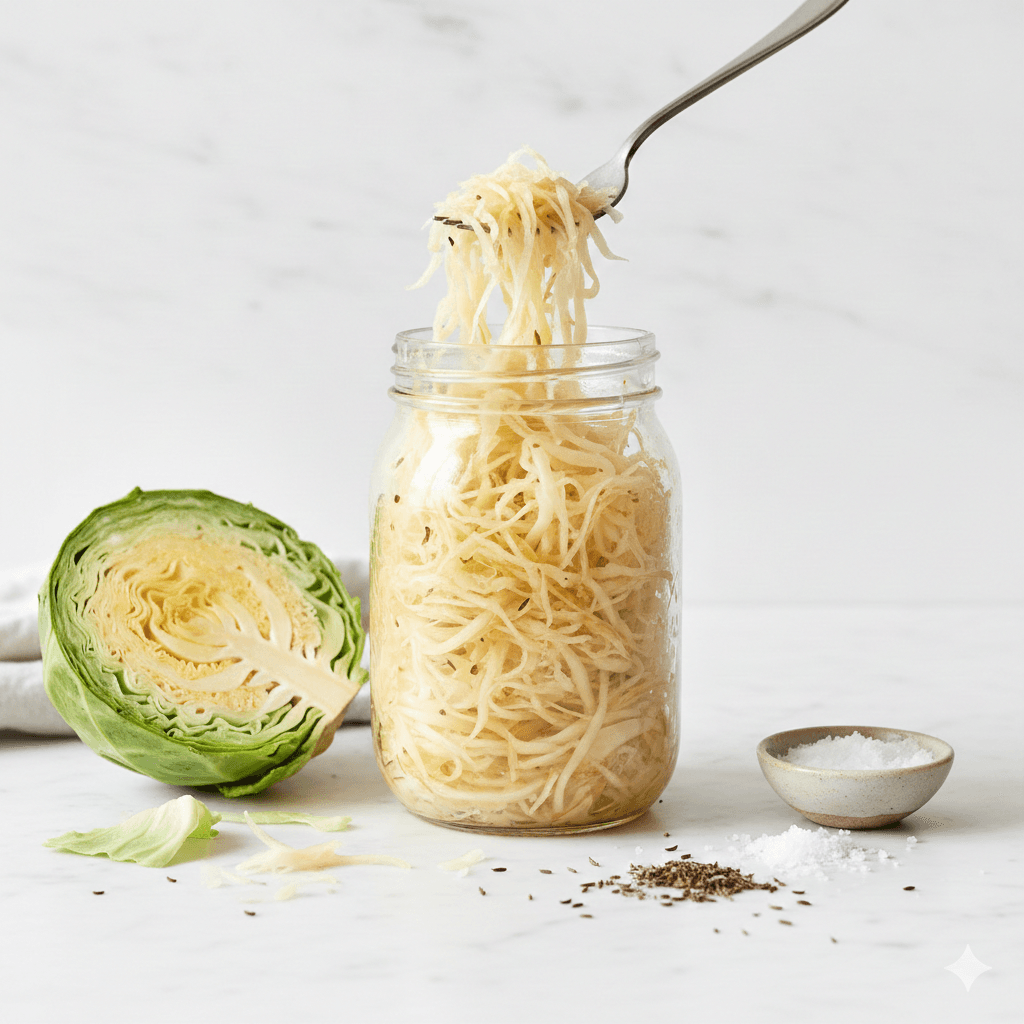
Both last a similar amount of time — months in the fridge with no problems. Sauerkraut tends to stay at peak flavor a little longer because its simpler ingredient profile (just cabbage and salt) has less material that changes with aging. Kimchi's garlic and fish sauce develop more aggressively over time, making the transition from “excellent” to “best used for cooking” faster.
For a fuller comparison of the two ferments, see our kimchi vs. sauerkraut comparison.