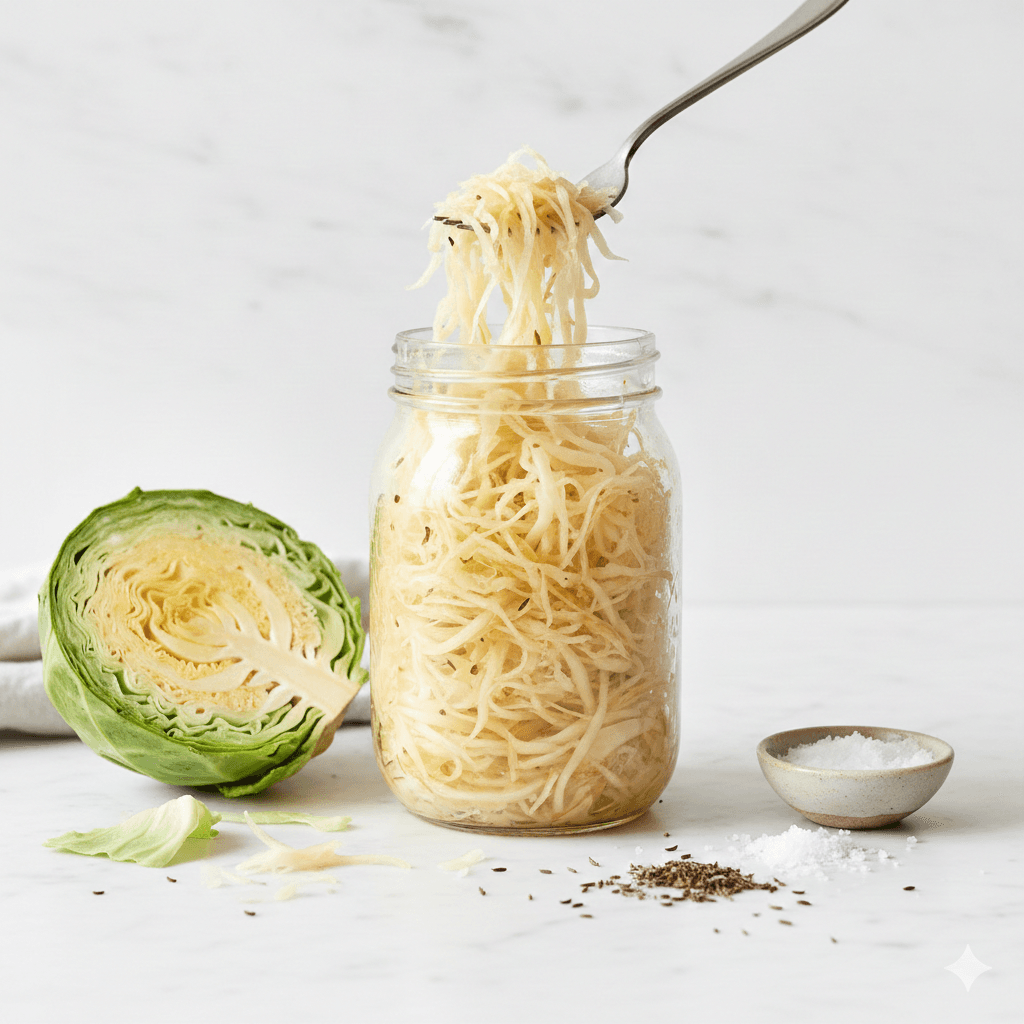
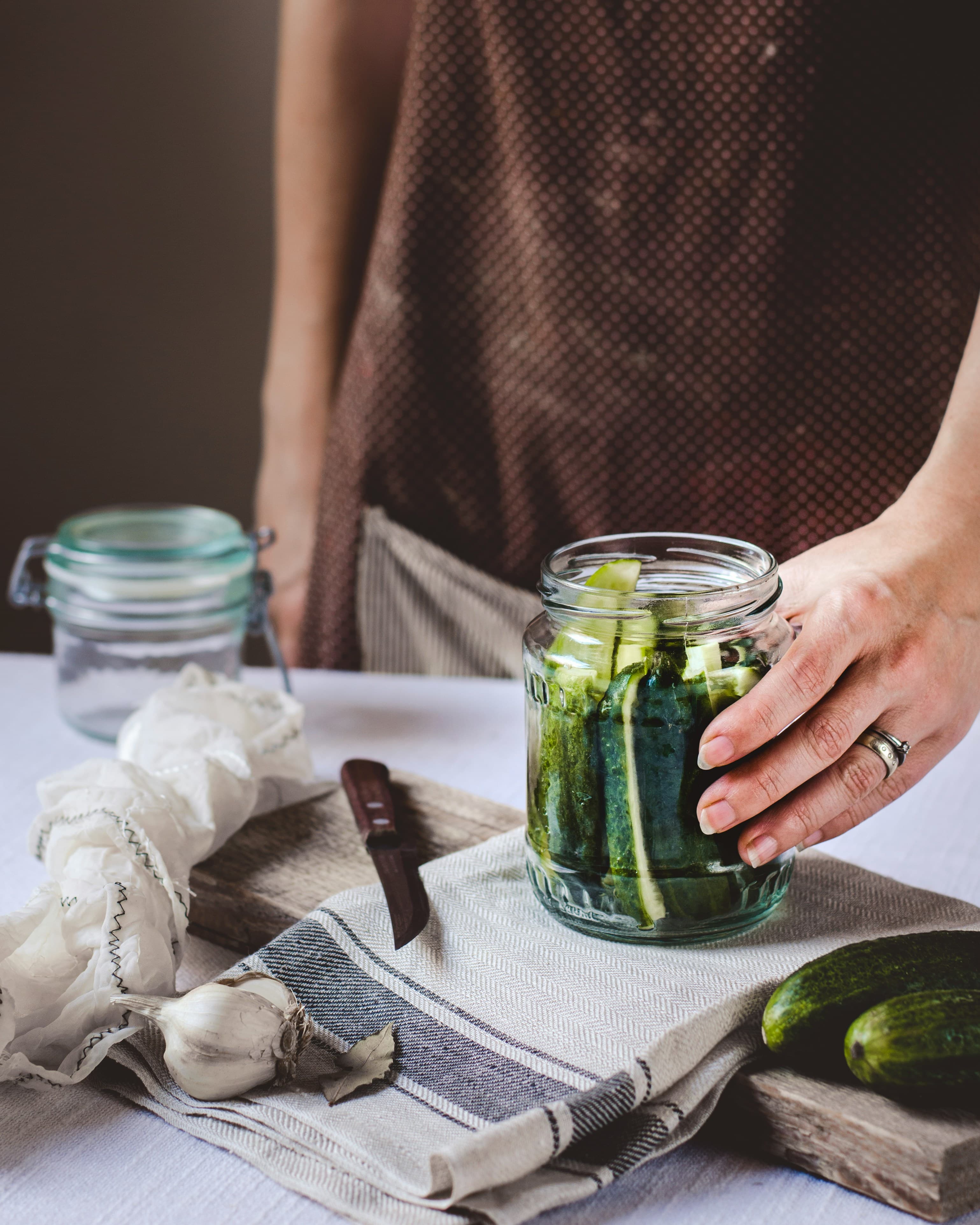
If you've ever eaten sauerkraut, kimchi, dill pickles, or miso, you've eaten lacto-fermented food. It's one of the oldest food preservation methods on earth — practiced across essentially every culture long before refrigeration existed. And despite the scientific- sounding name, it requires almost no equipment and nothing more than vegetables, salt, and time.
What Is Lacto-Fermentation?
Lacto-fermentation is a process in which naturally occurring bacteria — primarily species from the Lactobacillus genus — convert sugars in food into lactic acid. That lactic acid is what makes fermented foods taste sour. More importantly, it lowers the pH of the food, creating an acidic environment where harmful bacteria cannot survive.
The bacteria responsible are already present on the surface of fresh vegetables. You don't add them from a packet or a starter culture — they're just there, waiting for the right conditions to thrive. Salt creates those conditions.
Don't let the word "lacto" confuse you. It comes from Lactobacillus, not lactose or dairy. Lacto-fermented vegetables are entirely dairy-free. The same family of bacteria ferments both yogurt and sauerkraut — they just work with different raw materials.
How It Works (The Simple Version)
When you salt vegetables and pack them tightly, a few things happen:
- Salt draws out moisture. The salt pulls water out of the vegetables through osmosis, creating a natural brine. This brine is the medium in which fermentation happens.
- Salt suppresses harmful bacteria. Most spoilage bacteria and pathogens are killed or inhibited by salt. Lactic acid bacteria are more salt-tolerant, so they survive and eventually dominate.
- LAB go to work. With competition suppressed, the lactic acid bacteria begin converting the natural sugars in vegetables into lactic acid. This happens in an anaerobic (oxygen-free) environment — which is why keeping vegetables submerged under brine is so important.
- Acid builds up and preserves everything. As lactic acid accumulates, the pH drops. Below a certain pH, nothing harmful can grow. The ferment becomes self-preserving.
That's the whole mechanism. Salt, vegetables, oxygen exclusion, time. Everything else — technique, ratios, timing — is just dialing in the specifics for different ferments.
What You Can Lacto-Ferment
Almost any vegetable can be lacto-fermented. The most popular examples:
- Cabbage — the basis for sauerkraut and kimchi. High in sugars, easy to ferment, widely available.
- Cucumbers — traditional dill pickles are lacto- fermented, not vinegar-pickled. The result is a crisp, complex pickle with live cultures.
- Carrots, beets, radishes, turnips — virtually any root vegetable ferments well in a 2% salt brine.
- Hot peppers — the basis for fermented hot sauce. Fermentation deepens flavor and adds complexity beyond simple heat.
- Garlic — fermented in honey or brine, garlic becomes milder, sweeter, and deeply savory.
Grains and legumes (miso, tempeh, sourdough) also use related processes, though those are more involved.
Brine Ratios: The One Number to Know
The most important variable in lacto-fermentation is salt concentration. The standard for most vegetables is 2% salt by weight. That means:
- 2g of salt per 100g of vegetables (for dry-salting like sauerkraut)
- 20g of salt per 1 liter of water (for brine-submerged ferments like pickles)
Too little salt and the ferment may go wrong — spoilage bacteria get a foothold before the lactic acid can build up. Too much salt slows fermentation dramatically and can make the finished product unpleasantly salty.
Always use non-iodized salt. Iodine is added to table salt to prevent deficiency, but it also inhibits lactic acid bacteria — the exact organisms you're trying to cultivate. Kosher salt, sea salt, and pickling salt are all good choices. For a deeper look, see our guide to salt for fermentation.
Lacto-Fermentation vs. Vinegar Pickling
Most commercial pickles you find at the grocery store are not lacto-fermented — they're preserved with added vinegar. The distinction matters:
- Lacto-fermented: Acid created by bacteria. Live cultures present. Complex, nuanced sourness. Requires time.
- Vinegar pickled: Acid added externally. No live cultures. Sharp, straightforward sourness. Quick to make.
Neither is better — they produce genuinely different products. If you've ever wondered why homemade fermented pickles taste so different from store-bought dill pickles, this is why. For a deeper comparison, see our post on lacto-fermented vs. vinegar pickles.
Is Lacto-Fermentation Safe?
Yes — consistently and reliably so. Lacto-fermentation is one of the safest food preservation methods ever developed. The key reasons:
- The salt suppresses pathogens during the early, vulnerable stage of fermentation.
- As lactic acid builds, the pH drops below 4.6 — the threshold at which dangerous organisms like Clostridium botulinum cannot grow.
- Keeping vegetables submerged prevents oxygen exposure, which would allow mold and aerobic spoilage bacteria to grow.
The two main risks are using the wrong salt ratio (too low) and leaving vegetables exposed above the brine. Address both of these and lacto-fermentation is extremely forgiving.
How to Get Started
The simplest lacto-fermented food to make is sauerkraut — just cabbage and salt. You'll learn everything fundamental about the process in one batch. Our homemade sauerkraut guide walks you through it step by step. Once you've done that, you can ferment essentially any vegetable using the same principle.
For a broader introduction to fermentation — including equipment, what to expect, and how to troubleshoot — see our fermentation for beginners guide.
Two rules that cover almost everything.
Use 2% salt by weight. Keep everything submerged under brine. Those two rules address the vast majority of lacto-fermentation problems before they start. Everything else is fine-tuning.