Most pickles at the grocery store are made with vinegar. The process is fast, reliable, and produces a shelf-stable product — but it has nothing to do with fermentation. Lacto-fermented pickles take longer and require different handling, but the result is a fundamentally different food: one that's alive with beneficial bacteria, has a more complex flavor profile, and was, until the industrial era, simply how pickles were made.
Understanding the difference helps you make better choices at the store, make better pickles at home, and understand where these two approaches actually overlap — and where they diverge sharply.
How They're Made Differently
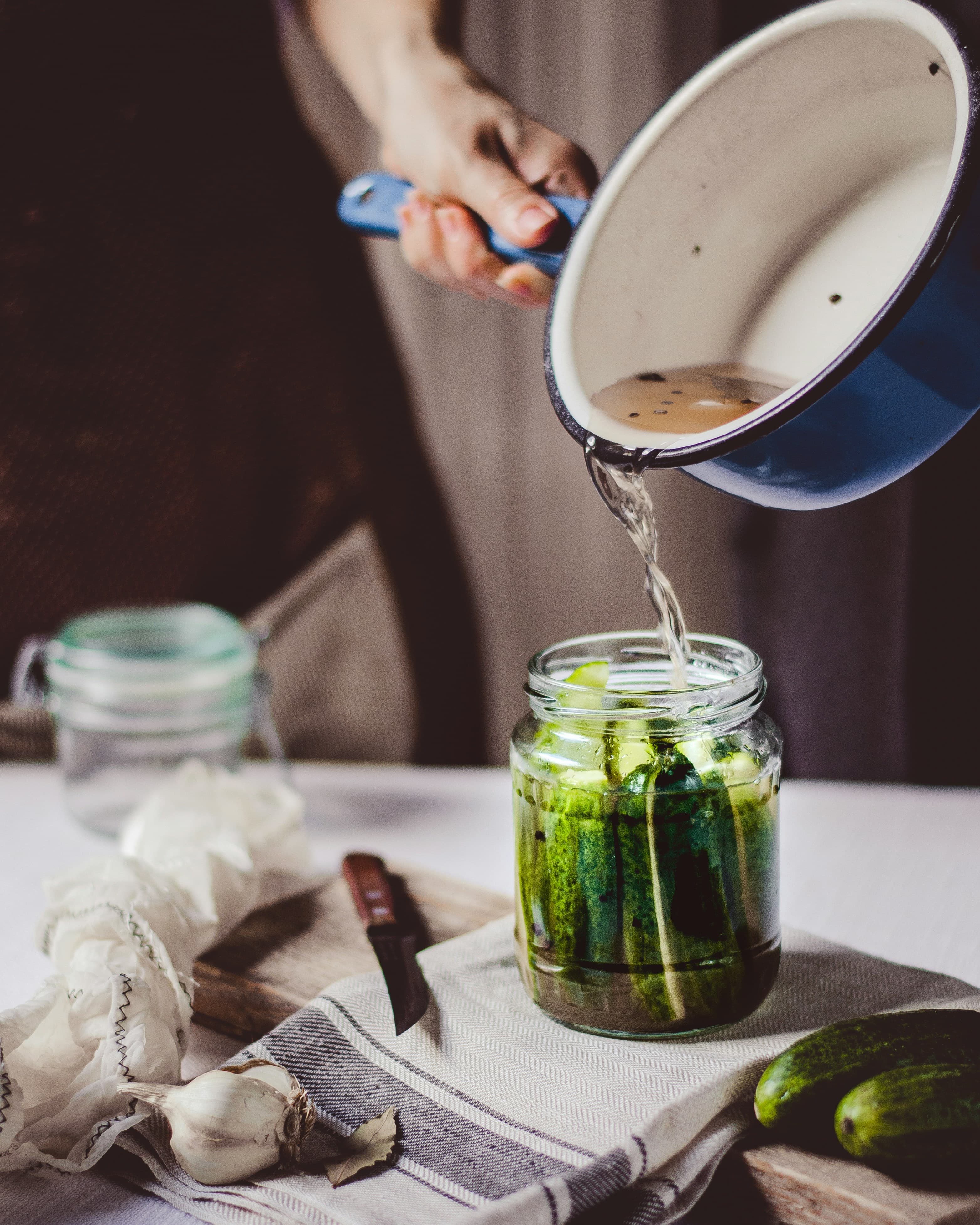
Vinegar pickles work through acidification. You prepare a brine of water, vinegar, and salt (sometimes with added sugar), bring it to a boil, and pour it over cucumbers packed in jars. The acetic acid in the vinegar lowers the pH immediately, preserving the cucumbers and preventing spoilage. The process can be done in a single afternoon. For shelf-stable storage at room temperature, the jars are then water-bath canned to create a vacuum seal. Quick refrigerator pickles skip the canning step and keep for a few weeks in the fridge.
Lacto-fermented pickles work through microbial activity. You submerge cucumbers in a plain salt brine — typically 2–3% salt concentration — and let naturally occurring bacteria do the work. The dominant species is Lactobacillus, a lactic acid-producing bacterium naturally present on the skin of fresh vegetables. Over three to seven days (or longer, depending on temperature and taste preference), these bacteria ferment the cucumbers, produce lactic acid, lower the pH organically, and create a complex, sour, garlicky pickle that's alive with live cultures.
No vinegar is added. No heat. Just salt, water, cucumbers, and time.
The Flavor Difference
This is where the divergence is most immediately noticeable. Put a vinegar pickle and a fermented pickle in front of someone who has never thought about the distinction, and they will immediately notice they taste different.
Vinegar pickles are sharp, bright, and assertive. The acetic acid from vinegar registers on the palate as a clean, clean hit of sourness. Depending on the spice blend and sugar content, they can be sweet-sour (bread and butter style), dill-forward and tangy, or tart and vinegary. The flavor is consistent jar to jar because it's determined by the recipe, not by a living culture.
Lacto-fermented pickles have a rounder, more complex sourness. The lactic acid produced by bacteria registers differently than acetic acid — it's milder and more integrated. The flavor continues to develop over time, becoming more pronounced the longer the ferment goes. There are also secondary flavors produced during fermentation that don't exist in vinegar pickles: a subtle funkiness, a depth that builds as you eat them, and a finish that lingers. Classic New York deli-style half-sours and full-sours are lacto-fermented. So are traditional Polish ogorki kiszone and Korean oi sobagi.
Probiotics: What the Research Actually Says
Lacto-fermented pickles contain live lactic acid bacteria as a byproduct of the fermentation process. These are the same class of bacteria found in yogurt, kefir, and sauerkraut, and they're often discussed in the context of gut health. The evidence for direct probiotic benefits from fermented foods is real but often overstated in popular media — the strains in fermented vegetables may or may not survive digestion and colonize the gut in meaningful numbers, and research is ongoing.
What is clear: lacto-fermented pickles contain live cultures, and vinegar pickles (especially heat-processed ones) do not. If you're eating pickles partly for the live bacteria, you need to specifically buy or make fermented pickles — and they need to be raw, unheated, and refrigerated, not shelf-stable canned products.
Most grocery store pickles, even ones marketed as "fermented" or "naturally fermented," have been pasteurized or heat-processed and contain no live cultures. The few brands that sell genuinely raw fermented pickles (like Bubbies) keep them in the refrigerated section, never shelf-stable.
Shelf Life Comparison
Shelf-stable vinegar pickles are designed for pantry storage. Properly canned with a good seal, they keep for one to two years at room temperature. This is the main practical advantage of vinegar pickling for large batches or gift-giving.
Quick refrigerator pickles (vinegar, no canning) keep for two to four weeks in the fridge.
Lacto-fermented pickles are stored in the refrigerator once fermentation is complete. Cold slows but doesn't fully stop the active culture, so the flavor continues to develop slowly over time. They keep for several months — some fermenters report good results at six months or longer — but flavor and texture change as they age. Generally, eat them within three months for the best balance of crunch and flavor.
How to Make Lacto-Fermented Pickles
This is a beginner-friendly ferment that requires no special equipment.
Ingredients (one quart jar):
- About 1 lb small cucumbers — Kirby or pickling cucumbers work best. Regular slicing cucumbers become soft and mushy.
- 2–3 garlic cloves, smashed
- 1 teaspoon whole black peppercorns
- 1–2 fresh or dried dill heads (or 1 tablespoon of dill seed)
- Optional: a slice of fresh horseradish root or a grape leaf (helps maintain crunch)
- Brine: 1 tablespoon of non-iodized salt per 2 cups of filtered water (approximately a 2.5% brine)
Instructions:
- Slice off the blossom end of each cucumber (the end opposite the stem). This removes enzymes that can cause the pickles to become soft.
- Add garlic, peppercorns, and dill to the bottom of a clean quart jar.
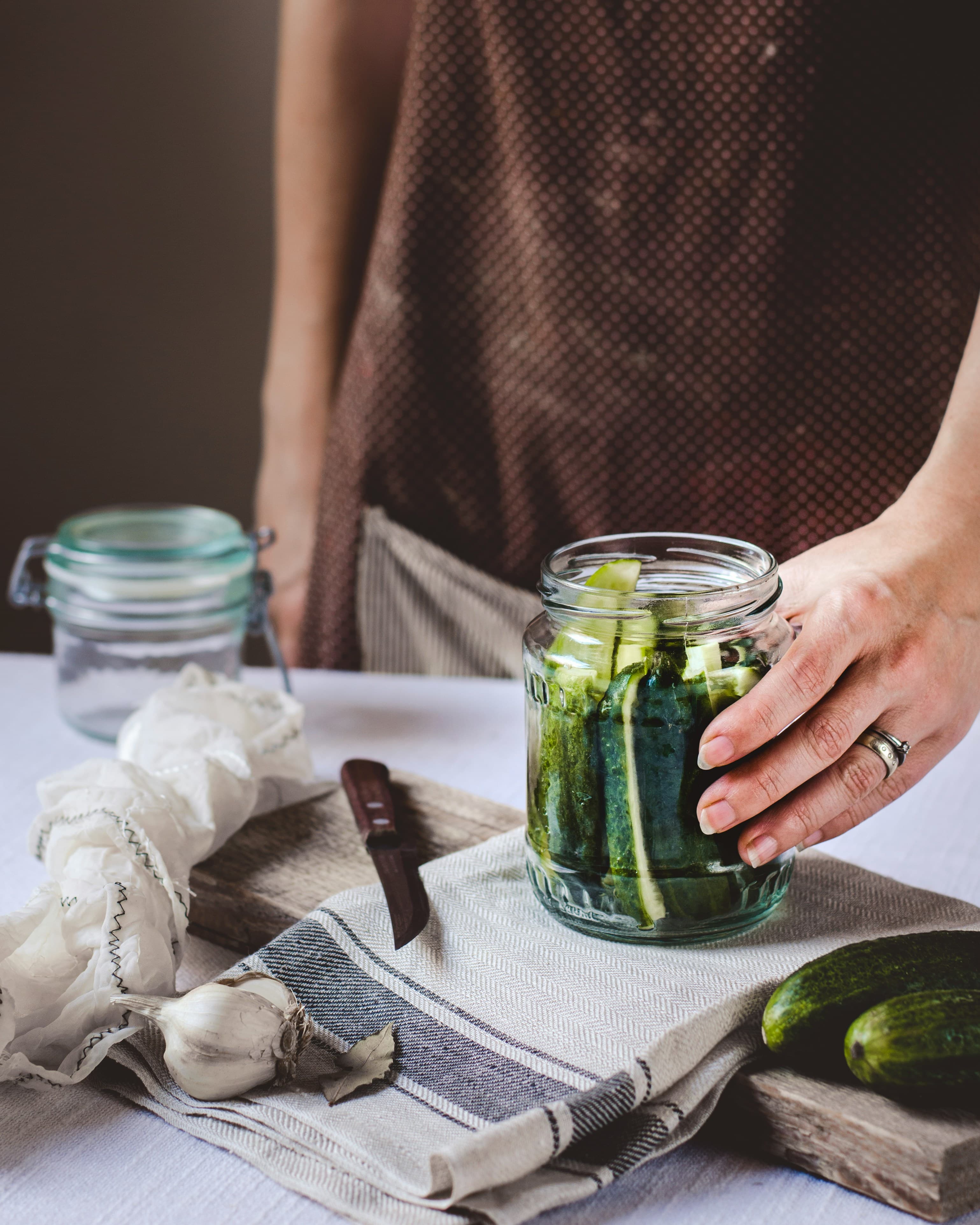
- Pack in the cucumbers vertically. They should fit snugly so they don't float during fermentation.
- Dissolve the salt in the water to make your brine, then pour it over the cucumbers until fully submerged, leaving an inch of headspace.
- Weight the cucumbers below the brine. A small zip-lock bag filled with brine works well. You can also use a fermentation weight — a glass disk designed to keep vegetables submerged.
- Cover loosely (cloth, or a lid set loosely) and ferment at room temperature for three to seven days, tasting daily from day three.
- When they taste right to you — sour, garlicky, with the cucumber flavor still intact — move to the fridge. They'll continue to slowly ferment in cold storage; taste improves over the first few weeks.
The crunch problem — and how to solve it.
Soft, mushy fermented pickles are a common beginner disappointment. There are three main culprits: wrong cucumber variety (avoid slicing cucumbers), forgetting to remove the blossom end, and fermenting too long at warm temperatures. Using a grape leaf, oak leaf, or horseradish leaf in the jar also helps — they contain tannins that keep cell walls firm. See our guide on fermentation weights and tools for equipment that makes keeping cucumbers submerged easier.
When to Choose Each Method
Choose vinegar pickling when:
- You want shelf-stable pickles for pantry storage or gifting
- You're making large batches from a summer harvest
- You want consistent, predictable results quickly
- You prefer a sharper, brighter sourness
Choose lacto-fermentation when:
- You want live-culture pickles with complex flavor
- You prefer the deli-style, salt-brined flavor profile
- You want to understand traditional fermentation
- You're making smaller batches to keep in the fridge
Many people end up doing both — vinegar pickles for large summer batches and lacto-fermented pickles as a year-round refrigerator staple. They solve different problems and taste different enough that there's no reason to choose one permanently.
The Salt Matters
Iodized table salt can kill or significantly slow the lactic acid bacteria you're trying to cultivate in lacto-fermented pickles. Use kosher salt, sea salt, or pickling salt. This is one of the most common reasons fermented pickle batches fail or taste flat. For a full breakdown of which salts work and why, see our post on salt for fermentation.
Reading Grocery Store Labels
If you want to buy fermented pickles rather than make them, here's what to look for:
- Location: Raw fermented pickles are always refrigerated, never shelf-stable.
- Ingredients: Look for ingredients like "cucumbers, water, salt, dill, garlic" — no vinegar and no preservatives. The presence of vinegar means it's a vinegar pickle.
- "Naturally fermented" or "raw" on the label is a good sign, but verify with the ingredients list.
- Brands: Bubbies is the most widely distributed brand of genuinely raw fermented pickles in the US. There are also several regional and artisan producers — check your local farmers market or natural food store.
Ready to start fermenting more vegetables? Our guide on lacto-fermentation basics covers the same principles that apply across everything from sauerkraut to kimchi to fermented salsa. And if you're setting up your first fermentation station, check out our overview of the best jars for fermentation.