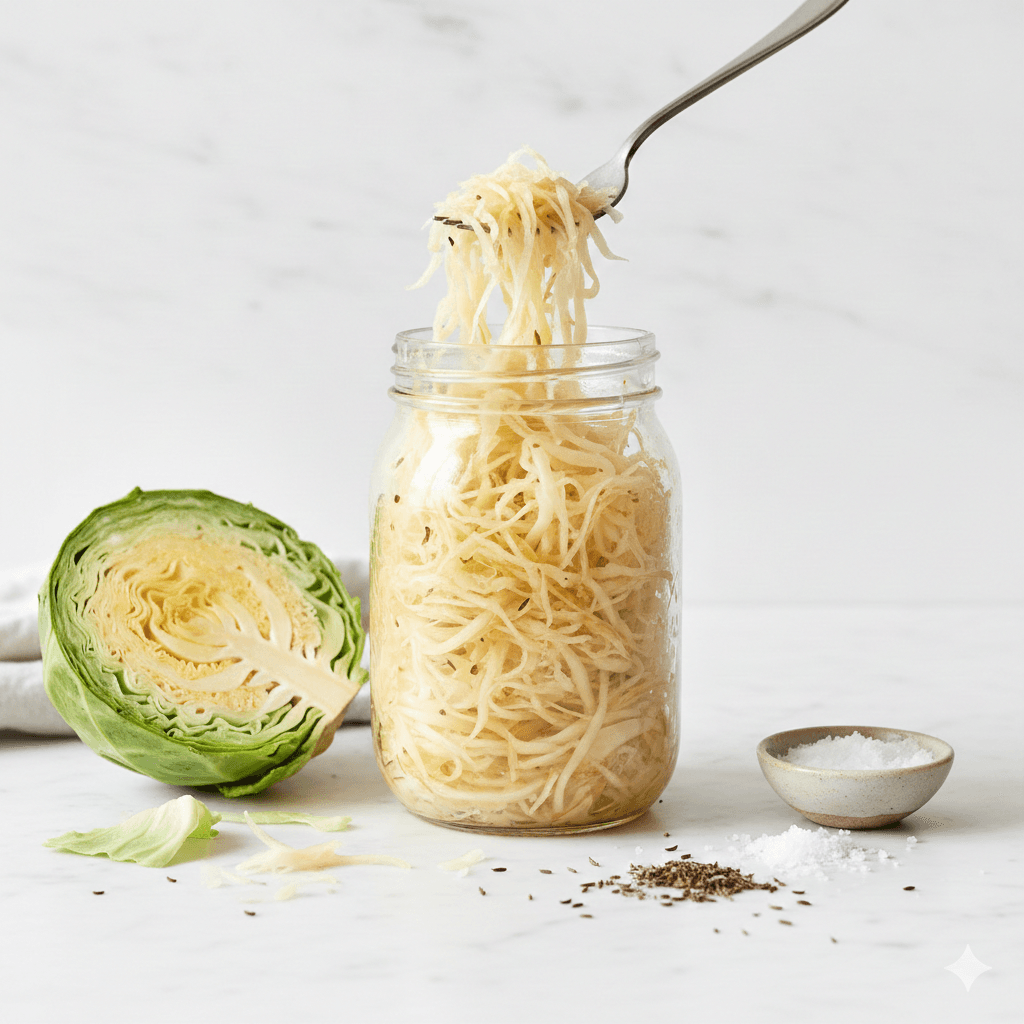
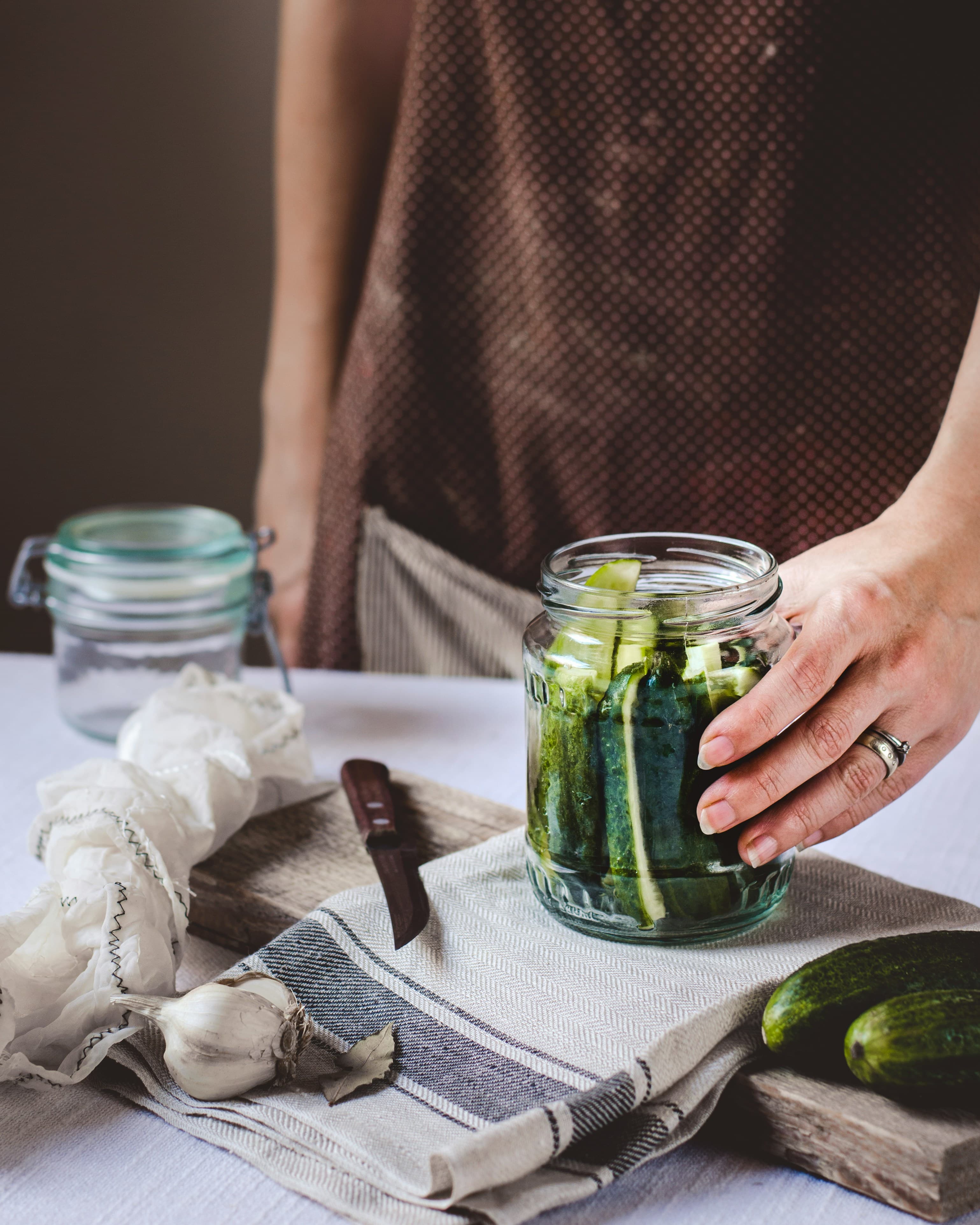
The fermentation equipment world is full of gadgets: airlocks, crocks, specialty lids, swing-top bottles, purpose-built fermentation kits at $40+ a jar. Most of it is unnecessary if you're just starting out.
The truth is, humans have fermented food successfully for thousands of years in earthenware crocks with cloth covers. The basics work. Here 's what you actually need.
For Most Vegetable Ferments: Wide-Mouth Mason Jars
A standard wide-mouth mason jar is the best fermentation vessel for beginners. Here's why:
- Wide mouth makes packing vegetables easy
- Glass lets you see what's happening
- They're cheap, everywhere, and last indefinitely
- The standard lid fits loosely enough to let CO2 escape
- Quart (32 oz) and half-gallon sizes cover almost every home ferment
A 12-pack of wide-mouth quart mason jars runs about $32 and will cover every vegetable ferment you want to make for the foreseeable future: sauerkraut, kimchi, pickles, fermented salsa, hot sauce, garlic honey.
One important note: don't seal these jars airtight during active fermentation. Leave the lid loose or just rested on top. Fermentation produces CO2 — a sealed jar can pressurize and overflow, or in extreme cases crack. You don't need an airlock for most vegetable ferments; loose lid works fine.
For Keeping Vegetables Submerged: Fermentation Weights
The one piece of equipment worth buying early is fermentation weights. Vegetables need to stay submerged below the brine to ferment safely — anything above the brine line is exposed to air and can mold.
You can improvise (a small zip-lock bag filled with brine works, so does a smaller jar nested inside), but glass fermentation weights sized for wide-mouth jars cost about $10 for a 4-pack and make the whole process easier. They're the single most useful fermentation accessory you can buy.
For Kombucha: A 1-Gallon Glass Jar
Kombucha first fermentation (F1) needs a wide-mouth vessel so your SCOBY can breathe — and needs to hold a full gallon for a standard batch. A 1-gallon glass jar with a wide mouth is the standard setup.
Cover the opening with a cloth secured by a rubber band (not a lid — kombucha needs airflow). You can use a large mason jar for small batches, but if you plan to brew regularly, a dedicated gallon jar is worth having.
For the second ferment (F2), where you carbonate with juice or fruit, you need bottles that can hold pressure: swing-top (Grolsch-style) bottles are ideal. Do not use regular mason jars for F2 — they're not designed for carbonation pressure.
See the full kombucha guide for setup details →
What You Can Skip (At First)
Airlock systems: Popular in homebrewing and sometimes marketed for vegetable ferments. Useful but not necessary for most beginner projects. A loose-lid mason jar works fine for sauerkraut, kimchi, and pickles.
Specialty fermentation crocks: Beautiful and functional, but $40–$80. A good upgrade if you ferment large batches regularly. Start with mason jars.
Dedicated fermentation lids with airlock ports: Popular on Amazon, inexpensive, and genuinely useful. But you can start without them.
The Minimum Kit
To ferment everything on this site, you need:
- Wide-mouth mason jars (~$32 for 12)
- Glass fermentation weights (~$10)
- Non-iodized salt (~$6)
That's $32 to start fermenting everything from sauerkraut to kimchi to pickles to fermented hot sauce. See our full tools page for everything else, with honest notes on what's actually worth buying.
Ready to use those jars?
Start with sauerkraut — two ingredients, one quart jar, one week. Or if you want something faster, fermented pickles are ready in 3–5 days and are one of the most satisfying beginner ferments you can make.