Salt is the single most important ingredient in lacto-fermentation. It creates the environment where beneficial bacteria thrive and harmful bacteria can't survive. But walk down any grocery store aisle and you'll find a dozen different salts — table salt, kosher salt, sea salt, pink Himalayan, pickling salt — and not all of them behave the same way in a ferment.
The short answer: yes, the type of salt matters. Use the wrong kind and you risk stalling your ferment entirely. Here's what you need to know.
Why Salt Type Matters: The Iodine Problem
Most standard table salt is iodized — meaning iodine has been added to it as a public health measure to prevent iodine deficiency. That's great for nutrition. It's not great for fermentation.
Lacto-fermentation works because of lactobacillus bacteria — naturally present on vegetables and in the environment — that convert sugars into lactic acid. Iodine is an antimicrobial agent. At the concentrations found in iodized table salt, it doesn't reliably wipe out all bacteria, but it does inhibit or slow the growth of the lactobacillus cultures you're depending on.
The result is an unpredictable ferment: slower activity, weaker sourness, increased risk of off-flavors, or a ferment that simply never gets going. For something as simple to avoid as the wrong salt, it isn't worth the risk.
Many iodized salts also contain anti-caking agents — additives that prevent clumping. These can cloud your brine and may further interfere with fermentation activity. A cloudy brine from anti-caking agents looks similar to the natural cloudiness of a healthy lacto-ferment, making it harder to read what's actually happening in your jar.
The Salts to Use
The common thread among fermentation-friendly salts is simple: no iodine and no anti-caking agents. Here are the three you'll see recommended most often.
Non-iodized sea salt is the most widely used choice among home fermenters. It dissolves easily, is available in fine and coarse grinds, and is clean-tasting with no additives. Look for labels that say "non-iodized" or simply check the ingredients list — it should say nothing but "sea salt." Fine sea salt is especially convenient because it incorporates quickly into shredded cabbage for sauerkraut or dissolves fast into brine for fermented pickles. Browse non-iodized sea salt on Amazon, or see our ranked comparison of fermenting salts for specific brand picks.
Kosher salt is another excellent option. It's widely available, inexpensive, and typically free of iodine and anti-caking agents (always check the label — a small number of kosher salt products do contain additives). The larger, flakier crystal structure means it takes a bit longer to fully dissolve in cold water, but it works beautifully when massaged directly into vegetables or dissolved in warm brine that's been allowed to cool.
Pink Himalayan salt is a popular choice and works perfectly well for fermentation. It's naturally free of iodine and anti-caking agents, and its mild mineral flavor is pleasant in ferments. The pink color comes from trace minerals — iron oxide, primarily — which don't affect fermentation. It tends to cost more than sea salt or kosher salt, so it's not necessary, but if it's what you have on hand, use it. Browse pink Himalayan salt on Amazon.
The Salts to Avoid
Two types of salt are reliably problematic for fermentation:
Iodized table salt is the most common culprit. It looks exactly like non-iodized salt and sits right next to it on the shelf. Always check the label. If the ingredients list includes "iodide" or "iodine," skip it for fermentation.
Salts with anti-caking agents — such as sodium aluminosilicate, calcium silicate, or yellow prussiate of soda — are worth avoiding even if they're not iodized. These additives can interfere with brine clarity and potentially with fermentation activity. Again, a clean ingredient list (just salt) is what you're looking for.
Heavily processed table salt without iodine but with anti-caking agents is a gray zone. Some fermenters use it without issue; others report cloudy brine or sluggish starts. The safest approach is to use a salt with zero additives.
The 2% Rule: How Much Salt to Use
Getting the salt quantity right matters as much as the type. Too little and harmful bacteria have a better chance of taking hold; too much and you slow or stop the lactobacillus you need.
The standard for most vegetable ferments is 2% salt by weight. This means 2 grams of salt for every 100 grams of vegetables and water combined. At this ratio, lactobacillus thrives while most spoilage organisms are suppressed.
Weight-based measurement is the only reliable way to hit this ratio consistently. Volume measurements (teaspoons, tablespoons) vary depending on the grind of your salt — a tablespoon of fine sea salt weighs considerably more than a tablespoon of coarse kosher salt. That's why a kitchen scale is considered essential equipment for serious fermenters. Browse kitchen scales on Amazon.
For reference: a 1 kg batch of shredded cabbage needs about 20 grams of salt to hit 2%. That's roughly 1 tablespoon of fine sea salt or about 1.5 tablespoons of kosher salt — but measure by weight, not by volume, to be sure.
Some recipes go slightly higher — 2.5% is common in warmer weather or with sugar-rich vegetables like beets and carrots, where unwanted yeast activity is more likely. The kimchi tradition often uses higher salt concentrations as well, balanced by a longer rinse before fermentation. Going above 3% is unusual for home ferments and will noticeably slow or stop fermentation activity.
Fine vs. Coarse Salt: Does Grind Matter?
The grind of your salt affects how quickly it dissolves, which matters in certain applications.
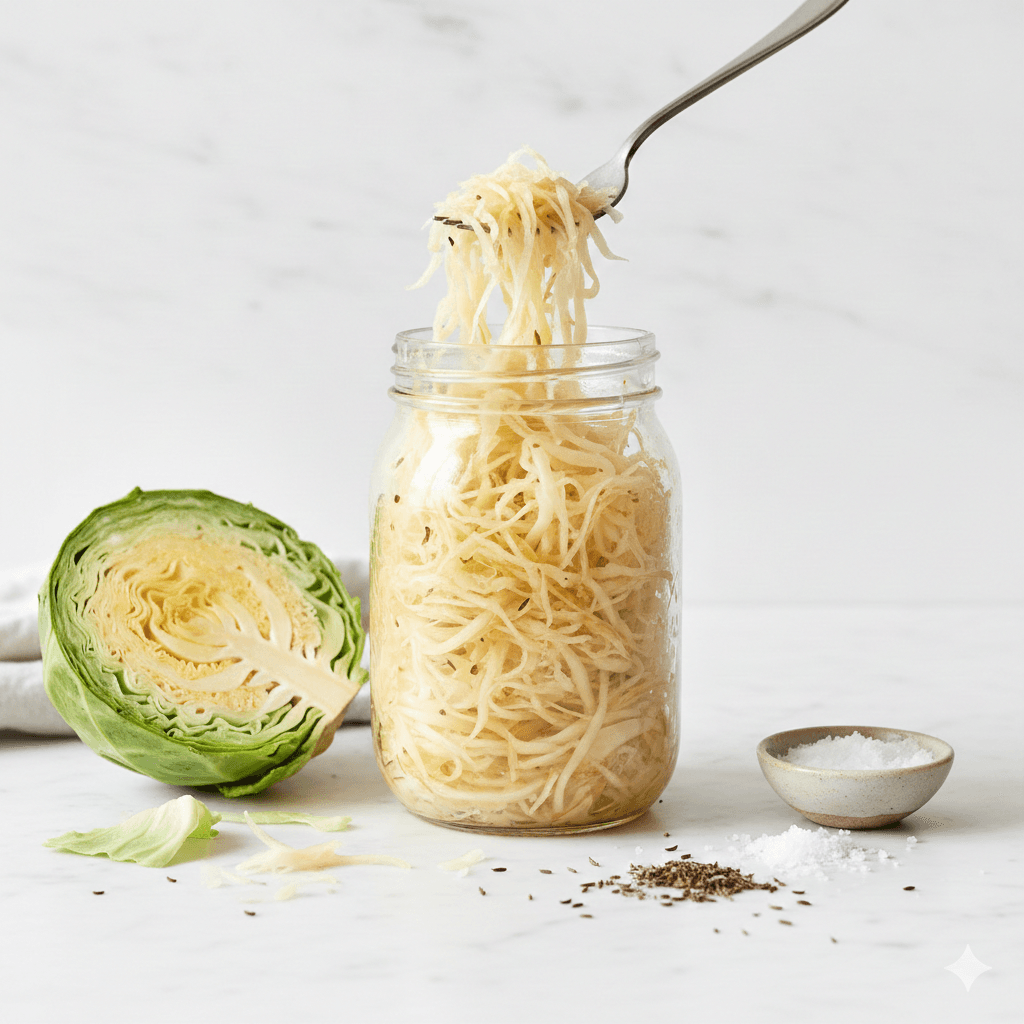
Fine salt dissolves quickly and is ideal for dry-salted ferments like sauerkraut, where you're massaging salt directly into shredded cabbage to draw out liquid. Fine salt also dissolves easily in cold brine. The tradeoff is that fine salt is easier to over-measure by volume, which is another argument for using a scale.
Coarse salt takes longer to dissolve and works best in brine ferments where you have time to stir or can use warm water. Coarse kosher salt in a cold-water pickle brine may leave undissolved crystals at the bottom if you don't stir thoroughly. This isn't a problem — the salt will dissolve eventually — but it can make it harder to confirm your brine concentration.
For most beginners, fine non-iodized sea salt is the simplest choice: it works for every application, dissolves reliably, and is easy to find. Pick up a large bag — you'll use it for every ferment you make.
The two-second salt check.
Before fermenting anything, flip your salt container over and read the ingredients. It should say one thing: salt (or sea salt). If you see iodide, iodine, or any anti-caking agent listed, set it aside and grab a different salt. Non-iodized sea salt, kosher salt, and pink Himalayan salt are all reliable choices — and a kitchen scale to weigh your salt at 2% by weight will take the guesswork out of every batch.