Kimchi and sauerkraut look similar from a distance: both are fermented cabbage packed in jars. But they come from different culinary traditions, use different techniques, and taste completely different. If you're trying to figure out which to make first — or just want to understand what distinguishes them — here's a clear breakdown.
The Short Answer
Both are lacto-fermented vegetables. The fermentation biology is the same: salt draws moisture from the cabbage, creating a brine in which lactic acid bacteria proliferate, produce acid, and preserve the food. But the vegetables, seasonings, flavor, fermentation time, and culinary context are substantially different.
Ingredients: Simple Salt vs. A Full Paste
Sauerkraut
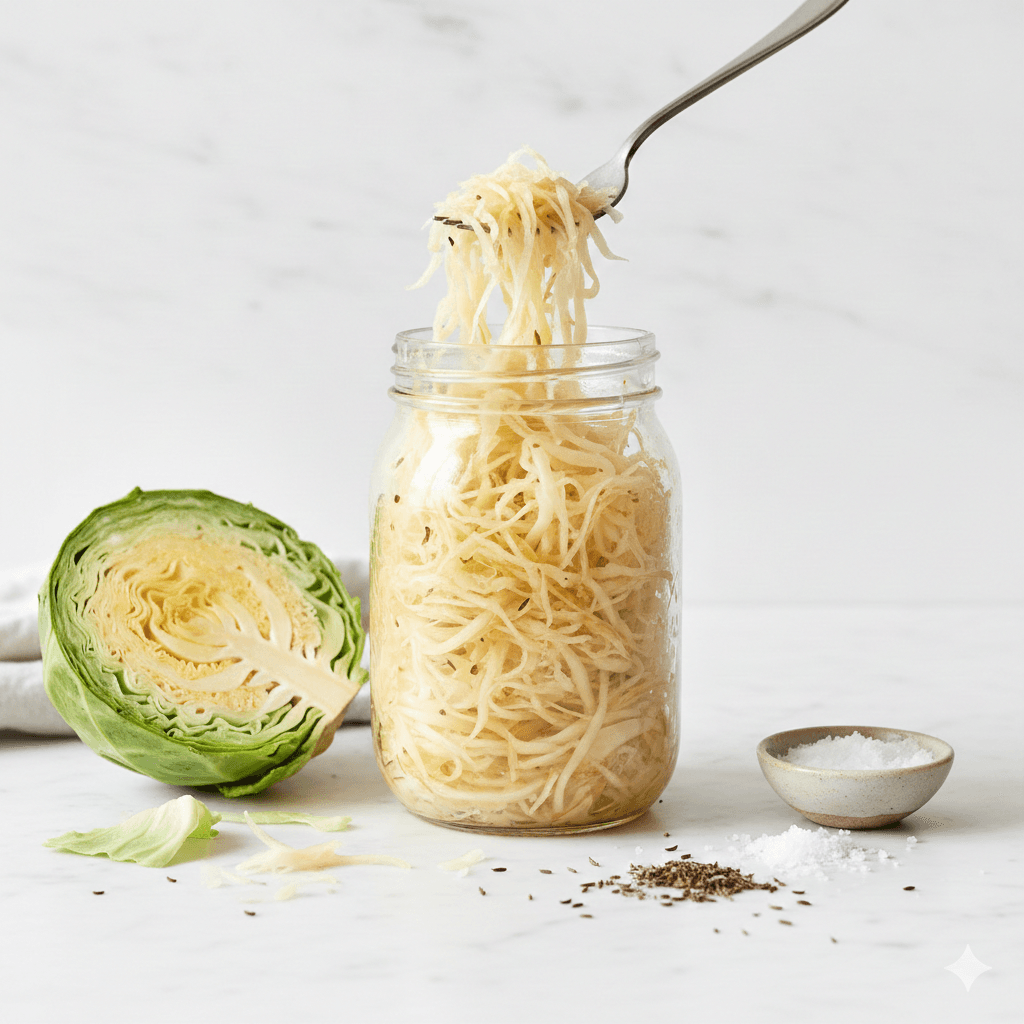
Two ingredients: green cabbage and non-iodized salt. That's it. You shred the cabbage, massage in about 2% salt by weight, and pack it tightly until the cabbage is submerged in its own liquid. No spices, no aromatics, no add-ins required (though caraway seeds are traditional in some European styles).
Kimchi
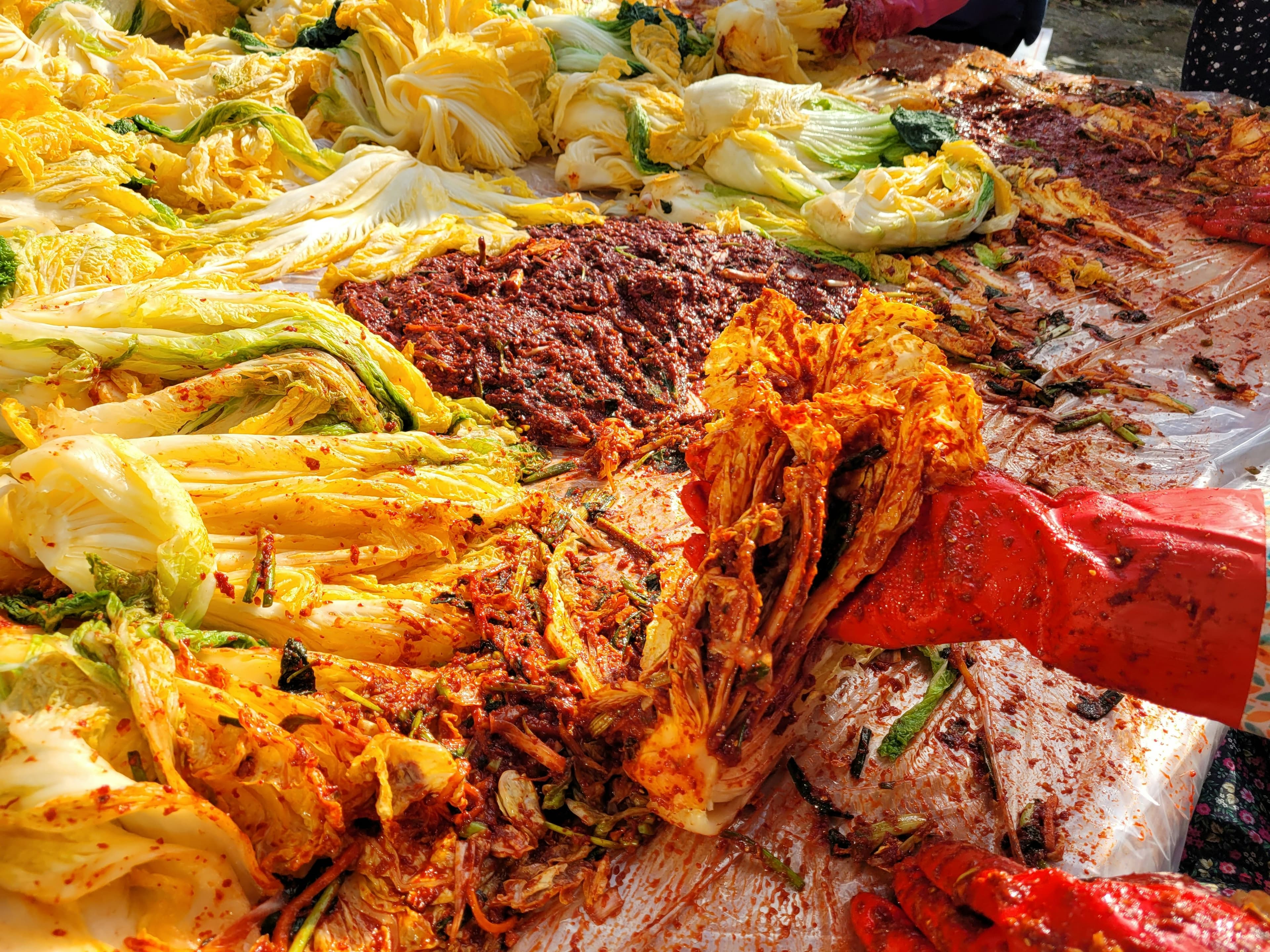
Kimchi starts with napa cabbage (baechu) and salt — but then adds a complex paste of:
- Gochugaru — Korean red pepper flakes. This is the defining ingredient. It's not the same as cayenne or chili powder; gochugaru has a fruity, earthy heat specific to Korean cooking.
- Garlic — usually several cloves per batch, blended into the paste.
- Ginger — adds warmth and brightness.
- Fish sauce or salted shrimp (for traditional versions) — adds umami. Vegan kimchi substitutes kelp powder, miso, or soy sauce.
- Green onions — mixed into the whole leaves rather than the shredded format sauerkraut uses.
The result before fermentation is already a highly seasoned dish. Fermentation adds depth and acidity on top of the existing flavor.
Process: Shredded vs. Whole Leaves
Sauerkraut starts with shredded cabbage. The shredding maximizes surface area, which speeds up the salt-and-brine process. You need roughly 20 minutes of active massaging to break down the cell walls and produce enough liquid to submerge the cabbage.
Traditional kimchi uses whole or quartered napa cabbage leaves. The leaves are salted (dry-brine or brine-soak) for 1–2 hours first, rinsed, and then each leaf is coated with the gochugaru paste before the kimchi is packed into jars. It's more hands-on — but still beginner-accessible. See our kimchi guide for step-by-step instructions.
Flavor: Sour and Clean vs. Sour and Complex
Sauerkraut's flavor profile is straightforward: sour, tangy, and savory with a clean vegetal base. Aged sauerkraut develops depth and funk, but it's never spicy or garlicky. The sourness comes from lactic acid; the savory quality comes from the broken-down cabbage.
Kimchi is multi-dimensional: spicy from the gochugaru, pungent from the garlic and fish sauce, sour from fermentation, bright from ginger, and with an underlying sweetness from napa cabbage. Fresh kimchi (just made) tastes primarily of the paste. Aged kimchi (several weeks in the fridge) develops sourness that integrates with all those other flavors into something more complex.
Fermentation Time
Sauerkraut is typically fermented at room temperature for 1–4 weeks before moving to cold storage. Fermentation continues slowly in the fridge. Most people prefer it after 3–4 weeks of room temp fermentation, but longer fermentation produces more sour, complex sauerkraut.
Kimchi ferments faster — usually 1–5 days at room temperature before moving to the fridge. The higher salt content, combined with the sugars in the paste, creates an active environment for the lactic acid bacteria. Many Koreans eat kimchi at every stage: fresh (called geotjeori), lightly fermented (“fresh kimchi”), and well-aged (mukeunji).
Nutritional Comparison
Both are excellent sources of probiotics when eaten raw (not cooked or pasteurized). Heating kills the live bacteria.
Kimchi tends to be nutritionally denser because of the additional vegetables and spices: garlic and ginger contribute antioxidants and antimicrobial compounds; gochugaru provides capsaicin and vitamin C. The napa cabbage base is also lighter in texture than green cabbage, though comparable nutritionally.
Sauerkraut is a good source of vitamin C (it historically prevented scurvy on long sea voyages), fiber, and vitamin K2 — the latter produced during fermentation.
Neither is a miracle food, and you'd need to eat a lot to hit clinically meaningful doses of any particular compound. But as everyday condiments that happen to be fermented — and therefore living foods — both are genuinely useful additions to meals.
Which Should You Make First?
Make sauerkraut first. It has two ingredients, one technique, and almost nothing that can go wrong if you use the right salt ratio. Our sauerkraut guide walks through the complete process — it's the canonical beginner ferment for good reason.
Once you've made sauerkraut once and understand what active lacto-fermentation looks and smells like, kimchi is a natural next step. The main new variable is sourcing gochugaru — look for it in Korean grocery stores or online. The fermentation mechanics are identical; the preparation is slightly more involved.
If you want to set up your first fermentation properly, a good fermentation crock makes both projects easier by keeping the cabbage submerged naturally — see our fermentation crock comparison for specific recommendations.
Can You Substitute One for the Other?
In cooking, sometimes. Both are sour fermented cabbage, so there's overlap in applications:
- On a pork sandwich or hot dog: sauerkraut is traditional, but young kimchi works and adds heat.
- In fried rice: kimchi is traditional; sauerkraut is an unconventional but workable substitute with a milder result.
- As a side to grilled meat: either works.
- In a Reuben sandwich: use sauerkraut. Kimchi changes the flavor profile significantly enough that it becomes a different dish.
As raw condiments, they're not interchangeable — the flavor difference is too significant. But in cooked applications where the acidity and fermented character are what you're after, they're more substitutable than their cultural distance would suggest.