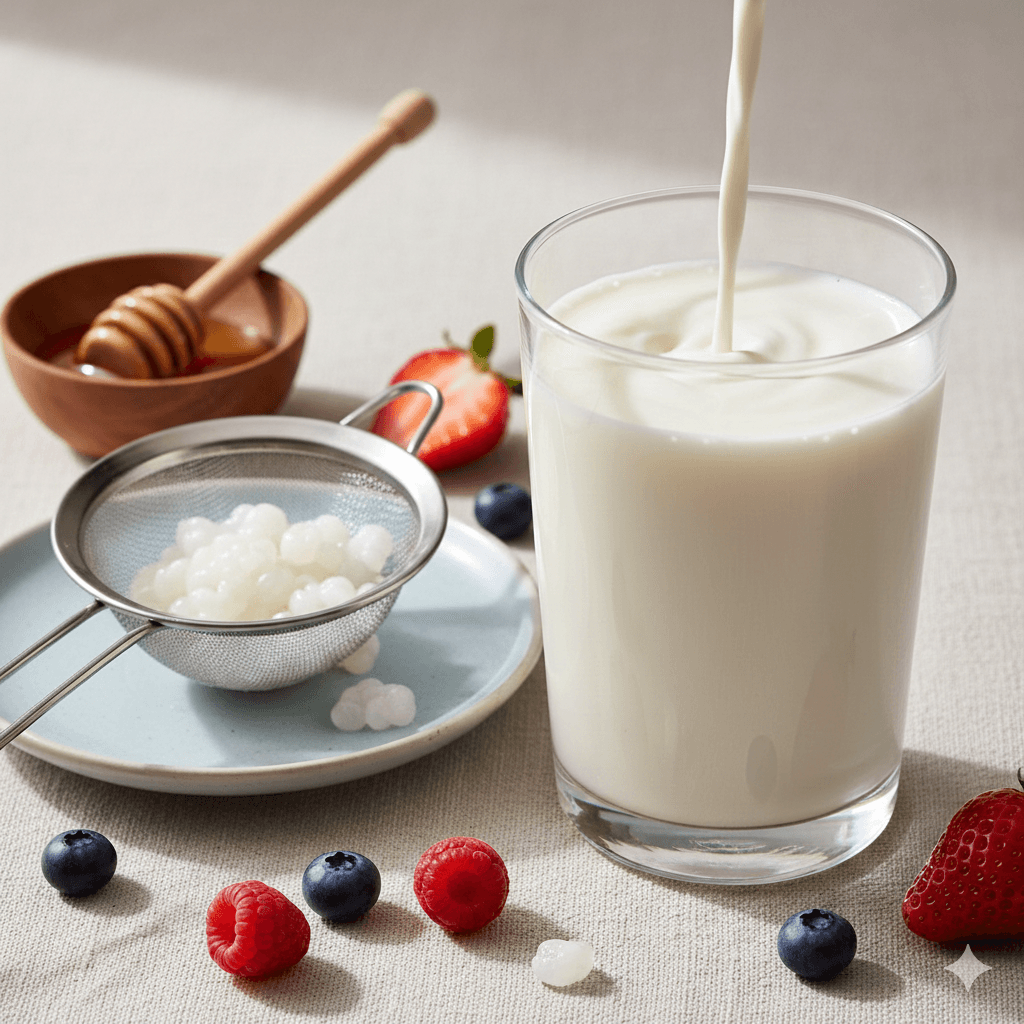
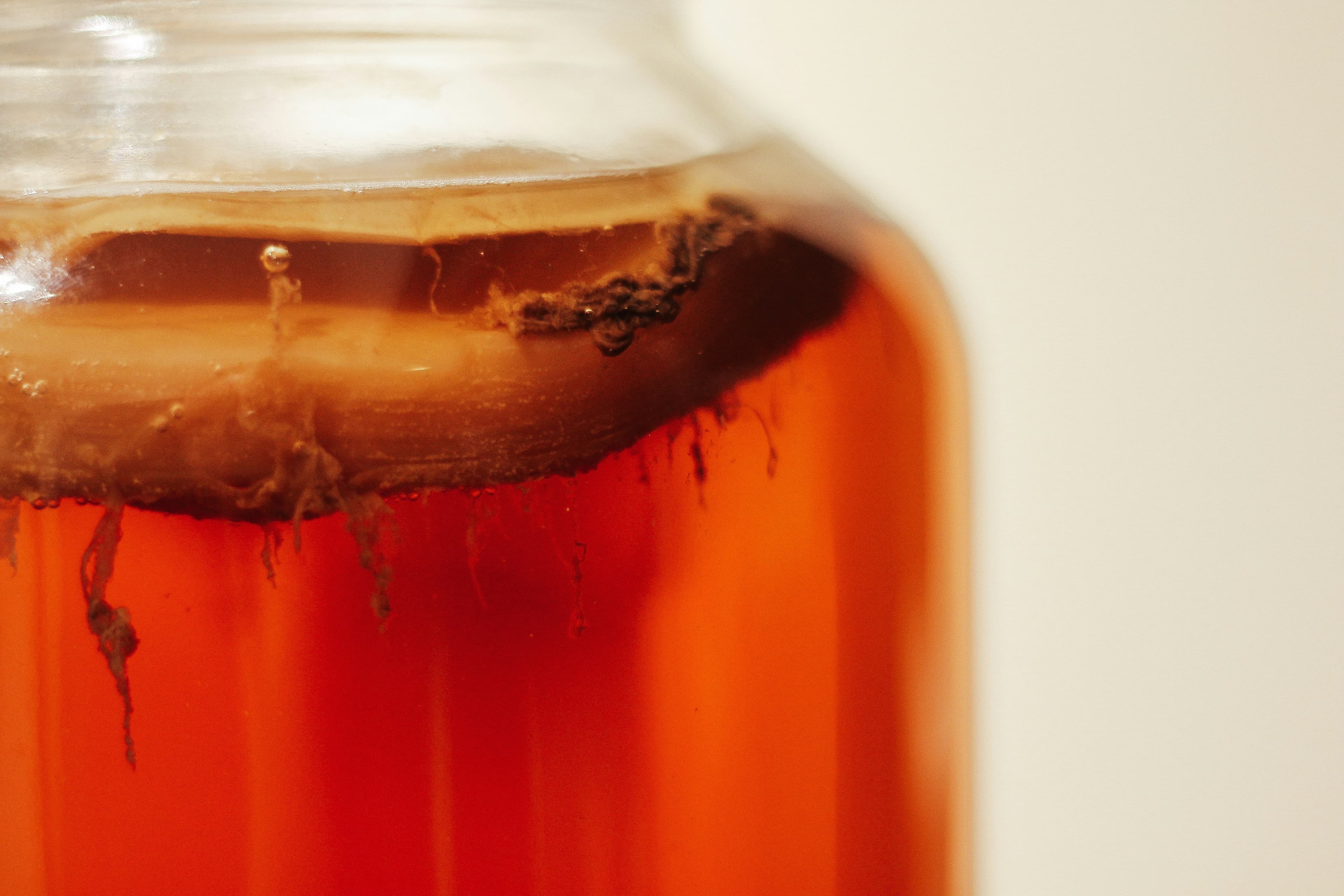
Kefir is one of the most probiotic-rich fermented drinks you can make at home — but there are two completely different types, and they have almost nothing in common except the name. Milk kefir is a creamy, tangy dairy drink. Water kefir is a light, slightly fizzy, dairy-free alternative. Both are made with cultures called kefir grains, but those grains are different organisms that live in different environments.
If you're trying to decide which one to start with, here's everything you need to know.
What Are Kefir Grains?
Kefir grains are not actual grains — they're gelatinous clusters of bacteria and yeast held together by a polysaccharide matrix. Each cluster contains dozens of different microbial species living symbiotically. When added to their preferred food source (milk or sugar water), they ferment it into kefir.
Milk kefir grains look like small, rubbery cauliflower florets — white to pale yellow. Water kefir grains are smaller, translucent, and glassy, like tiny crystals. They cannot be swapped between mediums — the microbial communities are entirely different.
Milk Kefir
Milk kefir is made by adding milk kefir grains to whole or 2% dairy milk and leaving it at room temperature for 12–24 hours. The grains ferment the milk, consuming lactose and producing lactic acid, carbon dioxide, and a small amount of alcohol (typically under 1%). The result is a thick, tangy, slightly effervescent drink — somewhere between yogurt and a thin smoothie in texture.
The flavor is sour and creamy, similar to plain yogurt but thinner and more complex. It has a mild yeasty note that sets it apart from yogurt. Full-fat milk produces a richer result; non-fat milk produces something thinner and sharper.
For full instructions, see our milk kefir guide.
Milk Kefir at a Glance
- Made from: Dairy milk (cow, goat, sheep)
- Fermentation time: 12–24 hours
- Texture: Thick and creamy
- Flavor: Tangy, sour, slightly yeasty
- Probiotics: High — multiple bacterial strains and yeasts
- Lactose: Low (most consumed during fermentation)
- Suitable for: Omnivores, those who tolerate dairy
Water Kefir
Water kefir is made by dissolving sugar in water, adding water kefir grains, and fermenting for 24–48 hours. The grains eat the sugar and produce a lightly fizzy, mildly sweet drink with a clean, slightly fruity flavor. Unlike milk kefir, water kefir has almost no fat or protein — it's essentially a fermented sugar water.
The base flavor is subtle — light and slightly tart. Most people do a second fermentation with fruit juice or fresh fruit to add more flavor and carbonation. Lemon and ginger is a classic combination; berry-based second ferments are also popular.
For full instructions, see our water kefir guide. If you're sourcing grains, our water kefir grains comparison covers the best suppliers.
Water Kefir at a Glance
- Made from: Filtered water + sugar (or coconut water)
- Fermentation time: 24–48 hours
- Texture: Light and liquid, mildly fizzy
- Flavor: Mild, slightly sweet-tart, fruity
- Probiotics: Moderate
- Suitable for: Everyone, including vegans and those avoiding dairy
Side-by-Side Comparison
| Milk Kefir | Water Kefir | |
|---|---|---|
| Base ingredient | Dairy milk | Sugar water |
| Dairy-free | No | Yes |
| Fermentation time | 12–24 hours | 24–48 hours |
| Probiotic content | Higher | Moderate |
| Flavor | Sour, creamy | Light, fruity |
| Carbonation | Mild | Moderate (more with second ferment) |
| Calories | Higher (from fat and protein) | Lower |
Which Should You Make?
If you eat dairy and want the most probiotic-rich option, start with milk kefir. It's simpler to make, ready in under 24 hours, and the flavor is familiar if you already eat yogurt.
If you avoid dairy, want something lighter to drink, or prefer something you can carbonate and flavor like a soda, water kefir is the better fit. It takes slightly longer and benefits from a second fermentation, but the result is genuinely refreshing.
Some people make both. The grains multiply as you use them — within a few weeks you'll have more than enough to maintain two ongoing batches.
Grains need minerals to thrive.
Water kefir grains need mineral content to stay healthy. If you use highly filtered or reverse-osmosis water, add a pinch of mineral-rich sea salt or a small piece of clean eggshell to the ferment. Coconut water (unsweetened) works well as a base because it's naturally rich in minerals and produces a mildly sweet, tropical-flavored kefir.