January is full of resolutions that sound great on the 1st and feel impossible by the 15th. Fermentation resolutions are different. You don't need willpower — you just need a jar, some salt, and a little patience. The microbes do most of the work.
If you've been curious about fermentation but haven't started, this is your moment. And if you've already made one or two things, January is a great time to add a new project to your rotation. Here are five that are genuinely beginner-friendly, deliver real results, and give you something to feel good about eating.
New to fermentation entirely? Start here — we'll walk you through the basics before you dive into any of these.
1. Sauerkraut — The Foundational Skill
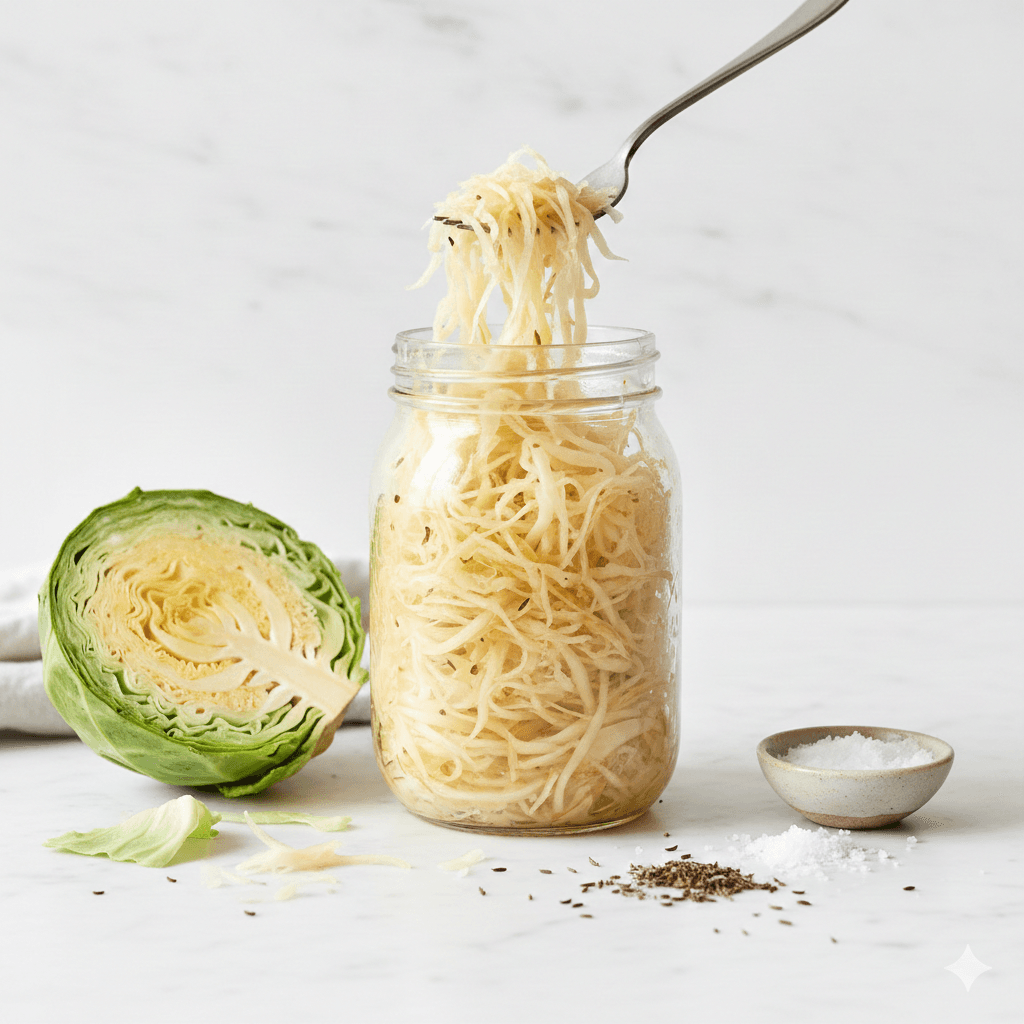
If you only make one ferment this year, make sauerkraut. It's two ingredients — cabbage and salt — and it teaches you everything you need to know about lacto-fermentation. Once you understand sauerkraut, every other vegetable ferment makes sense.
January is ideal because cool kitchen temperatures (around 65–70°F) produce a slower, more complex ferment. Your sauerkraut will be tangier and more layered than anything you'd get in summer heat.
It's also one of the most well-studied fermented foods for gut health — it's rich in live Lactobacillus cultures and provides both pre- and probiotic compounds. Start a batch this weekend and it'll be ready in 3–4 weeks.
Get the full sauerkraut guide →
2. Water Kefir — Your New Daily Drink
Water kefir is a lightly fizzy, mildly tangy fermented drink made from sugar water and a small colony of grains (SCOBY). It takes about 48 hours per batch, it's caffeine-free, and once you have grains, you can keep making it indefinitely.
It's a good resolution drink because you make it in small batches, it becomes a two-day rhythm, and it's genuinely enjoyable to drink. Flavor it with lemon, ginger, or fruit juice in the second ferment and you've got something that feels like a treat.
Water kefir is also gentler on the gut than kombucha for most people — less acidic, lower caffeine content, and easy to adjust to your taste. It's a natural starting point if you want a fermentation habit that touches every single day.
Get the full water kefir guide →
3. Fermented Hot Sauce — Make Something You'll Actually Use
One of the best arguments for fermented food is that it tastes dramatically better than the store-bought version. Fermented hot sauce is the clearest example of this. The flavor is rounder, more complex, less harsh — and you control the heat level completely.
Start with a simple red Fresno or jalapeño sauce. Blend your peppers with salt, pack them into a jar, and wait 5–7 days. Then blend, strain, and bottle. You'll use it on everything, and you'll never go back to Tabasco.
This is also a project that scales up easily — make a small test batch first, then double it once you know what you like.
4. Sourdough Starter — The Long Game
Starting a sourdough starter in January is a cliché for good reason: you have the time, you're already cooking more, and the daily feeding routine fits the pace of a slower month. It takes about 7 days to get an active starter from scratch.
Once your starter is active, you can bake sourdough bread, use the discard for pancakes and waffles, and keep the thing alive indefinitely with just flour and water. It's the only fermentation project that literally becomes part of your daily routine — some people's starters are decades old.
The learning curve is real, but it's front-loaded. Once you understand what an active starter looks and smells like, everything else follows.
5. Fermented Garlic Honey — Low Effort, High Reward
Fermented garlic honey is three ingredients (garlic, raw honey, and time) and maybe ten minutes of active work. You fill a jar with peeled garlic cloves, cover with raw honey, loosen the lid daily for the first week, and wait.
After 3–4 weeks, you have something extraordinary. The garlic mellows completely — no harshness, just sweet, funky, deeply savory cloves. The honey thins and ferments slightly, picking up garlic flavor. Use both as a condiment, a cooking ingredient, or when you're fighting off a cold.
It's also a great project for people who feel intimidated by fermentation. There's almost nothing to mess up, the timeline is forgiving, and the payoff is completely out of proportion to the effort.
The Rule for Actually Following Through
Pick one project from this list — just one. Start it this week. Don't buy a bunch of equipment before you begin. A mason jar and some salt are enough for sauerkraut, and a small jar and raw honey are all you need for garlic honey.
The resolutions that stick are the ones that cost almost nothing to start and pay you back quickly. Fermentation qualifies on both counts. Once you taste something you made yourself — really taste it — the habit takes care of itself.
For a deeper look at what fermented foods do for your body, read our guide to the benefits of fermented foods. And if you want a broader look at beginner-friendly options, our roundup of easy beginner projects covers even more ground.