August is a great time to start fermenting. The summer produce is at its peak, the weather is warm (which speeds up fermentation), and the back-to-school season is a natural moment to build new habits. Whether you're batch-cooking for the week ahead or looking for kitchen projects to do with your kids, fermentation fits the moment.
The five projects below are the best starting points we know of for complete beginners. Each one requires minimal equipment, uses ingredients you can find at any grocery store, and produces results within a week. None of them are difficult — the bacteria do most of the work. Your job is mostly to stay out of the way.
Not sure which one to pick? Start with sauerkraut. It's been the entry point for home fermenters for centuries for good reason: it's nearly impossible to fail, and it teaches you everything you need to know to succeed at every other ferment on this list.
1. Sauerkraut
Why it's great for beginners: Two ingredients — cabbage and salt. No brine to make, no equipment beyond a jar and your hands. Ready in 5–14 days. Keeps for months in the fridge.
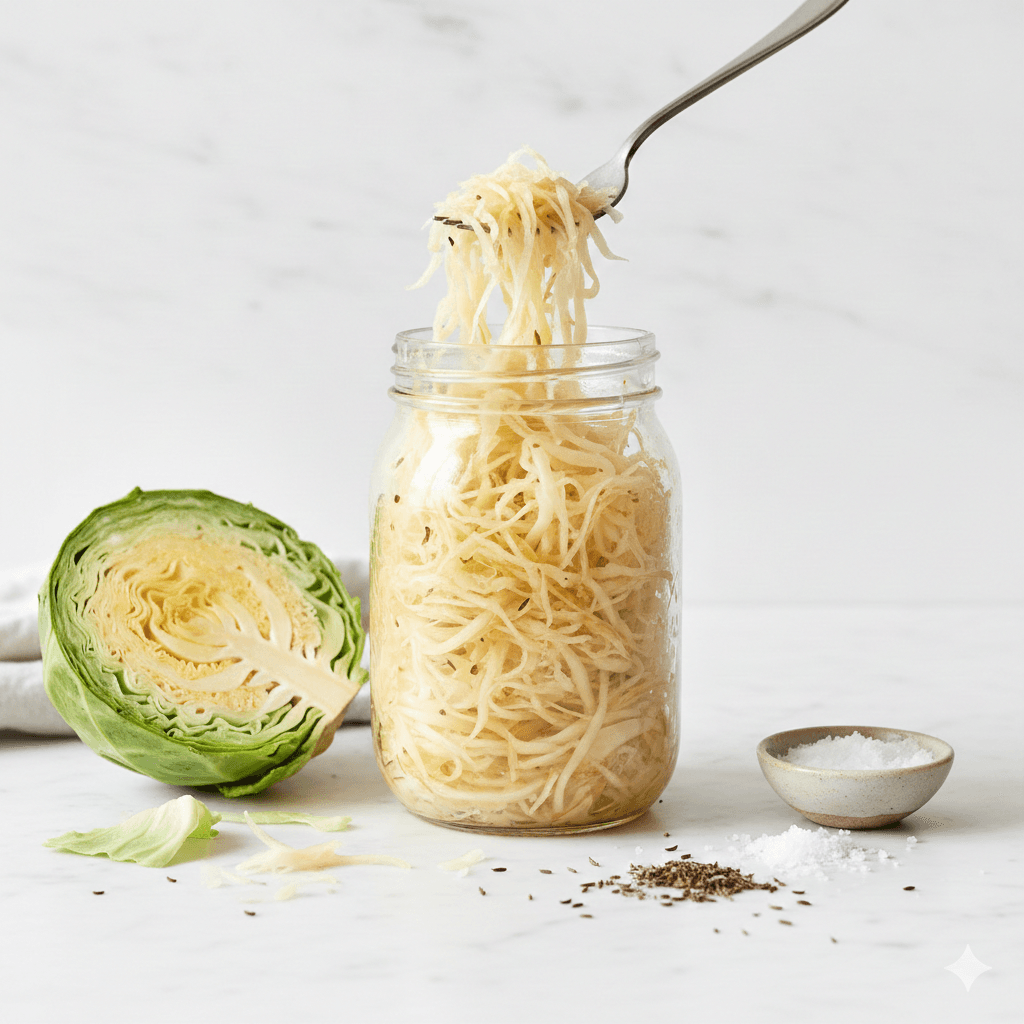
Sauerkraut is made by massaging shredded cabbage with salt until it releases enough liquid to become its own brine, then packing it tightly into a jar and leaving it at room temperature to ferment. The process is forgiving and beginner-friendly, and the result is genuinely useful — on sandwiches, alongside grilled sausages, stirred into grain bowls.
The only common mistake beginners make is not keeping the cabbage submerged below the brine. Use a starter kit with a weight and airlock lid, or improvise with a zip-lock bag filled with brine sitting on top of the cabbage. Everything below the liquid line will ferment safely. Anything above it can mold.
For a complete walkthrough, see our homemade sauerkraut guide.
2. Quick-Fermented Pickles
Why it's great for beginners: Ready in as little as 24–48 hours. Great use for the end-of-summer cucumber glut. No hot water bath or canning required.
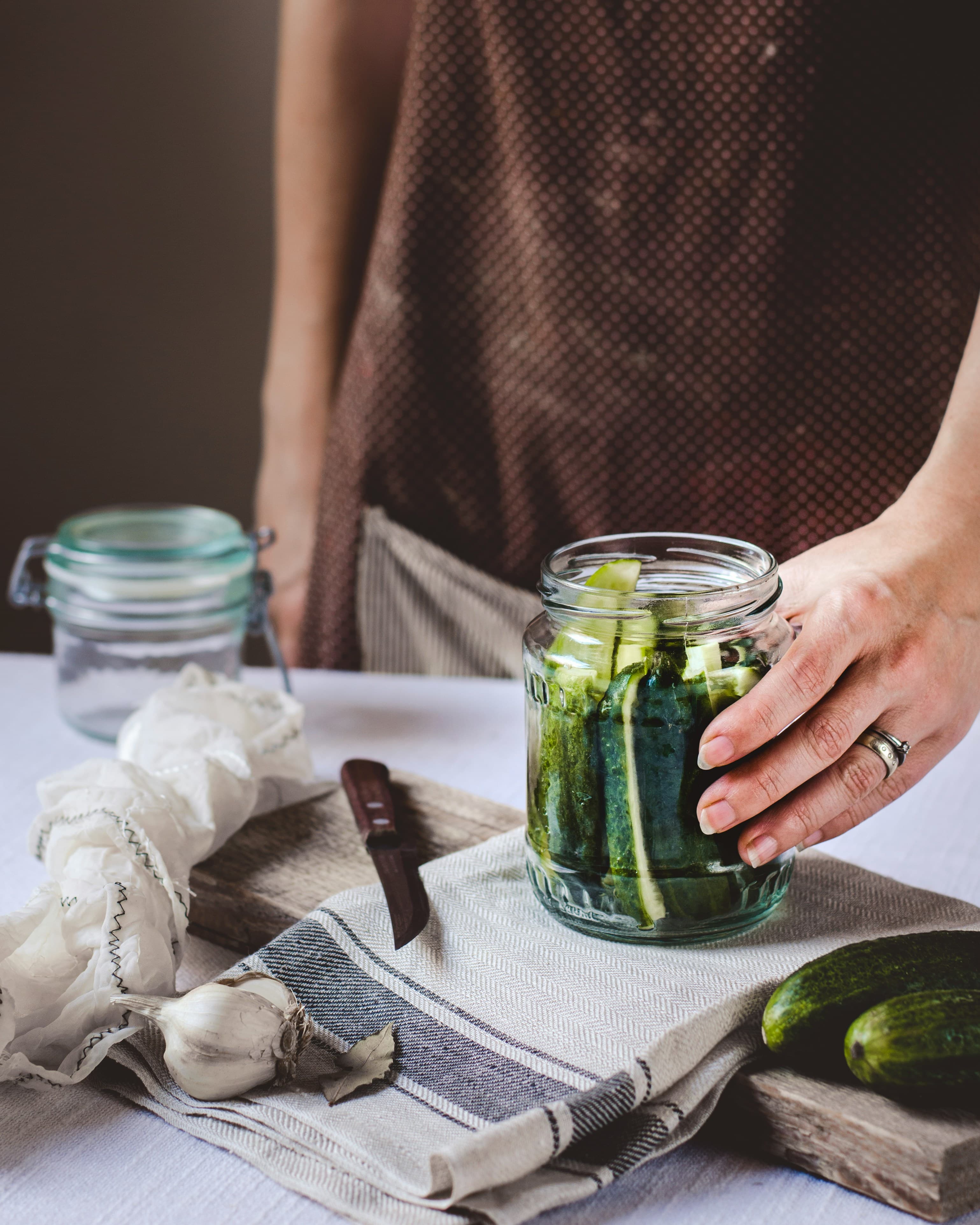
Lacto-fermented pickles use a salt brine rather than vinegar to preserve cucumbers. The process is simple: pack cucumbers into a jar with dill, garlic, and any spices you like; pour over a 2–3% salt brine; weigh everything down; and ferment at room temperature for two to five days.
The result is a living, probiotic pickle with a more complex flavor than anything vinegar-based. The crunch holds up remarkably well. If you've ever had a classic New York deli pickle — that sour, garlicky, slightly fizzy pickle served from a barrel — this is what you're replicating.
Kirby cucumbers (the small, bumpy ones) are the gold standard. Regular slicing cucumbers work too, but tend to be softer. Whatever you use, make sure they're fresh and firm — limp cucumbers make limp pickles.
Full recipe and technique in our fermented pickles guide.
3. Kombucha
Why it's great for beginners: Hands-off once started. Teaches you to read fermentation by sight, smell, and taste. Produces a fizzy, delicious drink that most households actually want to drink every day.
Kombucha is sweet tea fermented using a SCOBY — a Symbiotic Culture of Bacteria and Yeast. You brew a batch of sweet black tea, cool it, add your SCOBY and a cup of starter liquid (finished kombucha from a previous batch), and leave it to ferment for 7–14 days.
It sounds mysterious, but the process is genuinely simple once you understand what's happening. The SCOBY eats the sugar, the bacteria produce lactic and acetic acids, the yeast produces a tiny amount of alcohol and CO₂, and the result is a tangy, slightly fizzy fermented tea that's been consumed for centuries.
The main requirement is patience — it does take longer than the other projects on this list. But the hands-on time is minimal: maybe 30 minutes to brew the tea and set everything up, and then you check on it a week later.
Start with our kombucha brewing guide for everything you need.
4. Ginger Beer (via Ginger Bug)
Why it's great for beginners: No SCOBY or starter culture needed — you grow your own from scratch using fresh ginger and sugar. Introduces wild fermentation in a forgiving, low-stakes format.
A ginger bug is a wild-fermented starter made from fresh ginger, sugar, and water. You feed it a little grated ginger and sugar each day for about five days until it's active and bubbling. Once your ginger bug is ready, you use it to carbonate fresh ginger juice or fruit juice into natural soda.
This is one of the more exciting beginner ferments because you're essentially capturing wild yeast and bacteria from the ginger itself. It feels more like magic than science — which is what draws a lot of people into fermentation in the first place. And the fizzy ginger beer you get at the end is genuinely one of the best drinks fermentation produces.
It's also a natural gateway into other wild-fermented sodas: once you have an active ginger bug, you can use it to ferment lemonade, hibiscus tea, apple juice, and countless other bases.
See our guide to making a ginger bug to get started.
5. Yogurt
Why it's great for beginners: Fastest result on the list — done in 6–12 hours. No equipment needed beyond a pot and a warm spot. Saves money immediately and produces a better product than most grocery store yogurt.
Homemade yogurt uses thermophilic bacteria (heat-loving cultures) rather than the room-temperature bacteria in most other ferments. You heat milk to 180°F to pasteurize and change the protein structure, cool it to around 110°F, stir in a couple tablespoons of store-bought yogurt as a starter, and keep it warm for 6–12 hours. That's it.
The result is creamy, tangy, and adaptable. Strain it for a few hours to make thick Greek-style yogurt. Leave it unstrained for a thinner, more pourable consistency. Use it in smoothies, bowls, sauces, or baked goods. The culture is reusable: save a few tablespoons from each batch to start the next one.
The main requirement is maintaining the right temperature for incubation. Options include: a turned-off oven with just the light on, a cooler with a jar of hot water, or an Instant Pot on the "yogurt" setting if you have one.
The best fermentation kit for beginners.
If you want to start multiple projects without hunting for individual parts, a fermentation starter kit typically includes mason jars, airlock lids, glass weights, and a salt measure — everything you need for sauerkraut, pickles, and vegetable ferments. It's the most efficient way to get set up without buying things piecemeal.
What You Actually Need to Get Started
The barrier to starting is lower than most people expect. Here's the honest minimum:
- Mason jars — quart size for most projects. You probably already have some. If not, a 12-pack of wide-mouth quart jars covers everything on this list.
- Non-iodized salt — kosher salt, sea salt, or pickling salt. Iodized table salt inhibits the bacteria you're trying to cultivate.
- Patience — fermentation works on its own schedule. Most beginners struggle more with checking too often than with anything else. Set it up, leave it alone, taste it in a few days.
Beyond those basics, a fermentation weight and airlock lid make things easier, but you can improvise both for free. A zip-lock bag filled with brine works as a weight. A cloth secured with a rubber band allows CO₂ to escape without letting debris in.
For a full introduction to fermentation technique — the science, the safety, and what to expect — start with our beginner's guide to fermentation. And if you're not sure which project fits your schedule and skills best, our post on how to choose your first fermentation project walks through the decision in detail.