Water kefir is already good on its own — lightly sweet, faintly sour, slightly effervescent. But the second ferment is where it becomes genuinely exciting. Add fruit, citrus, or herbs to a sealed bottle, leave it at room temperature for 24–48 hours, and you get a fizzy, flavored drink that rivals anything from the refrigerated section.
Summer is the best time to experiment. Stone fruits, berries, tropical fruits, and fresh herbs are all at peak quality from June through August, and the warm temperatures accelerate carbonation — meaning faster fizz with less waiting. Here are the combinations that work best.
New to water kefir? Start with the complete water kefir guide before jumping into second ferment flavoring. You'll need active grains and a completed first ferment before any of these recipes apply.
How the Second Ferment Works
After your first ferment is complete (typically 24–48 hours with grains), you strain out the grains and bottle the liquid. Adding fruit or juice to the bottle gives the remaining bacteria more sugar to consume — the CO₂ produced by that fermentation is trapped in the sealed bottle, creating carbonation.
The ratio to remember: about 10–20% flavoring by volume. For a 16 oz swing-top bottle, that's roughly 2–3 tablespoons of juice, a small handful of fresh fruit, or 1–2 tablespoons of fruit concentrate. Too little and you get minimal fizz; too much and the bottle can over-pressurize.
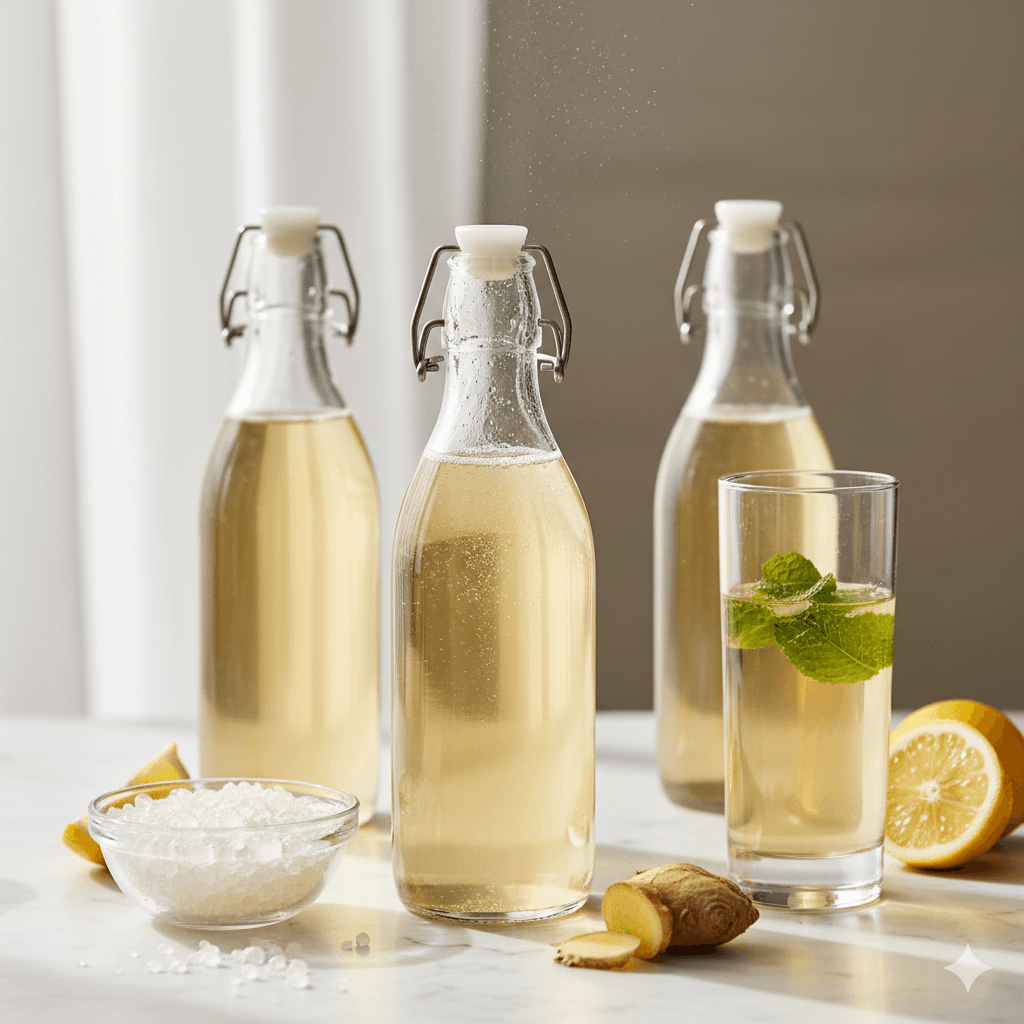
In summer heat (above 75°F), check your bottles more frequently — every 12–18 hours. Carbonation builds faster in warm weather. Swing-top fermentation bottles are the best vessel for second ferments — the thick glass handles pressure well and the flip-top seal makes it easy to burp and check.
Summer Flavor Guide
Strawberry Lemon
The most reliably delicious water kefir flavor. Ripe strawberries provide plenty of natural sugar for vigorous carbonation, and the lemon adds a bright acidity that keeps the flavor from being flat or cloying.
Per 16 oz bottle: 3–4 ripe strawberries (sliced or mashed), juice of ½ lemon. Fill with first-ferment water kefir. Seal and second ferment 24–36 hours. Strain before drinking if desired.
Variation: Add a small sprig of fresh basil. Strawberry, lemon, and basil is a natural summer combination and works exceptionally well in kefir.
Mango Ginger Tropical
Mango is high in natural sugar and produces excellent carbonation. Fresh mango is best; frozen mango (thawed) works well and is often sweeter. The ginger adds warmth that keeps the flavor from being one-dimensional.
Per 16 oz bottle: 2–3 tablespoons fresh or frozen mango, pressed into a pulp or blended, plus a thin slice of fresh ginger (about ½ inch). Second ferment 24–36 hours at room temperature.
Watch the pressure: Mango produces vigorous carbonation. In warm weather, burp the bottle after 18 hours and taste.
Mint Lime
Lighter on carbonation than fruit-heavy flavors, but intensely refreshing. This combination tastes like a probiotic mojito and is particularly good served over ice.
Per 16 oz bottle: Juice of 1 lime, 4–5 fresh mint leaves (lightly bruised). Add 1 teaspoon of sugar if you want more carbonation — lime juice alone doesn't provide enough sugar for vigorous fizz. Second ferment 24–36 hours.
Strain out the mint leaves before drinking. They can become bitter after extended fermentation.
Peach Vanilla
Stone fruit season peaks in July and August, and ripe peaches make an exceptional water kefir flavor. Vanilla rounds the edges and adds creaminess to the profile.
Per 16 oz bottle: 2–3 tablespoons ripe peach (mashed or very thin slices), ¼ teaspoon pure vanilla extract. Second ferment 24–48 hours.
Avoid artificial vanilla — it can impart a slightly medicinal off-note. Pure extract is worth it here.
Watermelon Mint
Watermelon juice is an unconventional water kefir addition but it works beautifully — sweet, very lightly flavored, with a pale pink color. Pair it with fresh mint for a clean summer combination.
Per 16 oz bottle: 3 tablespoons fresh watermelon juice (just blend a small cube and strain), 2–3 mint leaves. Second ferment 18–24 hours — watermelon ferments quickly.
Pineapple Coconut
Pineapple is one of the best water kefir flavoring agents — very high in natural sugar, strong carbonation, and a tropical flavor that complements the slight tang of the kefir. Coconut water or coconut cream adds richness.
Per 16 oz bottle: 3 tablespoons fresh or canned pineapple juice, 1 tablespoon coconut cream (optional). Second ferment 24–36 hours. This is one of the more aggressively carbonating combinations — burp the bottle at 18 hours in warm weather.
Raspberry Hibiscus
Deeply colored and vibrantly flavored. Raspberries ferment quickly and produce a rich berry flavor. Hibiscus adds a tart, floral dimension and beautiful deep red color.
Per 16 oz bottle: 8–10 fresh or frozen raspberries (lightly crushed), 1 tablespoon dried hibiscus flowers (or 2 tablespoons cooled hibiscus tea). Second ferment 24–36 hours.
Tips for Summer Second Ferments
Watch the Temperature
Summer heat is your friend and your risk. Warm temperatures (above 75°F) mean faster carbonation — sometimes much faster. A bottle that takes 48 hours to carbonate in winter may be ready in 18–24 hours in a warm kitchen. Burp bottles regularly and taste frequently to catch the fizz at its peak before it over-pressurizes.
Use Ripe, Flavorful Fruit
Underripe fruit contains less sugar and less flavor. Both matter in a second ferment — ripe fruit gives you better carbonation and a much stronger, cleaner fruit flavor in the final drink. Farmers market fruit in peak summer is noticeably better than grocery store off-season fruit for this.
Fresh vs. Juice vs. Concentrate
Fresh fruit gives the most complex, natural flavor. Juice (without additives or preservatives) is more consistent and slightly more predictable in carbonation. Fruit concentrate is very concentrated — use less than you think. Avoid juice with added preservatives like potassium sorbate, which inhibit fermentation.
Strain Before Bottling for Clarity
Fruit particles and pulp in the bottle create a cloudy final drink. That's fine if you don't mind it — but if you want a cleaner appearance, strain the finished second ferment through a fine mesh strainer before serving.
How to Know When It's Ready
The squeeze test works for plastic bottles: a firm, non-compressible bottle is well-carbonated. For glass swing-tops, crack the lid slightly — if you hear a significant hiss of CO₂, you have carbonation. Taste it: the drink should be clearly fizzy, the fruit flavor should be forward, and the sweetness should have dropped from the first ferment.
Once it's at the fizz level you want, move the bottle to the refrigerator. Cold stops active fermentation and locks in the carbonation. Consume within a week for best flavor and texture.
Going Deeper
If you want to refine your water kefir practice beyond second ferments, the full water kefir brewing guide covers grain health, first ferment timing, and troubleshooting. And if you're deciding between milk and water kefir, the milk kefir vs water kefir comparison breaks down the key differences in flavor, nutrition, and care.
The best summer batch you'll make is the one where you use whatever fruit is ripest right now. Don't overthink the flavor combinations — water kefir is forgiving, the process is fast, and the downside of an experiment that doesn't quite work is a single bottle. Try something new every batch.