How to Use This Guide
Find your problem below, check the symptoms, and follow the fix. Most kombucha issues are cosmetic or easily corrected — very few require you to toss a batch. If you're new to kombucha, start with our Kombucha Brewing 101 guide first.
Is That Mold on My SCOBY?
This is the #1 question new brewers ask — and the answer is almost always no. Real mold on kombucha is actually rare when you use enough starter liquid.
What real mold looks like
- Fuzzy or furry texture — not smooth, not slimy
- Grows on the surface only, on top of or on the SCOBY (mold needs air)
- Usually white, green, blue, or black circles or spots
- Looks exactly like bread mold or the mold on old fruit
What is NOT mold
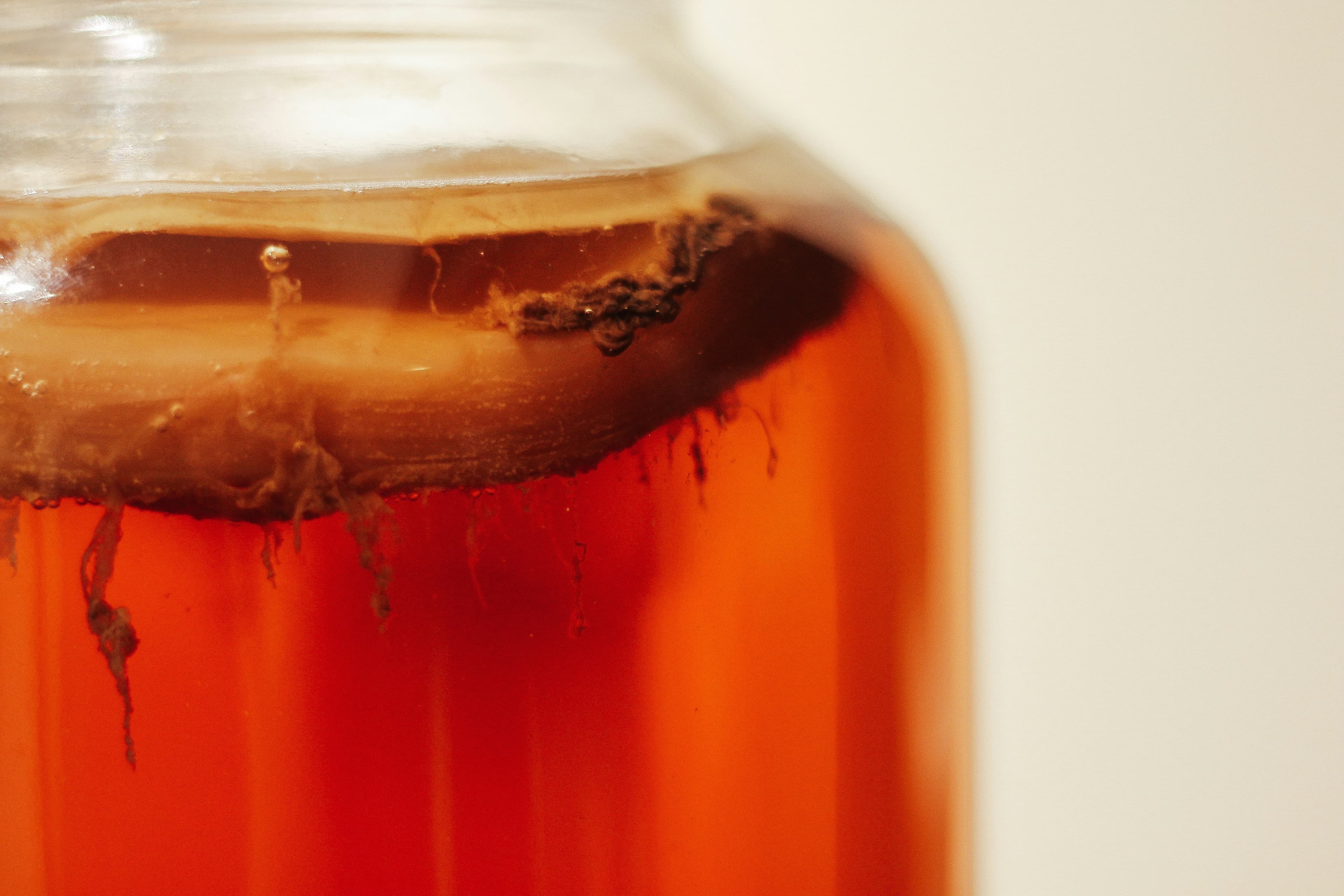
- Brown stringy bits hanging from the SCOBY — those are yeast strands, completely normal
- Bumpy, uneven SCOBY growth — new SCOBYs often look lumpy, bubbly, or patchy as they form
- Dark spots on the SCOBY — usually tea residue or embedded yeast
- White film forming on the surface — this is a new SCOBY forming, which is exactly what should happen
- Dry patches on a SCOBY that sits above the liquid line — just dried cellulose, not mold
🔑 The key test
Touch it. Mold is fuzzy and dry. Normal SCOBY growth is smooth and wet. If you can't tell from looking, this test almost always settles it. Still uncertain? Wait 24 hours — mold will get visibly fuzzier and spread. Normal growth will get smoother.
If it IS mold — what to do
Discard everything — the SCOBY, the liquid, all of it. Do not try to save a moldy batch. Wash your jar thoroughly with hot water and white vinegar before starting over.
Then figure out why it happened, so it doesn't happen again:
- Not enough starter liquid. You need at least 1 cup of strong, acidic starter per gallon of sweet tea. This acidifies the brew immediately and prevents mold from getting a foothold.
- Weak SCOBY. Dehydrated SCOBYs or very old ones may not acidify the tea fast enough. Start with a healthy, actively brewing SCOBY if possible.
- Too cold. Below 65°F (18°C), fermentation stalls and mold has time to colonize. Keep your brew at 70–80°F (21–27°C).
- Contamination. Dirty hands, jar, or utensils. Always work with clean equipment.
My Kombucha Has No Carbonation
Flat kombucha is the second most common complaint. Carbonation happens during second fermentation (F2) — when you seal kombucha in bottles with a sugar source. If it's flat, one of these is likely the issue:
The bottles aren't airtight
This is the most common cause. CO2 escapes through loose seals. Use flip-top Grolsch-style bottles with rubber gaskets — they create a proper seal. Mason jars with flat lids do not hold pressure and will always give you flat kombucha.
Not enough sugar for F2
The yeast needs sugar to produce CO2. If you're adding fruit, make sure it's sugar-rich (berries, mango, grape juice). If you're doing a plain batch, add 1/2 teaspoon of white sugar per 16 oz bottle. Fruit juice at about 10–20% of the bottle volume is a good baseline.
F2 isn't long enough or warm enough
Give it 2–4 days at room temperature (70–80°F). In a cold kitchen, it may need 5–7 days. The warmer it is, the faster carbonation builds.
You fermented F1 too long
If first fermentation went too long, most of the yeast may have died off. Less yeast means less CO2 in F2. Try ending F1 a bit earlier — when the kombucha still has a touch of sweetness.
Too much headspace
Leave about an inch of headspace in your bottles — but not much more. Too much air volume means the CO2 disperses instead of dissolving into the liquid.
💡 The plastic bottle trick
Fill one plastic soda bottle alongside your glass bottles during F2. When the plastic bottle is rock-hard to the squeeze, your glass bottles are carbonated too. This gives you a safe way to check pressure without opening a glass bottle and losing the fizz.
It Tastes Like Vinegar
Your kombucha fermented too long. The bacteria converted too much sugar into acetic acid, giving you essentially kombucha vinegar. This is completely safe — just not pleasant to drink.
How to fix it
- Use it as vinegar. It works great in salad dressings, marinades, and as a cleaning agent.
- Use it as starter liquid. Over-fermented kombucha is highly acidic and makes excellent starter for your next batch.
- Blend it. Mix 50/50 with fresh juice or a new batch for a drinkable result.
How to prevent it
- Start tasting on day 5–7 depending on temperature
- Bottle as soon as the sweet-to-tart balance tastes good to you
- Remember: warmer kitchens ferment faster — a 80°F kitchen can produce vinegar-strength kombucha in 7 days
- Set a phone reminder to taste daily once you hit day 5
My Kombucha Tastes Too Sweet
It hasn't fermented long enough. The yeast and bacteria haven't had enough time to consume the sugar. Give it more time — check it daily. Temperature below 70°F (21°C) will slow things considerably.
If it's been over two weeks and still tastes sweet, your SCOBY may be weak or inactive. Try adding more starter liquid from an active brew, or get a new SCOBY.
My SCOBY Sank to the Bottom
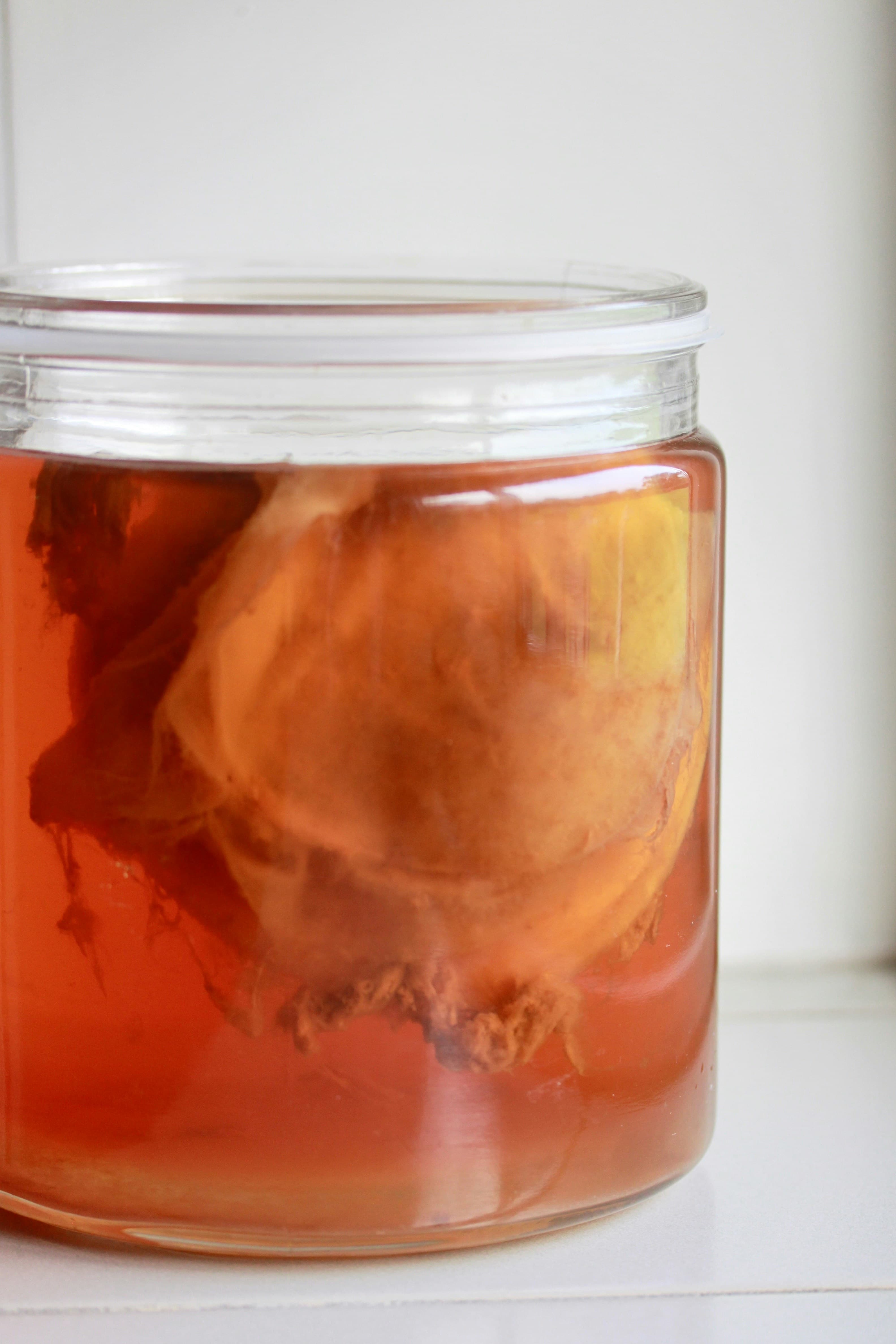
This is completely normal and not a problem at all. The SCOBY is just a cellulose mat — it can float, sink, or turn sideways. It doesn't matter. A new SCOBY will always form on the surface of the liquid (where it has access to oxygen), regardless of where the old one ends up.
Don't fish it out or try to reposition it. Just leave it alone.
There Are Brown Strings Hanging from My SCOBY
Those are yeast strands — totally normal and a sign of healthy fermentation. They're sometimes called “yeast rafts” and they can look alarming if you're not expecting them. You can leave them alone or strain them out when bottling if the texture bothers you.
My SCOBY Has a Hole or Tore
Doesn't matter. The SCOBY doesn't need to be intact or pretty. It can have holes, tears, thin spots, dark patches — none of this affects fermentation. The microbial culture lives throughout the liquid, not just in the cellulose mat. The SCOBY is more of a byproduct than a requirement.
A New SCOBY Isn't Forming
If no new SCOBY is forming on the surface after a week, check these things:
- Is it warm enough? Below 65°F, SCOBY formation stalls. Move it somewhere warmer.
- Are you moving the jar? The new SCOBY is a thin, fragile film at first. Moving the jar disrupts it. Find a spot and leave it alone.
- Is the tea too hot or too cold? If you added the SCOBY to hot tea, the culture may be dead. Always cool tea to room temperature first.
- Did you use flavored tea? Earl Grey (bergamot oil), herbal teas, and teas with essential oils can inhibit the culture. Stick to plain black or green tea.
It Smells Like Sulfur or Rotten Eggs
A faint sulfury smell in the first few days can be normal — some yeast strains produce small amounts of hydrogen sulfide. It usually dissipates. If the smell is strong and persistent, or if the liquid looks unusual (slimy, discolored), discard the batch.
Common causes of off-putting smells:
- Using water with high chlorine or chloramine — use filtered water or let tap water sit out overnight
- Metal contamination — never use metal containers or utensils that contact the brew for extended periods. Brief contact (metal spoon to stir) is fine
- Cross-contamination from nearby ferments or produce
My Kombucha Is Too Sour but Not Vinegar-Level
You went a little past the sweet spot. Next time, start tasting earlier and bottle sooner. For this batch:
- Add a splash of fruit juice to each glass when serving
- Use it in cocktail mixers — sour kombucha makes an excellent base
- Blend with sparkling water for a lighter drink
Bottles Are Exploding or Overflowing
Too much pressure built up during F2. This is the opposite of the flat kombucha problem — and it's more dangerous.
How to prevent it
- Burp bottles daily during F2 by briefly opening and resealing
- Use less sugar/fruit — high-sugar fruits like mango and grape produce intense carbonation
- Shorten F2 — 2 days may be enough in a warm kitchen
- Refrigerate promptly — cold stops carbonation. Move to the fridge as soon as you have fizz
- Use the plastic bottle trick described above to gauge pressure safely
- Open over the sink and point bottles away from your face, especially in warm weather
⚠️ Safety first
Always use bottles rated for carbonation — flip-top bottles are designed for this. Regular mason jars, wine bottles, and decorative bottles are not pressure-rated and can shatter. Never leave F2 bottles in a hot car or in direct sunlight.
White Film on the Surface (Not Mold)
A thin, smooth white film on the surface during F1 is a new SCOBY forming — this is exactly what should happen. During F2, a thin white film in your bottles is also normal — it's just a small SCOBY forming in the sealed bottle. Strain it out when pouring if it bothers you.
If the film is wrinkly, powdery, or patchy (like flour dusted on water), it may be kahm yeast. Kahm yeast is harmless but can affect flavor. Skim it off and taste the kombucha — if it tastes fine, it's fine. Kahm yeast is more common in warm, low-acid environments. Using enough starter liquid prevents it.
Quick Reference: When to Toss vs. When to Keep
Toss the batch if:
- You see fuzzy, raised, colored mold on the surface
- It smells rotten or putrid (not just sour or yeasty)
- There are signs of insect contamination (fruit flies laying eggs)
- You used a metal container and see discoloration or metallic taste
Keep brewing if:
- SCOBY looks weird, bumpy, uneven, or has holes
- Brown yeast strands are hanging off the SCOBY
- SCOBY sank or tilted sideways
- White film is forming on the surface (new SCOBY)
- It tastes too sweet (needs more time) or too sour (went too long)
- The liquid is slightly cloudy — that's normal