Fermented cucumber salad sits in a satisfying middle ground between a fresh salad and a proper pickle. The cucumbers stay crisp and bright but develop a gentle tang from lacto-fermentation, and the brine becomes a light, flavorful liquid that ties everything together. Unlike a week-long jar ferment, this is ready in 24 to 48 hours — quick enough to plan for dinner tonight.
And no dill required. Traditional dill pickles are wonderful, but fermented cucumber salad opens up a whole different flavor palette — rice vinegar-adjacent, slightly garlicky, with the brightness of fresh herbs or the warmth of chili, depending on how you season it.
Fermented vs. Pickled Cucumbers — What's the Difference?
Most store-bought pickles use vinegar to create acidity quickly — the jar is filled with a hot vinegar brine and sealed. This is fast and produces consistent results, but it also kills any beneficial bacteria and gives you a flat, one-note sourness.
Lacto-fermentation is different. Salt brine creates an anaerobic environment where naturally occurring lactobacillus bacteria convert the sugars in the cucumber into lactic acid. This produces acidity that develops gradually, with more complexity and a different character than vinegar. The cucumbers are alive — full of live cultures — until the moment you heat them or they go bad.
For a detailed breakdown of the two approaches, see our post on lacto-fermented pickles vs. vinegar pickles.
Choosing Your Cucumbers
Cucumber variety matters more than most people expect. The best choices:
- Persian cucumbers. Thin-skinned, few seeds, and naturally crisp. These are the gold standard for quick fermented cucumber salad — they hold their texture beautifully and have a clean, mild flavor.
- Kirby cucumbers. The classic American pickling cucumber. Slightly thicker skin, firmer flesh, and more pronounced flavor than Persian. Excellent for fermentation.
- English cucumbers. Work fine but have a higher water content, which can make them a bit softer. Slice thinner if using these.
Avoid waxed cucumbers (common in many grocery stores). The wax coating prevents brine absorption. Look for unwaxed varieties, or buy organic. Whatever you choose, blossom-end enzymes can soften cucumbers during fermentation — cut off a thin slice from the blossom end of each cucumber (the end opposite the stem) before using.
Fermented Cucumber Salad Recipe
This recipe produces a light, tangy cucumber salad ready in 24 to 48 hours. The base seasoning is intentionally simple so you can adapt it.
Ingredients
- 4–5 Persian cucumbers (or 2 Kirby cucumbers), thinly sliced (about 3 cups)
- 1 tsp non-iodized salt per cup of cucumber — so 3 tsp (1 tbsp) total
- 3–4 garlic cloves, thinly sliced
- ½ tsp red pepper flakes (optional but recommended for a little heat)
- A small handful of fresh herbs — mint, basil, or flat-leaf parsley all work
- Filtered water, if needed
Equipment
- A wide-mouth quart jar or a bowl with a plate that fits inside
- Something to weigh the cucumbers down
Instructions
- Slice cucumbers thinly — about ⅛ inch. Thinner slices ferment faster and are more salad-like; thicker slices give more crunch and take slightly longer.
- Toss sliced cucumbers with the salt in a large bowl. Mix well and let rest for 10 to 15 minutes. The salt will draw out moisture and the slices will become slightly limp and glossy.
- Add garlic, red pepper flakes, and herbs. Mix to distribute evenly.
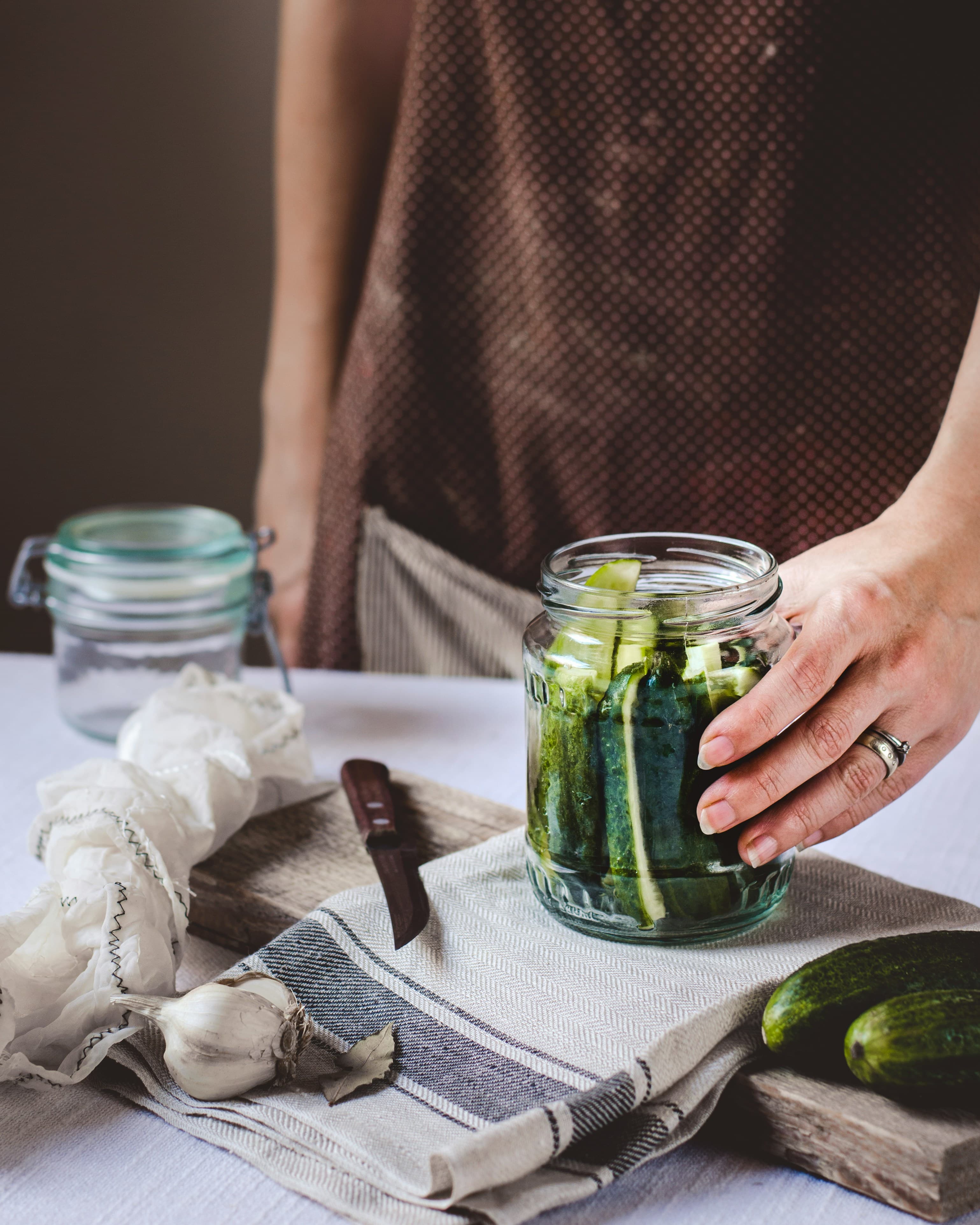
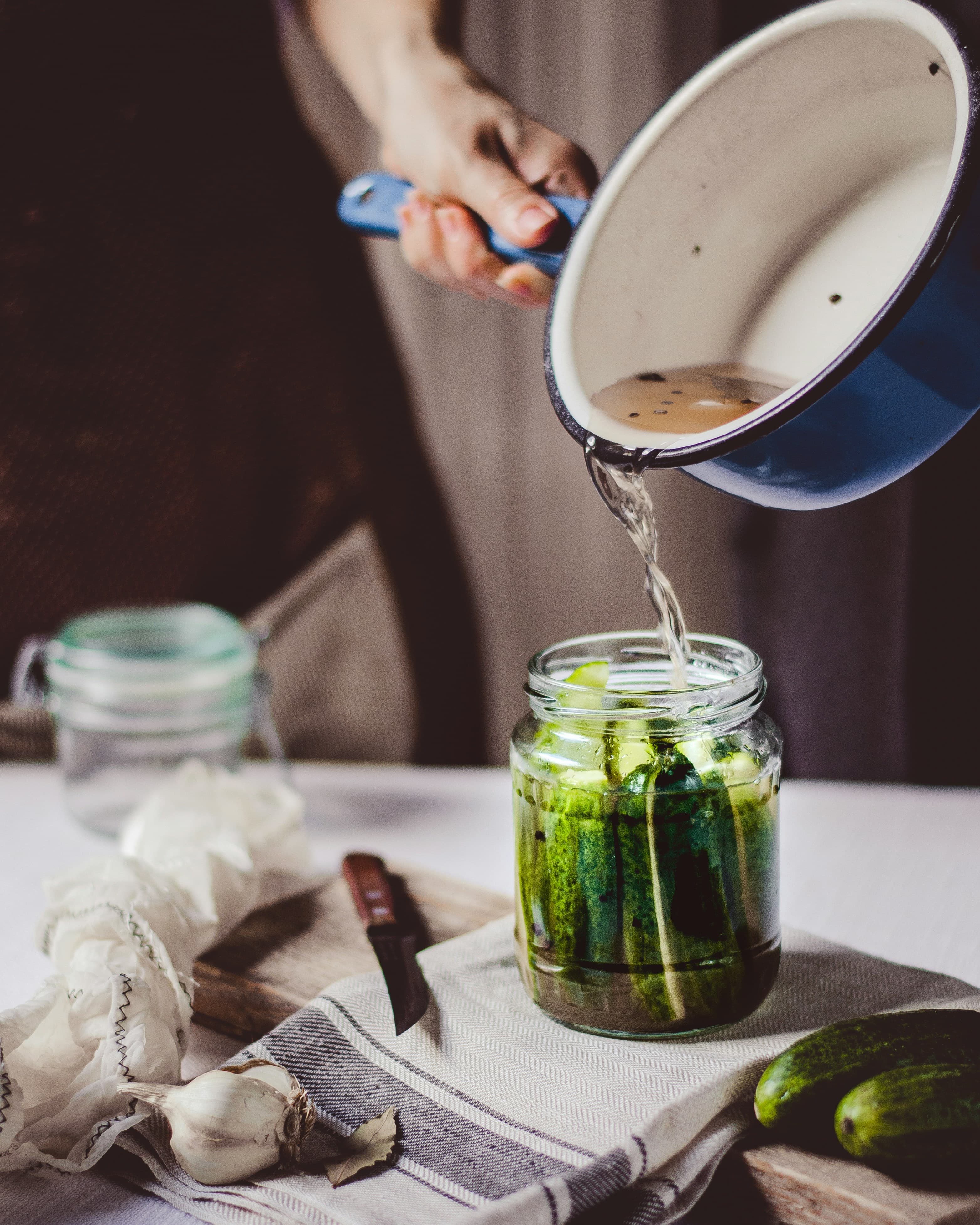
- Pack tightly into a jar, pressing down firmly. The cucumbers should release enough brine to cover themselves — if not, add just enough filtered water to submerge. Use a small jar or zip-lock bag filled with brine as a weight to keep everything below the liquid.
- Cover loosely with a cloth or lid set loosely on top (not sealed — you need gas to escape). Leave at room temperature.
- After 24 hours, taste. The cucumbers should be lightly tangy with a faint fizz when you chew them. If you want more tang, leave for another 12 to 24 hours. Once they hit the flavor you want, seal tightly and refrigerate.
Keep them submerged
The single most important thing you can do is keep the cucumbers below the brine line throughout fermentation. Anything poking above the surface is exposed to oxygen and will develop kahm yeast or mold. See our post on fermentation weights for tools that make this easy.
Flavor Variations
Once you have the base recipe down, the variations are easy:
- Korean-inspired: Add 1 tsp gochugaru (Korean chili flakes), 1 tsp toasted sesame oil (add after fermentation, not before), and a pinch of sugar. Finish with sliced green onions.
- Japanese-inspired: Use rice vinegar (just a tablespoon, added after fermentation) and a few drops of soy sauce. Finish with toasted sesame seeds and thin-sliced scallions.
- Mediterranean: Add a pinch of dried oregano, a little lemon zest, and a drizzle of olive oil after fermentation. Serve with feta.
- Classic dill (for when you want it): Add a few sprigs of fresh dill and a bay leaf to the jar during fermentation. Works perfectly.
Serving and Storage
Fermented cucumber salad is best eaten within a week of refrigeration — the texture softens over time, and the acidity continues to build slowly even in the cold. Eat it as a side dish alongside grilled meats, stir it into grain bowls, or serve it on a cheese and crudité spread.
The brine left in the jar is worth saving. It's a light, flavorful, probiotic-rich liquid. Use it to dress other salads, add to salad dressings, or drink straight as a gut-healthy tonic. Don't pour it down the drain.
For the full guide to fermented pickles — including longer ferments in a proper jar with airlock — see our fermented pickles guide. The technique builds directly on what you've learned here.
Troubleshooting
Cucumbers are mushy. This can happen if: (1) the salt ratio was too high for a quick ferment, drawing out too much moisture; (2) the blossom end wasn't trimmed, allowing enzymes to soften the flesh; or (3) fermentation went too long at too warm a temperature. For crisp results, use the correct salt ratio, trim the blossom end, and taste early.
White film on the surface. This is almost certainly kahm yeast — harmless but unpleasant-tasting. Skim it off, make sure cucumbers are fully submerged going forward, and refrigerate sooner next time.
Not tangy enough after 48 hours. Your kitchen is probably cool. Move the jar somewhere warmer, or simply give it more time. Lacto-fermentation slows significantly below 65°F.