If you grow zucchini, you know the problem: one day you have a manageable garden, and the next you're staring at a counter full of squash the size of baseball bats wondering what went wrong. Zucchini plants are relentless producers, and peak season runs from July through August.
Lacto-fermented zucchini is one of the best ways to handle a surplus. A few pounds of fresh zucchini becomes jars of tangy, crunchy pickles that keep for months — and the process takes about 10 minutes of active work plus a few days of waiting.
Why Ferment Zucchini Instead of Just Eating It?
Zucchini has a mild, slightly sweet flavor that can get repetitive when you're eating it every night through July. Fermentation transforms it: the lactic acid tang adds complexity and brightness, the salt amplifies the subtle flavor, and the aromatic additions (garlic, dill, peppercorns) make each jar genuinely interesting to eat.
More practically, fermented zucchini stores well where fresh zucchini doesn't. Fresh squash lasts a week in the refrigerator. A jar of fermented zucchini keeps for 1–2 months. You can process a large harvest into jars in one session and have pickles available for the rest of summer.
The process is lacto-fermentation — the same method used for sauerkraut, kimchi, and fermented pickles. Salt brine creates an environment where beneficial bacteria thrive, produce lactic acid, and preserve the vegetable. No canning, no vinegar, no special equipment beyond a jar.
Quick Pickle vs. Long Ferment
Fermented zucchini is flexible on timing:
- 3-day quick ferment: Light tang, very crunchy, mild flavor. Good if you want to eat them fast and prioritize texture.
- 5–7 day ferment: More sour, deeper flavor, slightly softer texture. Better for use as a condiment or alongside rich foods.
Both approaches use exactly the same method — the only variable is how long you leave the jar out before refrigerating. Taste daily starting at day 3 and stop whenever it suits your preference.
Choosing Your Zucchini
Medium-sized zucchini (6–8 inches, about the diameter of two fingers) are ideal. They have better flavor and firmer flesh than oversized ones. The giant zucchini that somehow hid under a leaf for a week is edible fermented — but the center can be watery and the seeds large, which affects texture.
Yellow summer squash works exactly the same way as green zucchini and you can combine them in the same jar. Pattypan squash also ferments well if you cut it into wedges.
Equipment
A wide-mouth quart mason jar handles most batches. For processing a large garden surplus, a fermentation crock allows you to process 4–8 pounds of zucchini in one batch. Crocks often have water-seal lids that handle the gas release automatically, which simplifies things.
A fermentation weight is important here. Zucchini is very buoyant and will float aggressively without something holding it down. Any piece above the brine line is exposed to air and at risk. See the fermented pickles guide for more on keeping vegetables submerged.
The Recipe
1. Prep the Zucchini
Wash the zucchini and trim both ends. Cut into your preferred shape — spears are easiest to pack and eat; rounds are more versatile as a condiment. For the crunchiest result, do the optional dry-salt step: toss cut zucchini with ½ teaspoon salt, let sit 30–60 minutes, then rinse lightly. This draws out extra water and firms the flesh before fermentation begins.
2. Prepare the Brine
Dissolve 1 tablespoon of non-iodized salt in 2 cups of filtered water. Stir well. Scale up if your batch is larger — the ratio is 1 tablespoon salt per 2 cups water (roughly 2% brine). Room temperature water works; no need to heat it.
3. Pack the Jar
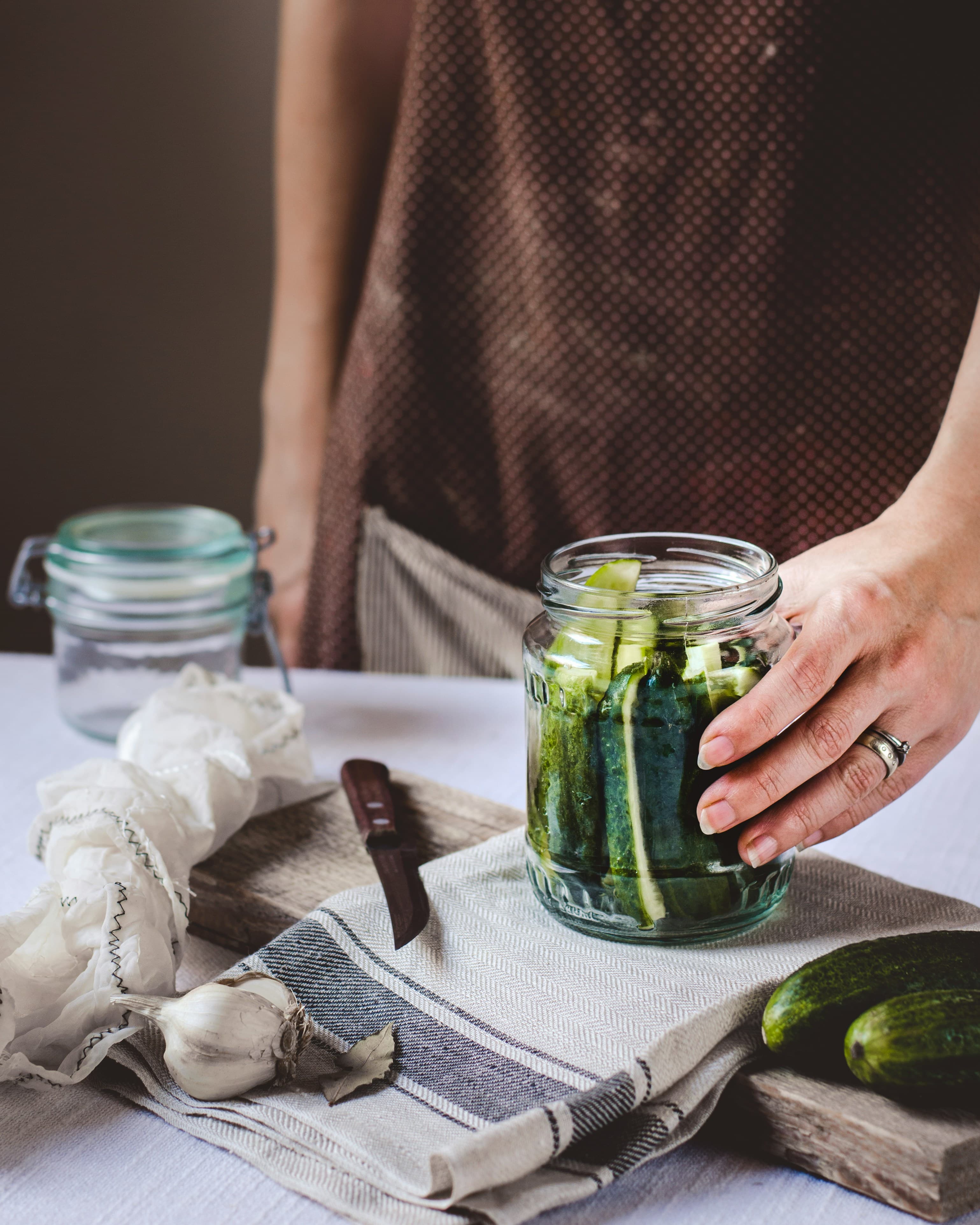
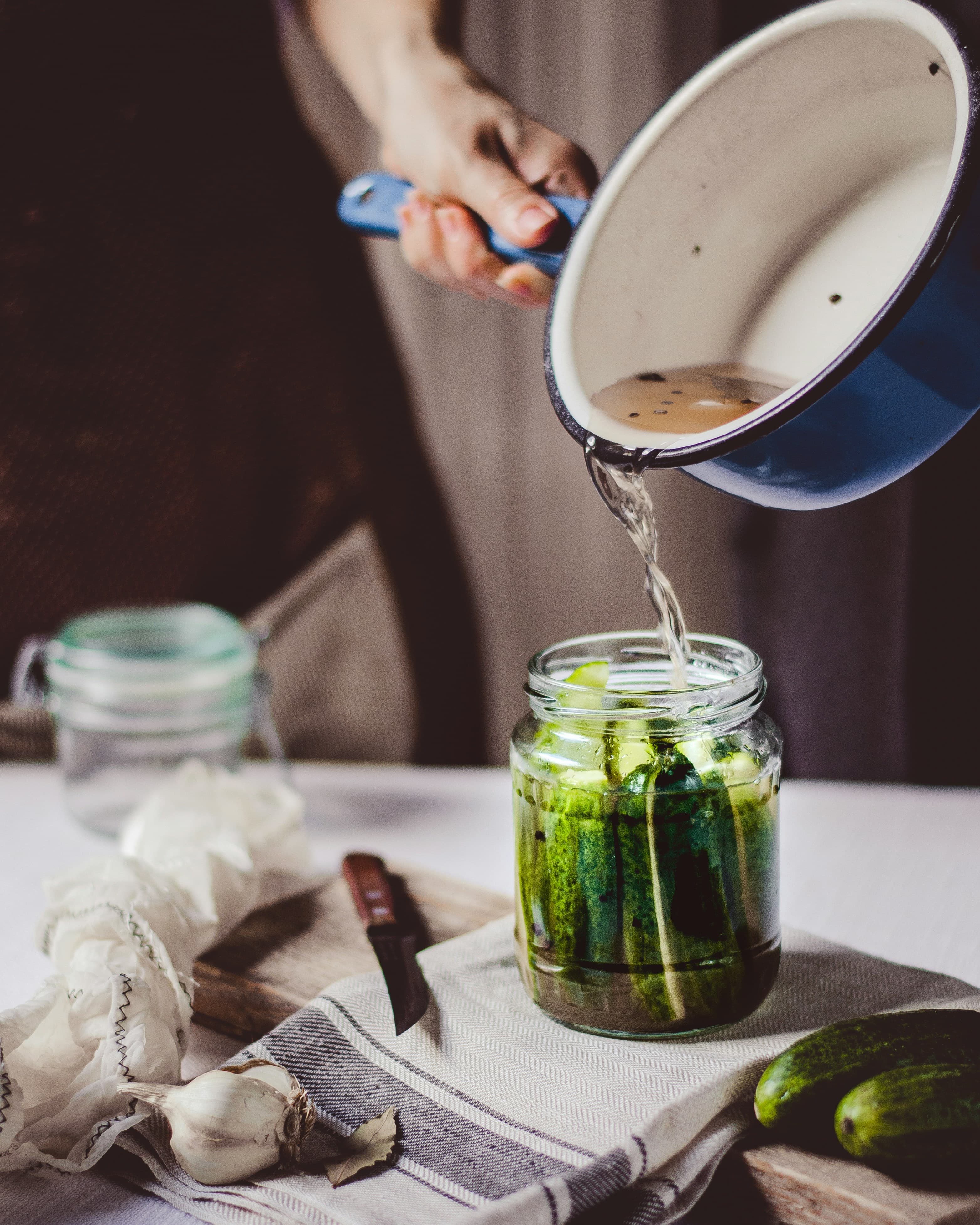
Put aromatics in first: garlic, dill, mustard seed, peppercorns at the bottom of the jar. Pack zucchini pieces in snugly. Pour brine over everything, pressing pieces down so they're fully submerged. Leave an inch of headspace. Check that every piece is covered.
4. Weigh Down and Cover
Add a weight to hold the zucchini under the brine. Cover with a breathable cloth or rest the lid loosely on top. You can also use an airlock lid — useful if your kitchen is warm and you want to minimize fuss.
5. Ferment 3–7 Days
Room temperature, out of direct sunlight. Check daily — push down any floating pieces. Bubbles should appear within 24–48 hours. Taste starting at day 3. Stop and refrigerate whenever the flavor is right.
In warm summer conditions (above 75°F), fermentation moves faster. A 3-day room-temperature ferment in July may produce more tang than a 5-day ferment would in cool weather. Taste frequently and trust your palate.
6. Refrigerate
Seal and refrigerate when done. The pickles keep for 1–2 months in the fridge. They'll continue to develop flavor slowly. The brine is excellent — use it as a salad dressing base, add it to bloody marys, or drink it straight if you like the sour hit.
Flavor Variations
- Italian herb. Add a small sprig of fresh basil, oregano, and a few fennel seeds. Works particularly well with yellow squash.
- Spicy. Add 1–2 sliced fresh chiles or ½ teaspoon red pepper flakes. The heat mellows during fermentation but stays present.
- Lemon-herb. A strip of lemon zest plus fresh thyme. Bright, versatile, great on grilled fish or chicken.
- Classic dill pickle. Lean into the dill — double the amount. The result tastes like a classic deli pickle.
What to Do With Fermented Zucchini
- Alongside grilled meats. The tang cuts through fatty proteins and works as a natural condiment.
- In grain bowls and salads. Chop the spears and add to farro, quinoa, or lentil salads for brightness and texture.
- On sandwiches. Fermented zucchini rounds make a better pickle than most store-bought options on a sandwich or burger.
- Straight from the jar. The simplest use, and often the best.
Troubleshooting
Zucchini Got Mushy
Most common causes: pieces floated above the brine line, or the ferment went too long in warm conditions. Start with firm zucchini, use a weight, and taste frequently. The optional dry-salt step before packing also helps maintain firmness by drawing out excess water in advance.
Very Little Bubbling
Zucchini ferments more slowly than higher-sugar vegetables. If your kitchen is below 65°F, move the jar somewhere warmer. Some activity should be visible by day 2. If nothing is happening by day 3, check whether your salt is iodized (iodine inhibits fermentation).
Slimy Texture
A slight surface sliminess on the brine is usually harmless. If the zucchini pieces themselves feel slimy, check that they were fully submerged and that the brine concentration was in the 2–3% range. Discard if there is an off smell or visible mold.
For more help, the vegetable fermentation troubleshooting guide covers the full range of issues and solutions.
Fitting This Into a Fermentation Practice
Fermented zucchini is an excellent project for a beginner who's already tried sauerkraut or fermented pickles. The method is identical to any brine-based vegetable ferment — if you can make one, you can make any of them. The fermentation for beginners guide has the full foundation if you're just starting out.
And if you end up with more jars than you can eat before they peak, the guide to storing fermented foods covers fridge management, labeling, and when to call it.
The summer garden surplus problem doesn't have a clean solution — but fermentation is the closest thing. A pile of zucchini you can't give away becomes jars of pickles people ask you for. That's a pretty good trade.