Both kombucha and kefir have earned loyal followings among people who want probiotic-rich fermented drinks. But they share almost nothing beyond that label. They taste completely different, ferment differently, come from different culinary traditions, and fit different dietary needs. If you're trying to decide which to explore first — or which belongs in your daily routine — here's an honest breakdown.
What Each One Is
Kombucha
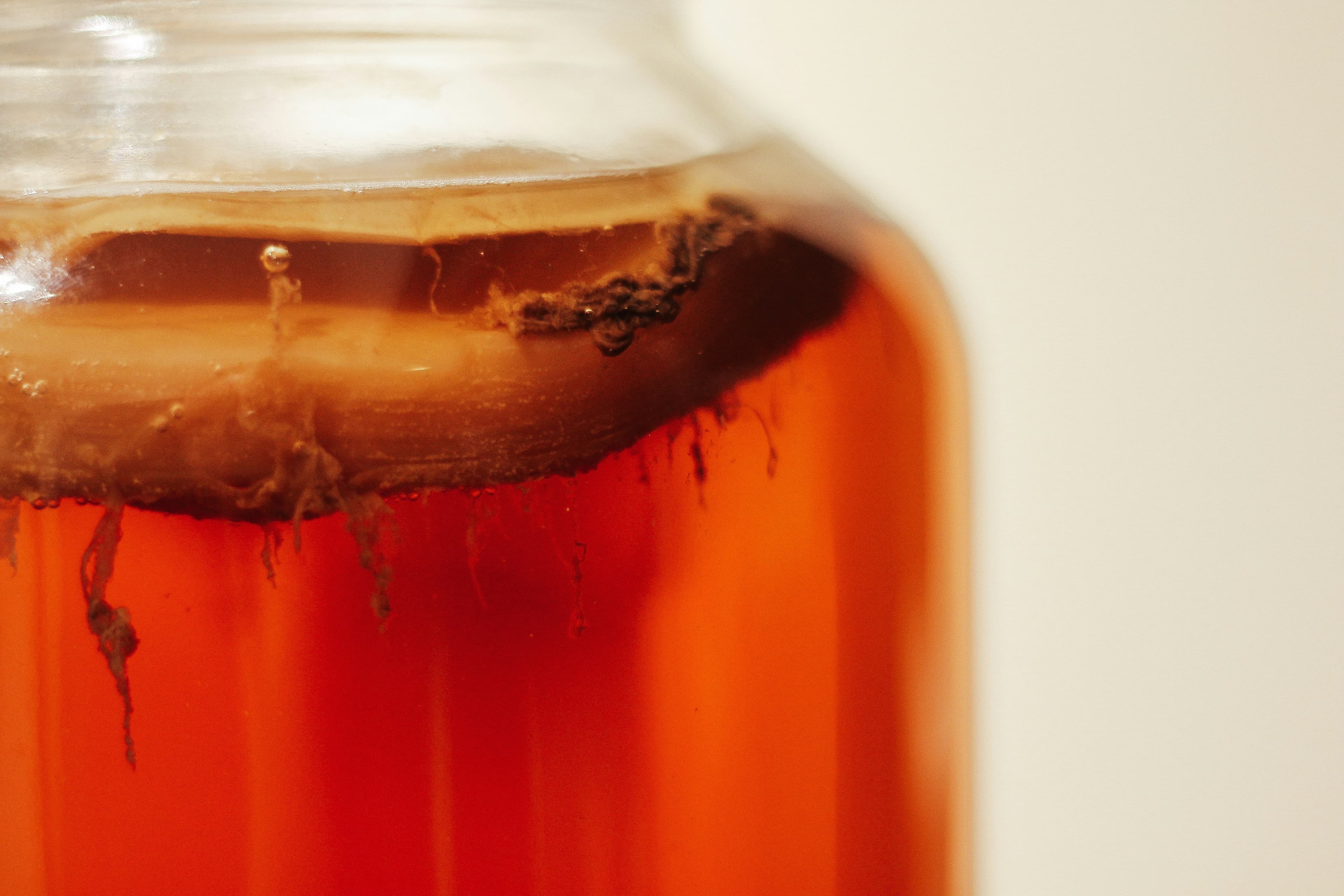
Kombucha is fermented sweet tea. You brew black or green tea, dissolve sugar into it, cool it down, and add a SCOBY (Symbiotic Culture of Bacteria and Yeast) along with some starter liquid from a previous batch. Over 7–14 days at room temperature, the culture ferments the tea — consuming the sugar, producing organic acids, B vitamins, and trace alcohol, and developing a tangy, effervescent flavor. The result is dairy-free, slightly fizzy, and ranges from mildly tart to quite sour depending on fermentation time.
Our kombucha brewing guide covers the full process for beginners.
Kefir
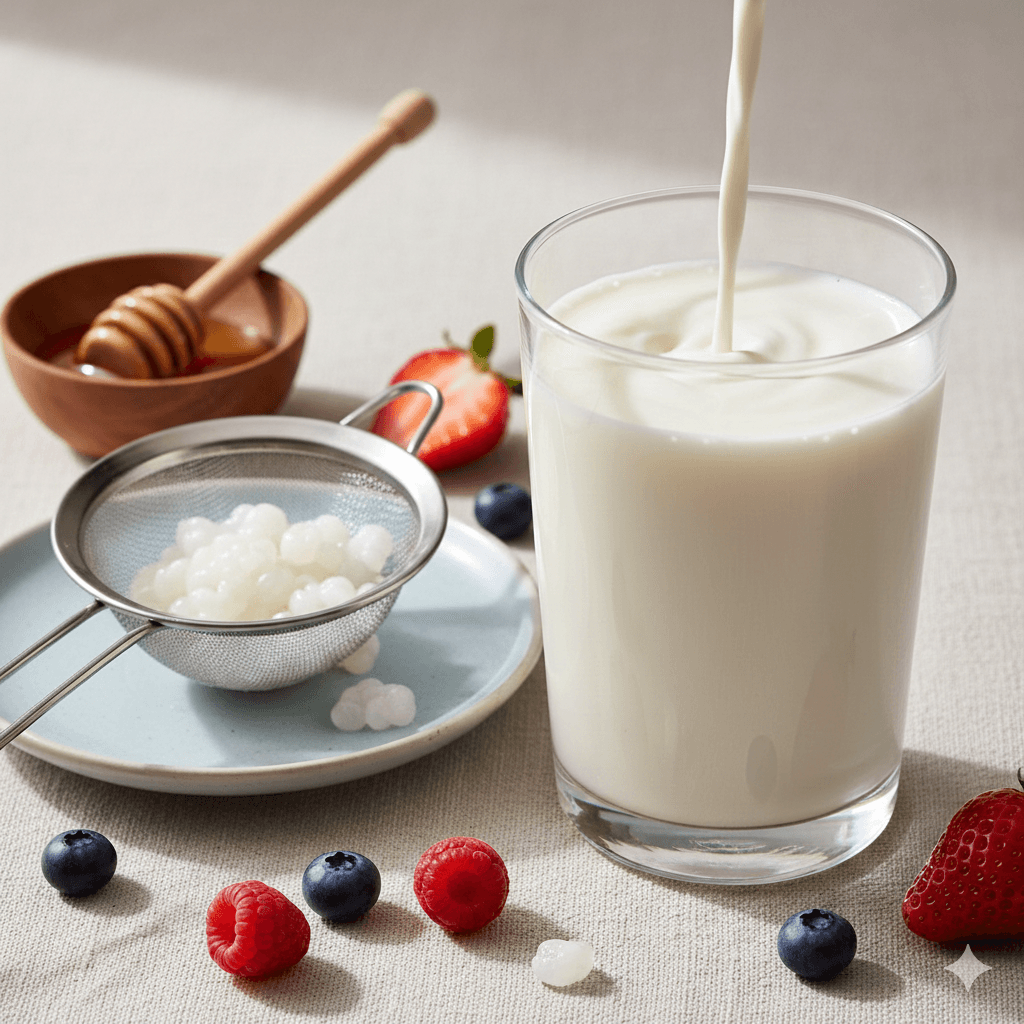
Milk kefir is fermented dairy. You add milk kefir grains — small, rubbery clusters of bacteria and yeast — to whole milk, leave it at room temperature for 12–24 hours, strain out the grains, and drink the finished kefir. It's thick and drinkable (like buttermilk), tangy, slightly fizzy, and rich in protein, calcium, and probiotic cultures. The grains are reusable indefinitely and multiply with each batch.
See our milk kefir guide for complete instructions, or our milk kefir vs water kefir comparison if you're considering the dairy-free water kefir alternative.
Taste and Texture
Kombucha is light, vinegary, and effervescent. The dominant flavor is organic acids — primarily acetic acid (like mild vinegar) and gluconic acid — layered over the base flavor of the tea. Second-fermented kombucha with fruit or juice becomes noticeably sweeter and more carbonated. Most people find kombucha easier to enjoy right away, especially if they already like sparkling water, vinegary drinks, or shrubs.
Kefir is thicker and more dairy-forward. It tastes like tangy yogurt you can drink, with a slight yeasty depth and gentle fizziness. The sourness is lactic (from milk) rather than acetic (from vinegar), making it creamier and richer-tasting than kombucha. People who like yogurt or buttermilk tend to enjoy kefir immediately.
Probiotic Content
Both contain live probiotic cultures, but the research base is not equivalent:
- Kefir has been studied extensively. It contains 10–34 strains of bacteria and yeasts, and has a substantial body of clinical research supporting benefits for gut health, immune function, and lactose digestion.
- Kombucha is less studied, and the probiotic strains in kombucha vary significantly by SCOBY source and brewing conditions. Many of the bacteria in kombucha may not survive digestion as effectively as those in kefir. The organic acids, B vitamins, and antioxidants in kombucha are real, but the specific gut-health research is thinner.
For maximum probiotic impact, kefir is the stronger evidence-based choice. For a light, pleasant fermented drink with real (if less documented) benefits, kombucha is excellent.
Nutrition at a Glance
| Nutrient | Kefir (1 cup) | Kombucha (1 cup) |
|---|---|---|
| Calories | ~160 | ~30–60 |
| Protein | ~9g | <1g |
| Calcium | ~30% DV | negligible |
| B vitamins | present | present (B1, B6, B12) |
| Dairy-free | No | Yes |
| Trace alcohol | <1% ABV | 0.5–3% ABV |
Ease of Home Brewing
Kefir: Simple and Fast
Making milk kefir at home requires no special equipment, no temperature control, and no timing precision. Add grains to milk, wait 12–24 hours, strain. Done. A batch is ready every day if you want it. The grains are reusable forever.
Kombucha: More Steps, but Still Beginner-Friendly
Kombucha requires more steps: brew tea, cool it, maintain a SCOBY, wait 7–14 days, taste-test, bottle. If you want carbonation, there's a second fermentation step. You also need a continuous tea supply and a vessel large enough for a gallon-plus batch. It's not hard, but it takes longer and has more moving parts than kefir.
Both are genuinely accessible for beginners. Start with kefir if you want the fastest path to homemade probiotics. Start with kombucha if you love the taste and want a more involved project.
Which Should You Make First?
Start with kefir if: You want a quick, nutritious daily probiotic, you're okay with dairy, or you want the simplest possible first fermentation project. Check out our best milk kefir starter kits to find quality grains and equipment.
Start with kombucha if: You're dairy-free, you enjoy vinegary or effervescent drinks, or you want a more involved project with a wide range of flavor possibilities. Our best kombucha brewing kits round-up covers starter SCOBYs and beginner equipment.
Long-term, many fermentation enthusiasts make both. They fit different occasions — kefir as a nutritious morning drink, kombucha as an afternoon sparkling alternative to soda. They also give you a wider range of probiotic strains than either alone.
Also Worth Considering
If you want to compare kefir to its dairy counterpart, see our kefir vs yogurt breakdown. If you're curious about the dairy-free kefir alternative, our milk kefir vs water kefir comparison covers water kefir in detail.