If you've ever looked up how to make kombucha, you've encountered the word SCOBY. It gets tossed around casually, but if you're new to brewing, it can feel like a mysterious blob of biology standing between you and your first batch. What exactly is it? Where do you get one? How do you keep it alive? And what happens when it starts looking a little strange?
This guide covers everything — the science, the sourcing, the care, and the creative uses you probably haven't thought of yet.
What Is a SCOBY?
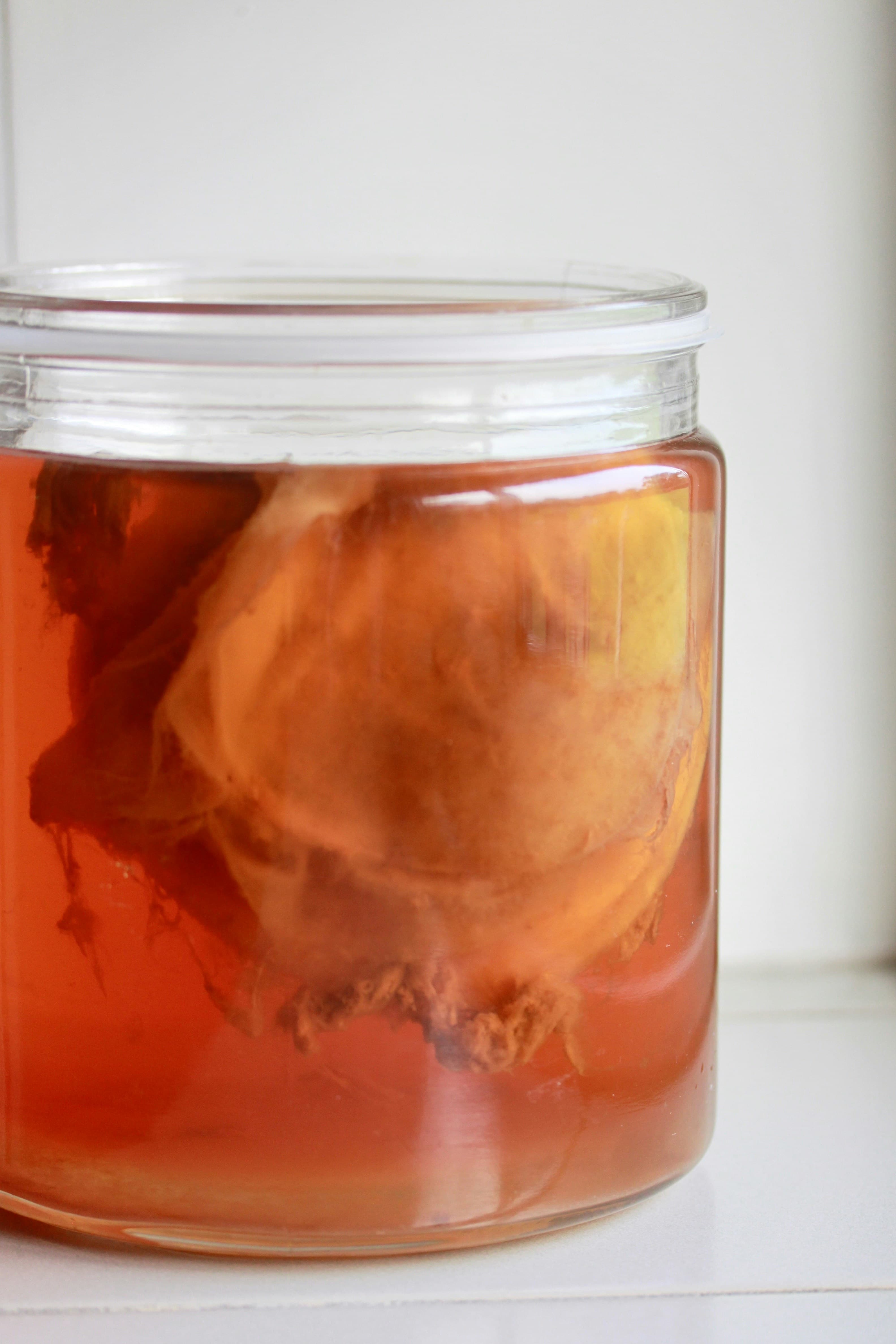
SCOBY stands for Symbiotic Culture of Bacteria and Yeast. It's a living, self-renewing microbial community — a rubbery, disc-shaped mass of cellulose produced by the bacteria themselves, which serves as a home for the microorganisms doing the actual work of fermentation.
Here's what's happening at the microbial level: the yeast in the SCOBY break down sucrose (table sugar) into glucose and fructose, then ferment those simple sugars into ethanol and carbon dioxide. The acetic acid bacteria in the SCOBY then convert much of that ethanol into acetic acid — the same acid that gives vinegar its tang. Other organic acids, B vitamins, and trace compounds are produced along the way, giving kombucha its characteristic tart, lightly effervescent flavor.
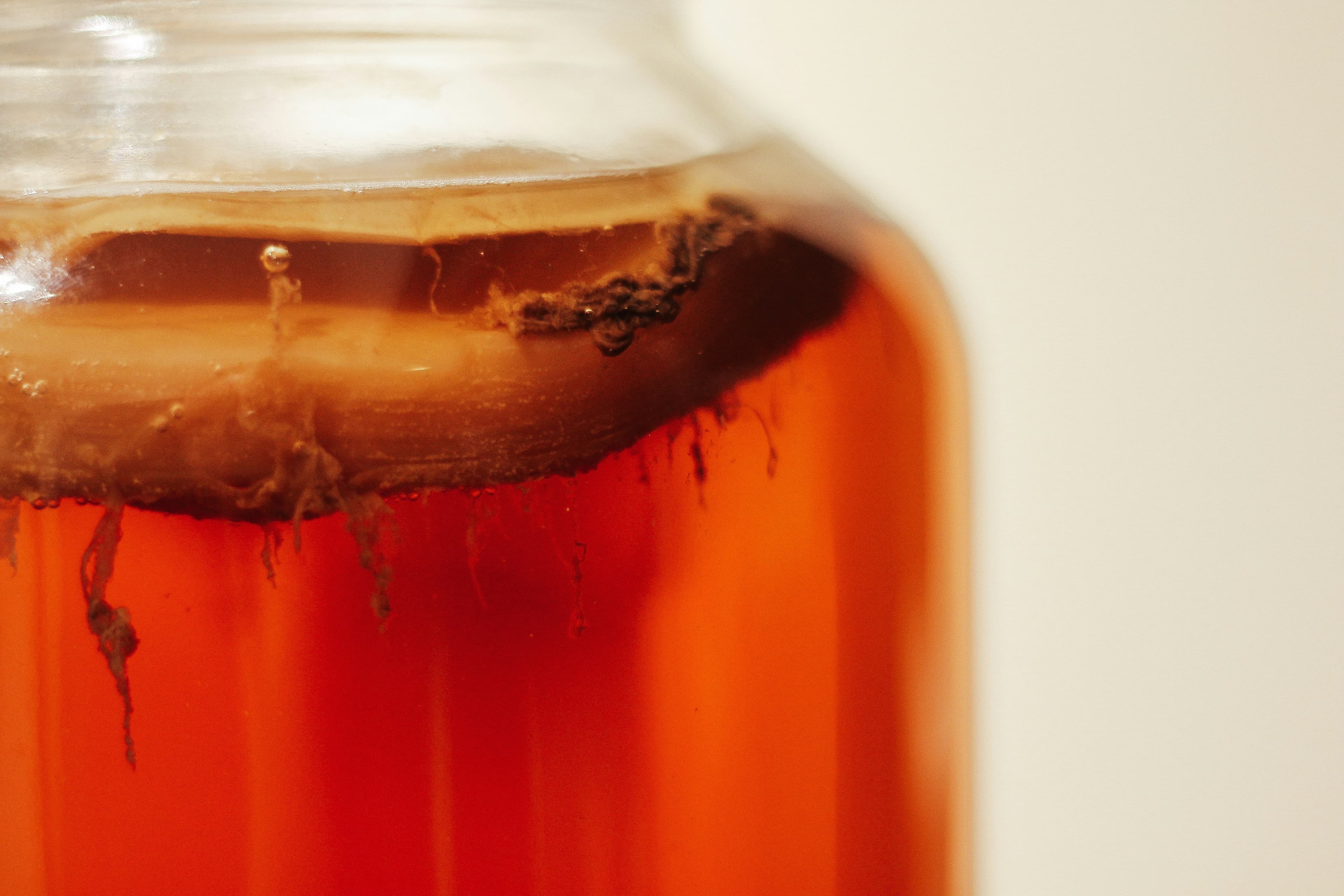
The cellulose mat you can see and handle is often called the "mother" or the "pellicle." It's not where all the microorganisms live — the liquid starter tea carries just as much (if not more) of the active culture. But the pellicle is a reliable visual signal that your culture is alive and doing its job.
For a full walkthrough of how to use your SCOBY to brew your first batch, see our Kombucha Brewing 101 guide.
Where to Get a SCOBY
You have three practical options, each with its own trade-offs.
From a friend or local brewer. This is the best option if you can manage it. A mature SCOBY from an established home brewer comes with a proven track record and a generous amount of starter liquid. Ask around in local fermentation groups, community forums, or subreddits — the kombucha community is generally enthusiastic about giving away SCOBYs because every batch grows a new one.
Buy one online. There are reputable vendors who sell SCOBYs packaged with starter liquid, shipped in a sealed bag. Quality varies, so look for sellers who include a good volume of starter tea (at least one to two cups) alongside the pellicle. If you're also picking up brewing equipment, check our kombucha brewing kit recommendations — several kits include a SCOBY.
Grow one from raw kombucha. This takes two to four weeks but costs almost nothing. Buy a plain, unflavored, raw (not pasteurized) kombucha from the grocery store — GT's Original is the most commonly recommended. Pour it into a clean jar, add a cup of room-temperature sweet tea (1 tablespoon of sugar per cup of tea), cover with a breathable cloth, and wait. A thin pellicle will form on the surface within one to two weeks. After a few cycles of feeding and growing, it will be thick enough to use for full batches.
What a Healthy SCOBY Looks Like
New brewers often worry when their SCOBY doesn't look like the pristine beige discs in product photos. In reality, a healthy SCOBY is often lumpy, uneven, and a little strange-looking — and that's completely fine.
Normal and healthy:
- Tan, beige, light brown, or off-white coloring
- Brown streaks or patches — these are yeast strands and are normal
- Uneven thickness, bumps, or holes
- Small brown stringy bits hanging from the bottom
- A new thin layer forming on top with each batch
- A vinegary, slightly sweet smell
Potentially problematic:
- Fuzzy growth — this is the key warning sign. A healthy SCOBY is smooth. Fuzzy patches are mold, and a moldy SCOBY should be discarded entirely, along with the liquid.
- Green, black, or pink spots, which can indicate mold contamination
- A strong rotten or foul smell (distinct from the normal vinegar tang)
- A completely dry SCOBY left without starter liquid for an extended period
If something looks off and you're not sure, visit our kombucha troubleshooting guide for a detailed breakdown of common problems and how to diagnose them.
How to Care for Your SCOBY
A SCOBY in active brewing pretty much takes care of itself — it just needs sweet tea and a suitable environment. But between batches and when you need to take a break from brewing, you need to know how to store it properly.
Temperature. SCOBYs ferment best between 68°F and 78°F (20–26°C). Below 65°F, fermentation slows significantly and the SCOBY becomes sluggish. Above 85°F, the culture can be stressed and off-flavors can develop. A stable room-temperature spot away from direct sunlight is ideal.
The SCOBY hotel. As your collection of SCOBYs grows, you'll want to maintain a "SCOBY hotel" — a jar where you store extra SCOBYs submerged in kombucha starter liquid. Keep it at room temperature if you're brewing regularly, or in the fridge if you need to pause for a few weeks or months. A fridge-stored SCOBY will go dormant; bring it back to room temperature and give it a fresh batch of sweet tea to reactivate it before brewing.
Feeding schedule. If your SCOBY hotel is sitting at room temperature, "feed" it every two to four weeks by replacing some of the liquid with fresh sweet tea. You're keeping the pH acidic enough to prevent contamination and providing sugars for the culture to stay active. The hotel will smell strongly of vinegar — that's a good sign.
Equipment. Always use clean glass jars and avoid contact with metal objects, which can react with the acidic kombucha. Stainless steel is generally fine, but avoid aluminum and reactive metals entirely. Use wooden or plastic utensils when handling your SCOBY directly.
How to Grow More SCOBYs
Here's one of the great things about kombucha: every batch automatically grows a new SCOBY. The bacteria produce a fresh cellulose layer on the surface of each ferment. After a few batches, you'll have a thick stack of layers — more SCOBY than you know what to do with.
You can gently peel the layers apart and treat each one as a separate SCOBY. Store the extras in your SCOBY hotel, give them away to friends who want to start brewing, or use them in one of the creative applications below.
There's no need to keep an enormous stack together. A single healthy layer an inch or more thick, combined with one to two cups of starter liquid, is plenty to kick off a new batch. A thicker SCOBY doesn't necessarily ferment faster — the starter liquid pH matters just as much.
Creative Uses for Extra SCOBYs
If your SCOBY hotel is overflowing, don't just discard the extras. There are genuinely interesting things you can do with them.
SCOBY jerky. Rinse the SCOBY, season it with soy sauce, garlic, smoked paprika, or your preferred marinade, and dehydrate it at around 105°F until it's chewy and dry. The result is a tangy, slightly chewy snack that's surprisingly approachable. It has a mild, savory, fermented flavor — not unlike some dried fruit leathers.
SCOBY smoothies. Blend a small piece of SCOBY into a fruit smoothie. It's nearly tasteless when blended and adds a dose of the same probiotic-adjacent compounds in your kombucha. This works best with ripe fruit that has a strong enough flavor to mask any vinegary notes.
Pet treats. Many dog owners feed small pieces of SCOBY to their pets as an occasional treat. The chewy texture tends to go over well, and the low sugar, fermented profile is generally considered a benign addition to a dog's diet. As with any new food, introduce it in small amounts and check with your vet if you have specific concerns.
Compost. When all else fails, SCOBYs are organic material and compost easily. A productive culture that's been brewing for years will generate a meaningful volume of biomass over time — it all goes back to the garden.
The single most important SCOBY rule.
Always keep your SCOBY submerged in acidic starter liquid. The acid is what protects the culture from contamination. A SCOBY sitting dry or in plain water is vulnerable; a SCOBY in mature kombucha is nearly indestructible. When in doubt, add more starter liquid — you can't really over-acidify a storage vessel.