Asparagus season is short — April and May in most of North America — and lacto-fermentation is one of the best ways to extend it. Fermented asparagus keeps for months in the refrigerator, and the fermentation process transforms the flavor: mildly vegetal raw asparagus becomes tangy, savory, and complex. It pairs well with charcuterie boards, grain bowls, eggs, and roasted meats.
This is a lacto-fermentation project — no vinegar, no canning, no heat required. You're relying entirely on salt water, lactic acid bacteria naturally present on the vegetables, and time.
What You Need
- Fresh asparagus — thin to medium spears work best. Thick spears can be woody and may not ferment as evenly.
- Non-iodized salt — kosher salt, sea salt, or pickling salt. Iodized salt inhibits fermentation and can produce off flavors.
- Filtered or unchlorinated water — chlorine in tap water can slow or kill your fermentation. Use filtered water, or let tap water sit uncovered for 30 minutes to off-gas chlorine.
- Wide-mouth quart jar(s) — asparagus spears need tall jars. Wide-mouth quart mason jars are ideal.
- A weight — to keep asparagus submerged under the brine. A small zip-lock bag filled with brine, a smaller jar, or a fermentation weight all work.
- Optional tannin source — a grape leaf, oak leaf, or 1/4 teaspoon black tea per jar helps maintain crunch.
Asparagus Fermentation Recipe
Ingredients (per quart jar)
- 1 bunch fresh asparagus (about 1 lb / 450g)
- 2 cups filtered water
- 1–1.5 teaspoons non-iodized salt (for a 2–3% brine)
- 2–3 garlic cloves, lightly crushed (optional)
- A few sprigs of fresh dill (optional)
- 1/4 teaspoon black tea or 1 grape/oak leaf (optional, for crunch)
- Pinch of red pepper flakes (optional)
Steps
- Trim the asparagus. Cut the tough woody ends off the spears. Trim them to fit your jar with about 1 inch of headspace — the tips should be well below the jar rim.
- Make the brine. Dissolve the salt in the water. Stir well until completely dissolved. For a stronger 3% brine that produces a firmer texture, use 1.5 teaspoons per cup of water.
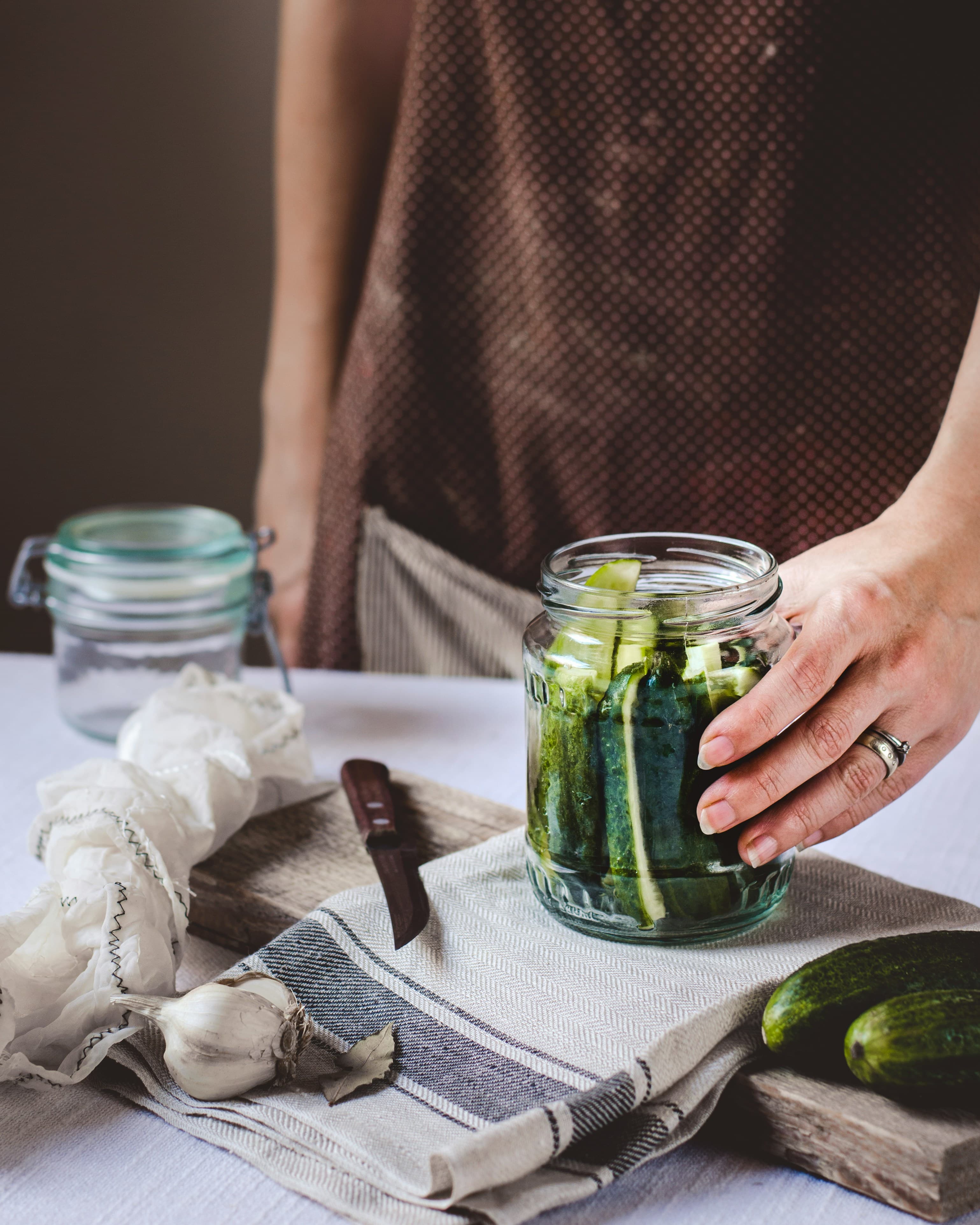
- Pack the jar. If using a tannin source, place it at the bottom of the jar. Add garlic, dill, and any other aromatics. Stand the asparagus spears upright, tips pointing up, packed tightly enough that they support each other.
- Pour in the brine. Fill to within an inch of the rim. All asparagus spears must be fully submerged — this is important. Anything above the brine level can mold.
- Weigh down the spears. Asparagus is buoyant and will try to float above the brine. Use a fermentation weight, a small jar filled with brine, or a zip-lock bag filled with brine to hold everything down.
- Cover loosely. You want CO2 to escape during fermentation. A loose lid, a cloth cover secured with a rubber band, or a purpose-made fermentation lid all work. Don't seal the jar airtight.
- Ferment at room temperature. Leave the jar in a spot away from direct sunlight, at 65–75°F (18–24°C). You should see bubbles forming within 24–48 hours — this is the lactic acid bacteria getting active.
- Taste from day 3 onward. Use a clean fork to taste the asparagus daily. At day 3–4 it will be mildly tangy and crisp. By day 5–7 it will be more sour. Move to the fridge when it reaches your preferred flavor.
Troubleshooting
White Film on the Surface
This is almost certainly kahm yeast — a harmless white film of wild yeast that can form on the surface of lacto-ferments. It looks alarming but doesn't affect the safety or flavor of the ferment beneath the brine. Skim it off with a spoon and continue.
Soft Asparagus
Softness usually means over-fermentation or too weak a brine. Use a 3% brine next time (1.5 teaspoons per cup of water), add a tannin source, and move to the fridge earlier. Thinner spears are also more prone to softening — use medium spears.
Spears Floating Above the Brine
Anything above the brine line is exposed to oxygen and can mold. Make sure you have a proper weight keeping everything submerged. If mold (not just kahm yeast) forms on an exposed spear, discard that spear and check the rest — if the submerged spears smell and taste fine, they are likely safe.
How to Use Fermented Asparagus
Fermented asparagus is best served cold or at room temperature. Heat kills the live cultures, so don't cook it if you're eating it for the probiotics. Good uses:
- Charcuterie and cheese boards
- Alongside smoked fish or cured meats
- Chopped into grain bowls or salads
- Alongside scrambled eggs or a frittata
- As a tangy garnish for roasted meats
- Sliced and stirred into potato salad in place of pickles
More Spring Fermentation Ideas
If you're looking for more ways to ferment the spring harvest, our spring fermentation projects guide for April and May covers what's in season and what to do with it. For a broader introduction to fermenting vegetables, our fermented pickles guide covers the core lacto-fermentation technique that applies to almost any vegetable.